
 Michelangelo di Lodovico Buonarroti Simoni and Pope Julius II had, at times, a testy relationship. They respected and liked each other, but each was a difficult personality in his own right. Michelangelo was touchy, irritable, and quick to anger; the Pope was demanding, intrusive, and also quick to anger.
The Pope had heard of Michelangelo’s genius and recruited him for several projects, including the sculptures for the Pope’s tomb. Although they initially developed a nice relationship, it didn’t last long. The sculptor did not like being watched at work and kept his studio locked; he didn’t like the Pope’s questions about his rate of progress. Michelangelo became very irritated about his patron’s bossy interference.
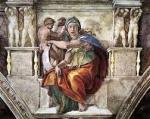 When the Pope pressed Michelangelo to undertake projects for which he did not feel qualified—a monumental bronze statue of Julius fourteen feet high for the façade of a church in Bologna…and the painting of the ceiling of the Sistine Chapel—Michelangelo insisted it wasn’t “his kind of art.” The more he refused the Pope, the more the Pope insisted, and Michelangelo was ready to fly into a rage. But seeing how persistent the Pope was, Michelangelo eventually relented and began work on the ceiling in 1508.

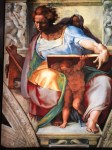 He immediately regretted that he had given in. There was trouble with the scaffolding that an architect had constructed for him. There was trouble with his assistants from Florence whom he considered so incompetent that he removed everything that they did and painted all twelve thousand square feet of it himself. He locked the chapel door provoking another quarrel with the Pope. And then the labor was both physically and emotionally exhausting. He painted standing up and looking upwards for such long periods that his neck became stiff and swollen.
And then there was the Pope…again. He insisted on being let into the chapel to see what he was paying for. The Pope kept asking impatiently when it would be finished, even climbing up onto the scaffold with his stick. “How much longer?” he asked. “When it satisfies me as an artist” was Michelangelo’s reply. The angry Julius retorted, “And we want you to satisfy us, and finish it soon.” During one of their outbursts, the Pope even hit Michelangelo with his stick, after which he did apologize.
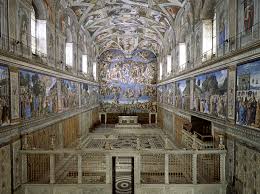 After nearly four years’ work, the scaffolding was removed. The artist was still not satisfied and wanted to do much more. But the Pope would wait no longer. He rushed into the chapel to look at the astonishing achievement of more than 300 figures, many of them painted three or four times life-size. On 31 October 1512, the Pope celebrated Mass inside the chapel. Afterwards, all of Rome came to see what Michelangelo had done. They were speechless with astonishment.
Summarized from excerpts from “Rome: The Biography of a City” by Christopher Hibbert.
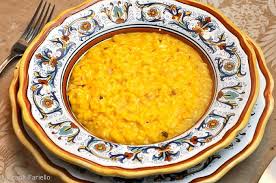 Il riso è un ingrediente presente nelle cucine nel tutto il mondo, ma il risotto è una preparazione tutta italiana, diffusa e resa famosa nel mondo dagli italiani. Mentre gli italiani sono molto orgogliosi della loro intera cucina, uno dei piatti più celebri è il Risotto alla Milanese—non solo per il sapore squisito, ma anche per le leggende che circondano il piatto e per lo zafferano per cui l’Italia è conosciuta.
 Ma la storia più conosciuta sull’origine del Risotto alla Milanese è attestata da un documento ritrovato nella biblioteca Trivulziana a Milano. Secondo il manoscritto il piatto nacque nel 1574 durante le nozze della figlia di Mastro Valerio di Fiandra, pittore fiammingo che all’epoca lavorava alle vetrate del Duomo di Milano. Le fonti dicono che Mastro Valerio aveva un assistente chiamato “Zafferano”, che aveva la mania di mescolare un po’ di questa spezia ai suoi colori, così da renderli più
  vivaci. Durante il matrimonio della figlia di Valerio, la mania di Zafferano passò dalla tavolozza alla tavola. L’assistente, forse per gioco, negoziò con il cuoco per aggiungere un po’ di zafferano nel risotto, che, all’epoca, veniva servito con solo burro. La reazione degli ospiti fu sorprendente. Oltre ad aver aggiunto un sapore squisito al piatto, lo zafferano lo rese dello stesso colore dell’oro, simbolo di ricchezza e prosperità. Da quel giorno, il Risotto color giallo preparato a Milano divenne uno dei piatti più alla moda del periodo, percorrendo osterie e taverne per tutta Milano e poi per tutta l’Italia in lungo e in largo.
 Lo zafferano è una pianta antica originaria del Medio Oriente, anche se citata nei documenti medievali italiani. A quei tempi era così prezioso che veniva usato come merce di scambio, come
  bestiame e terra. Oggi lo zafferano è così caro (circa 3.000 euro al chilo) che nei negozi alimentari viene spesso tenuto sotto chiave. Lo zafferano può essere raccolto solo a mano e i pistilli giusti devono essere scelti da uomo. Si possono usare solo quelli dorati-cremisi, e 200 di questi sono necessari per produrre un singolo grammo.
 L’Italia oggi è la patria del miglior zafferano al mondo. Viene coltivato nelle valli tra l’Abruzzo e la Toscana. In tutta Italia ci sono molti prodotti e ricette che contengono lo zafferano, tra cui il miele di zafferano della Toscana, il pecorino siciliano chiamato Piacentinu Ennese DOP, e, ovviamente, il leggendario Risotto alla Milanese.