
Our film group met recently, as usual, by Zoom. We marveled how Zoom could connect 5 people who were, at the time, in 4 different times zones: Katia in Italy, Gina in Massachusetts, Susie in New Mexico, and Giovanna and I in California. And we mused over the Italian term for time zone, fuso orario. Orario, which refers to time, was fine, but fuso, as in formaggio fuso, melted cheese?
So began the research. A time zone is defined as an area that observes a standard time for legal, commercial, and social purposes. In the past, there were hundreds, if not thousands, of local solar times. To minimize the chaos, North American railroads designated in 1883 four standard time zones across the United States and Canada. A few years earlier, in 1879, Canadian engineer Sandford Fleming—who is often credited as the inventor of time zones–had proposed a global 24-zone system.
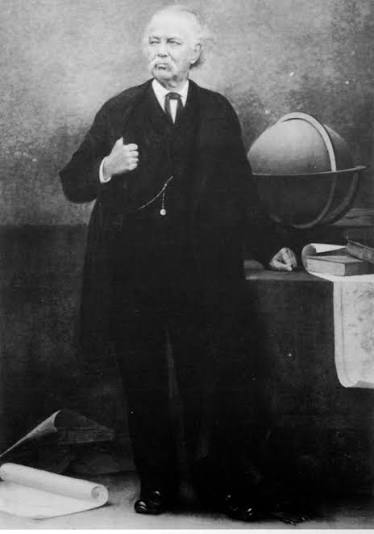
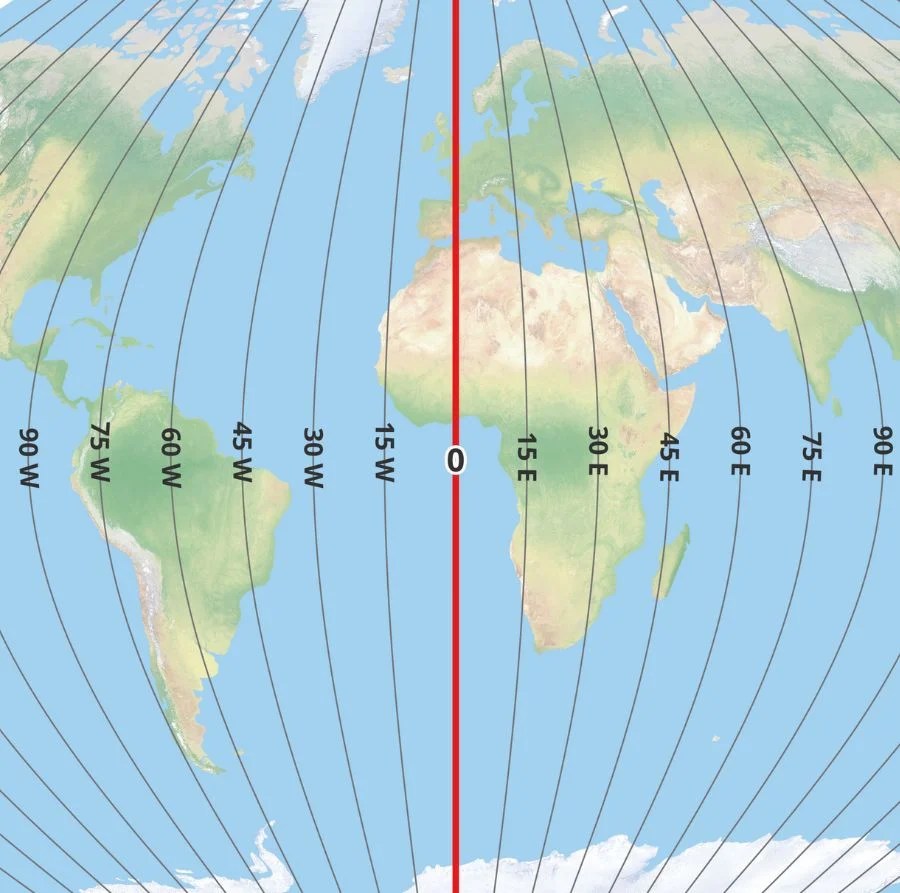
But it was an Italian mathematician and politician, Giuseppe Barilli (1812-1894) who first developed the modern, global system of time. In 1858, more than 20 years before Fleming, he published a book titled Miranda! under the pen name Quirico (from Latin meaning Roman citizen) Filopanti (from Greek meaning “one who loves everyone”), which he coined out of his admiration for ancient Rome. He proposed dividing the earth into 24 “longitudinal days.” Each would span 15 degrees of longitude from its east and west neighbor, and each zone would differ from its neighbor by one hour. He chose Rome as the prime meridian. Filopanti also proposed a single Universal Time to be used worldwide for astronomy and telegraphy.
Miranda! was an eccentric work, a mixture of science, political ideology, and mysticism; it was largely ignored at the time. In the 1830s and 1840s, Barilli was a graduate of and professor at the University of Bologna. A political figure in Italian unification, he also participated during the 1849 establishment of the Roman Republic. After the end of the republic, he sought shelter in the United States and London, where he wrote Miranda! When he eventually returned to Italy, his appointment at the University of Bologna ended, because he repeatedly refused to take an oath of allegiance to the monarchy. In 1876 he was elected to Parliament in unified Italy. He died poor in Bologna in 1894.
Filopanti’s legacy is undeniable: he supplied the conceptual map of 24 zones, one-hour steps, and a universal reference; he also understood the communications significance long before synchronized timetables and transcontinental telegraphy. The modern system that we use today differs from Filopanti’s in 3 ways: The prime meridian was changed from Rome, Italy, to Greenwich, England. Both the 1883 Rome Conference and the 1884 Washington, D.C, Meridian Conference formally endorsed Greenwich to unify global time. After all, 72% of the world’s shipping and commerce already used Greenwich-based sea charts, making it the most practical choice for international navigation and science.

The other two are more subtle adaptations: The meridians initially followed exact lines of longitude; today, for practical reasons, the borders today curve to accommodate national, state, and economic boundaries. Finally, the terminology changed from “longitudinal days” to “time zones.”

Fuso orario? The Italian word “fuso” in this context, comes from the Latin fusus, which means spindle—the wooden tool used in spinning wool or flax. When cartographers first divided the globe into 24 equal segments, the resulting map strips were wide at the equator and tapered to a point at the North and South Poles. This wedge shape resembled a textile spindle, inspiring the metaphorical name.


I admire your research and dedication. I
Fascinating!! thanks for the education.