Italy is the place to be

In 2017, the Bloomberg Global Health Index rated Italy number 1 out of 163 countries for a long and healthy life.  Every country in the index was evaluated based on diverse variables: life expectancy, causes of death, health risks such as elevated blood pressure, use of tobacco, availability of clean water, and risk of malnutrition.
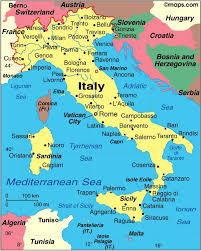
The top 10 countries are:  Italy, Iceland, Switzerland, Singapore, Australia, Spain, Japan, Sweden, Israel, and Luxembourg.  The United States came in 34th because of the epidemic of obesity.  The Italians are better than the Americans (#34), the Canadians (#17) and the British (#23), who are hit more by hypertension, cholesterol, and mental disorders.

Italy is number 1 notwithstanding its shaky and stagnant economy.  About 40% of the youth are without work, and the country is crushed by a public debt that is among the highest in the world.  But the family is strong and perhaps social services also contribute to the reduction in numbers of the hungry and homeless.

Among Italy’s strong points in the Bloomberg study, not surprisingly, is the diet, which is rich in vegetables and seasoning with olive oil.  Moreover, most of the top 10 countries also have a diet rich in fish.  The Bloomberg study also cites the elevated number of doctors in Italy as a strong point.  But this issue is a bit complicated.  Another study in 2016 analyzed the numbers of people employed in health care.  It showed that Italy has 3.9 physicians for every 1,000 residents – after Greece (6.29), Austria (4.9) Germany (4.05) and Switzerland (4.04).  In fact, there is a controversy within Italy about the shortage of staff within Italian hospitals.  This has been caused by the lack of medical staff replacement after the number of entrants to medical school was restricted in 1999.

According to the Bloomberg study, a baby born in Italy has a life expectancy of at least 80 years compared to 52 in Sierra Leone, which is in last place.  But some of the data don’t jive.  For example, a report in Italy a year ago showed a drop in life expectancy:  80.1 for men, 84.7 for women while the numbers were 80.3 for men and 85 for women in 2014.  Perhaps the reason is that there is less effort put into prevention.  Luckily, Italians smoke less today (but 25% more than Americans); in 2014 more than a third of the adult population was overweight and a little more than 10% were obese…despite the Mediterranean diet.

Every country has its problems.


Posted in Abitudini, Cucina italiana, Differenze culturali, English, Foto, Italia, Medicina, Olivo | Leave a comment

Parlare due lingue protegge il cervello

In passato ci sono stati diversi studi scientifici che mostrano che conoscere due lingue protegge il cervello dalla demenza.  Ora uno studio italiano ha messo in luce come questa attività modifichi la funzione cerebrale e protegga dall’Alzheimer.

Lo studio è stato condotto dai ricercatori del San Raffaele di Milano ed è stato pubblicato su “Proceedings of the National Academy of Sciences.”  Hanno studiato 85 pazienti dall’Alto Adige affetti da Alzheimer di cui metà italiani monolingua e metà bilingue.

Come gli altri studi, questo studio ha mostrato che i pazienti bilingue affetti da demenza erano in media 5 anni più vecchi rispetto ai monolingua.  Gli studi hanno anche mostrato che i bilingue hanno ottenuto punteggi più alti in alcuni test cognitivi volti a valutare la capacità di riconoscere luoghi e volti.

Lo studio italiano ha utilizzato la tecnica di imaging per esaminare l’attività metabolica frontale e la connettività tra specifiche aree del cervello per compensare i danni prodotti dalla malattia.  I dettagli sono troppo complicati da spiegare, ma i risultati sono impressionanti.  Secondo il leader di ricerca, “Abbiamo scoperto che i bilingue hanno una maggior riserva cerebrale.  Studiando anche i bilingue che sviluppano una demenza, abbiamo scoperto che i loro i circuiti del controllo cognitivo sono più forti.”

I ricercatori hanno usato un questionario sull’uso delle lingue.  Hanno stabilito che gli effetti positivi del bilinguismo dipendono anche dal livello di esposizione e di utilizzo delle due lingue: più le due lingue sono utilizzate, maggiori sono gli effetti a livello cerebrale e migliore è la performance.

Il punto non è quindi conoscere due lingue, ma usarle in maniera attiva e durante tutto l’arco della vita.  È importante promuovere e mantenere l’uso delle lingue e dei dialetti nella popolazione italiana.  Se i dialetti non fossero scoraggiati, molti italiani conoscerebbero automaticamente due lingue: l’italiano e un dialetto.

Per altri post sul questo argomento, vedete, Una Lingua o un Dialetto? (il 4 agosto 2016), Dialetti e il bilinguismo (l’8 settembre 2016) e Maria Crisà (il 12 gennaio 2017).


Posted in Abitudini, Italia, Italiano, La Gente, La Lingua, Medicina | Leave a comment

Speaking two languages protects the brain

I have always envied people who are bilingual—how they can so easily move from one language to another.  They seem to think in two languages—despite major differences in vocabulary and idioms, grammatical structure, and syntax.  Meanwhile, those struggling to learn a second language tend to think in their mother tongue and then try to bridge over to the new language, invariably making mistakes in prepositions and verb tenses, which are common pitfalls among Americans studying the Italian language.

There have been several scientific studies that have highlighted that bilingualism protects people from senile dementia.  Now there is a new Italian study on this subject that was recently published in Proceedings of the National Academy of Sciences.  The study was conducted by a team of researchers, directed by Daniela Perani, of a neuroimaging center at the San Rafael Hospital in Milan.

The researchers studied 85 patients with Alzheimer’s dementia from the Alto-Adige region of Italy.  Half were monolingual and half were bilingual (probably Italian and German).  The researchers used an imaging technique that enabled them to measure cerebral metabolism and the connectivity between different areas of the brain.  Like the other studies, this one showed that bilingual patients affected by dementia were, on average, 5 years older compared to the monolingual.  The studies also showed that the bilingual patients obtained higher scores on cognitive tests designed to evaluate ability to recognize places and faces.

The Italian study used an imaging technique to examine the frontal metabolic activity and the connectivity between specific areas of the brain that compensate for the damage produced by the disease.  The details are too complicated for me to explain, but the results are impressive.  According to the research leader, “We discovered that the bilingual patients have a major cerebral reserve.  Studying also the bilingual patients that develop a dementia, we discovered that their cognitive control circuits are much stronger.”

The researchers used a questionnaire on the use of languages.  The established that the positive effects of bilingualism depends on the level of exposure and use of the two languages: the more that both languages are used, the greater the effects at a cerebral level and the better the performance.

The point is therefore not to know two languages, but to use them actively and during the entire course of one’s life.  It is important to promote and maintain the use of languages and dialects in the Italian population.  If dialects are not discouraged, many Italians would automatically know 2 languages:  standard Italian and the dialect.

For other posts on this topic, see A Language or a Dialect? (August 4, 2016), Dialects and Bilingualism (September 8, 2016), and Maria Crisà (January 12, 2017).


Posted in Abitudini, English, Italia, La Lingua, Medicina | 2 Comments