
Many weeks ago, I wrote this post, in which I described Ennio Morricone as “a living legend.” On July 6, 2020, he died in Rome where he was born and lived. He will remain a legend, and his music will live on.
They were born in Rome in the late 1920s, only three months apart. Both had fathers in professions that would become their chosen fields, and who became their first teachers. Neither spoke much English despite their popularity in the English-speaking world. For a brief period, they were classmates in the same school together. Sergio Leone and Ennio Morricone eventually formed one of the best-known and exemplary collaborations between a film director and a composer in film history.
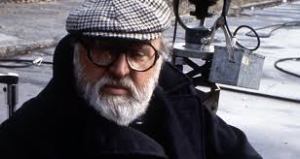 Leone began his career as an assistant to director Vittorio de Sica during the production of Bicycle Thieves in 1948. He went on to direct epics, such as The Last Days of Pompeii and The Colossus of Rhodes. Later, Leone turned down the offer to direct The Godfather in favor of working on a gangster story that would eventually become his masterpiece. In the mid-60s, as audiences lost interest in historical epics, Leone turned to a genre that had intrigued him since childhood: the American Western.
 From an early age, Morricone played several instruments, most notably the trumpet. He wrote his first compositions when he was only six years old. As he matured, he wrote music for the theatre, as well as classical music for voice and piano. Then he started writing and arranging music for films as a ghost writer. Although he composed music for some Western movies, it was his arrangement of an American folk song that captured Leone’s attention.
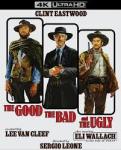 The turning points in the careers of both Leone and Morricone came in the mid 1960s with their collaboration on A Fistful of Dollars, followed by For a Few Dollars More, and The Good, the Bad and the Ugly. The trilogy became known as the Dollars Trilogy and also as the Man With No Name Trilogy. Each film became more financially successful and more technically accomplished than its predecessor, and each artist contributed lasting innovations to the genre.
 Leone redefined the Western in plot, characterization and mood, and the American cowboy in appearance, character and motivation. Gone are the handsome, beautifully dressed men in white hats for heroes and black hats for villains. Leone’s characters are more realistic and complex—often “lone wolves” who are morally ambiguous. Relationships revolved around money, power and retribution. Violence was rampant. Leone’s cinematography is
  stunning: He often juxtaposed close-up shots of dirty, unshaven, menacing faces with lengthy long shots of the beautiful, albeit barren, land and settings of the Old West, together with beautifully framed interior shots.
Instead of orchestral arrangements that had been used in previous Westerns, Morricone used gunshots, cracking whips, whistle, voices, Jew’s harp, trumpet, and the then-new electric guitar. His special effects punctuated the action and contributed to its visceral effect. For Leone, the eclectic and poignant music was a protagonist in his films. It was said that he kept scenes going because he did not want the music to end, which probably contributed to somewhat long, slow films.
 After the Dollars Trilogy, Leone and Morricone collaborated on what became known as the Once Upon a Time Trilogy. Morricone’s score for the first, Once Upon a Time in the West, is one of the best-selling original instrumental scores in the world today. The third, Once Upon a Time in America, is Leone’s brilliant masterpiece. Starring Robert de Niro, it is the story of gangsters and friendship in Manhattan in the years of American prohibition.
Leone died five years later in 1989 at the age of 60, ending the relationship between the two artists. Morricone went on to collaborate with many other directors, including Brian De Palma (The Untouchables), Giuseppe Tornatore (Cinema Paradiso), and Franco Zeffirelli (Hamlet). But this “living  legend”, who has composed more than 400 scores for film and television, is probably best known for the variety of genres in his repertoire, which includes choral work, romantic themes, jazz, and the melodies of Africa. He received seven Academy Award nominations for his film scores. Finally, perhaps long overdue, Morricone was awarded the Best Original Music Score in 2016 for Quentin Tarantino’s The Hateful Eight.
 Sergio Leone never received an Oscar, not even an honorary one. Maybe it was because he produced “the Spaghetti Western,” almost always discounted with a disparaging tone. Maybe it was because an Italian had the audacity to perfect a Hollywood standard. Maybe it was because Hollywood had moved on to James Bond films and other fare. But film history surely will credit Leone for his innovative vision in several genres and for bringing Morricone’s themes into popular culture.
 Come ognuna delle 20 regioni italiane, anche il Piemonte ha i propri prodotti agricoli, ricette e tradizioni. L’attuale fama della cucina piemontese è in gran parte legata all’eccellenza dei suoi vini, in particolare al Barolo e ai suoi prodotti rari e raffinati come
  il tartufo bianco d’Alba. Il Piemonte è anche la patria della Nutella, è il luogo di origine del movimento Slow Food e degli amati grissini. Poiché il Piemonte confina con la Francia, in questa regione viene utilizzato più burro rispetto ad altre parti d’Italia.
 Tra i famosi piatti piemontesi c’è la bagna calda, una preparazione a base di olio d’oliva, burro, aglio e acciughe in cui si intingono verdure e pane. È una fonduta italiana. La pasta tipica
 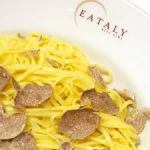 della regione sono i tajarin, simili alle tagliatelle. Vengono usati solo tuorli e farina per questi sottili nastri color zafferano. Un’altra pasta dorata (cioè all’uovo) regionale sono gli agnolotti al plin, piccoli ravioli delicati, ripieni di carne, verdure o formaggio. Una delle ricette più famose sono gli agnolotti al plin conditi semplicemente con burro e salvia.
 Il Piemonte è anche famoso per molti deliziosi dolci, come il bonet, la panna cotta e lo zabaione, quest’ultimo una ricca crema dolce fatta con vino Marsala e tuorli d’uovo. Le pesche ripiene, un’altra specialità, sono riempite di cioccolato e amaretti, poi cotte in forno. Ma forse i dolci più rappresentativi della regione sono quelli a base di nocciole. Tutto è iniziato dopo la seconda guerra mondiale, con l’idea di inserire le nocciole tritate al cioccolato per preparare la crema gianduja, precursore della Nutella.
 Oggi le nocciole sono utilizzate per molti dolci piemontesi locali, dai baci di dama al torrone, alla torta di nocciole. Le noci delle Langhe hanno ricevuto la designazione europea Igp (indicazione geografica protetta), il che significa che solo i prodotti di quella zona possono essere identificati come tali nel commercio. Queste nocciole sono state coltivate sin dall’antichità in un’area compresa nelle province di Cuneo, Alessandria e Asti.
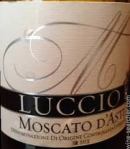 Ci sono versioni senza farina che utilizzano solo nocciole e altre versioni che usano del cacao. Ci sono anche versioni che aggiungono all’impasto due etti di amaretti sbriciolati e un bicchierino di Marsala secco. È possibile aggiungere un goccio di rhum, o una tazzina di caffè. A lavoro finito si può gustare la torta spolverandola di zucchero a velo e accompagnandola con dello zabaione caldo o della panna montata. Infine un altro ottimo abbinamento è con un buon bicchiere di Moscata d’Asti.
 panna cotta, and zabaione, a rich custard made with Marsala wine and a decadent number of egg yolks. Pesche ripiene are baked peaches filled with chocolate and amaretti. But perhaps the desserts most representative of the region are those made with hazelnuts. It all started with the idea after World War II of incorporating chocolate into pulverized hazelnuts to make the gianduja paste, a forerunner of Nutella.

