
In the following post, I have borrowed generously from an opinion piece in the New York Times from July 2020, and I have added my own thoughts and observations.
Italy was the first Western nation to experience a major wave of the Covid-19 pandemic. Hospitals became overwhelmed, and the initial death toll was terrible. But then Italy moved quickly to do what was necessary to deal with the coronavirus. It instituted a very severe lockdown and kept to it. You may remember the videos on social media of mayors of Italian towns and cities who walked out into their communities and pleaded, exhorted, and even screamed at citizens to stay home; they were funny, but also deadly serious. After a few weeks, cases peaked, and then the numbers began a steep decline.
In the United States, cases plateaued for a couple of months. States started to reopen, and then cases began to rise rapidly. Death rates followed. The numbers got frighteningly out of hand, particularly in the south. Too many Americans arrogantly thought that “If Italy can do it, we can do it better. We are the largest and strongest nation on earth.”
It is true that Italy has some major disadvantages compared to the United States. The economy has been stagnant for some time; the country is deeply in debt and without its own currency cannot print money to extricate itself. The ratio of seniors to working-age adults is among the highest in the Western world. And in facing a new phenomenon like a pandemic, Italy is not known for its bureaucratic efficiency nor for its citizens’ willingness to follow the rules. Those may be national stereotypes, but look whose citizens actually defied stay-at-home orders and mask wearing in the name of individualism? Whose citizens defiantly and selfishly said, “Nobody can tell me what to do”?
Italy has one huge advantage that the United States lacks: Leadership. The Prime Minister and the Government took the pandemic seriously: they quickly initiated policies, like the auto certification forms to leave home during the lockdown. Government aid helped to sustain workers and businesses. Pandemic supplies were mobilized. Of course, there were flaws in the response, but even the Prime Minister apologized to the country for delays in aid and took steps to resolve the problem.
Not so in the United States. The response, if you can call it that, from the President has been abysmal. First, he denied that there was a pandemic, then he said it would go away. Then he advocated phony remedies like ingesting bleach. He didn’t listen to top scientists and epidemiologists. He still doesn’t. He insisted on reopening before it was safe. He wouldn’t wear a mask. He has tied funding to the states based on reopening the schools. Empathy for those who have suffered—none.
Plan A was to get the economy going again; when that didn’t work, there was no Plan B. Now Americans can look longingly at Italy’s success in containing the coronavirus. Restaurants and bars are open there, albeit with restrictions, and much of normal life has returned. Italy’s numbers are a tiny fraction of those in the United States. We have become a pathetic figure on the world stage.
But we must not be paralyzed. The election is less than 100 days away. We must each do an active part to ensure that Trump is not re-elected. I am supporting the Lincoln Project, whose goal is defeat Trump and Trumpism. Ironically, it was started by Republican campaign operatives who share in this one iron-clad goal. Their ads are brilliant and tough and can be viewed on YouTube. It is not hyperbole to state that Trump is an authoritarian dictator. He must be removed from office.
 Si potrebbe pensare che il pane raffermo sia abbastanza comune negli Stati Uniti, visto che è necessario comprare intere pagnotte di pane. In Italia ciò non è “obbligatorio”, perché quando si va in panetteria si può richiedere la quantità desiderata e perfino la parte che si preferisce, quello con il bordo croccante o la parte centrale più morbida. Naturalmente si paga a peso.
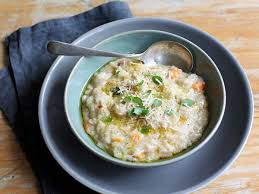 Per un piatto come il Pancotto, una zuppa di pane toscana, c’è probabilmente una ricetta diversa in ogni casa. Alcune più semplice, altre più elaborate e con più ingredienti. Si può usare brodo vegetale invece di acqua, aglio a piacere, aggiungere peperoncino e broccoli, o forse aggiungere pancetta tritata su un soffritto di carota, sedano e cipolla. L’importante comunque è il pane secco.
 Agli americani piace, ma non sempre la fanno molto bene, la Bruschetta. Ciò che mi attrae di più della bruschetta è il contrasto della consistenza, dallo scrocchio iniziale del primo morso alla polpa succosa del pomodoro, fino alla soffice mollica interna. Consigli? Tagliare il pane di circa due o tre centimetri di spessore, tostarle, quindi passarvi, strofinando, il pomodoro fresco maturo e versarvi abbondante olio d’oliva, sale e basilico.
 Gli americani potrebbero chiamare i Crostini alla Romana la versione italiana della colazione a base di pane tostato francese. È fatto con pane raffermo imbevuto di latte, fritto in padella e
  quindi condito con mozzarella e acciuga. Tornando in Toscana, la Ribollita è una zuppa densa, ricca di verdure, fagioli e pane raffermo. La
  Panzanella è invece un’insalata fresca di pane, che si consuma in estate, condita con diverse verdure di stagione: generalmente cetrioli, pomodori, cipolle rosse e basilico, i celebri colori dl’Italia.
 raffermo è la Pappa al Pomodoro. La ricetta risale probabilmente alla fine del XIX secolo, quando i pomodori divennero un ingrediente base per salse e molti altri piatti. La pappa può essere consumata calda, tiepida o fredda. Ed è semplice – pane toscano raffermo, pomodori, aglio, basilico, olio d’oliva, sale e pepe – può diventare un piatto eccellente se gli ingredienti sono di alta qualità. Si dice che abbia avuto origine a Siena, e se chiedi a qualche toscano, probabilmente non sarà disposto a svelare i propri piccoli o grandi segreti. Ad Arezzo, questo piatto viene preparato usando la cipolla anziché l’aglio, in altre zone invece si usano entrambi.

