For centuries, pilgrims from all over the world came to the Tuscan town of Lucca to pray before one of Christendom’s most treasured relics—an eight-foot-tall (247 centimeters) wooden crucifix known as the Volto Santo di Lucca. Like the Shroud of Turin, the Volto Santo is regarded as one of the true icons of Christ. By the late Middle Ages, it was well known throughout Europe. “By the face of Lucca” was an oath sworn by William II of England, and it is even mentioned in Dante’s Inferno.
According to legend, the Holy Face was sculpted by Nicodemus who, in the Bible, helped to prepare and place the body of Christ in the tomb. Nicodemus fell asleep before he had finished the face. When he awoke, he found that it had been completed by an angel. In the 8th century, an Italian bishop, guided by a dream, discovered it in a cave on a pilgrimage to the Holy Land. The crucifix was put on a ship with no sails or crew and miraculously set sail for Italy. It first came to the port of Luni in eastern Liguria. The attempts of the inhabitants to take possession of the boat were useless. Following a visit by an angel in a dream, the bishop of Lucca went to the port, and the boat revealed to him its precious cargo. A dispute arose between Luni and Lucca over the right to receive such a gift. The bishop gave Luni an ampoule with the blood of Christ, and the Holy Face thus went to Lucca.
Over time, many art historians came to believe that the current crucifix in the San Martino cathedral in Lucca was a 12th century copy of the lost or destroyed 8th century original. As part of the commemoration of the 950th anniversary of its foundation, the cathedral recently authorized a scientific study of the crucifix to determine its age. The tests were carried out with the Carbon 14 method at the Florence headquarters of the National Institute of Nuclear Physics. This method is best known for dating material of organic origin, such as wood and fabrics. Samples were taken from the crucifix—withdrawals of a few milligrams of material in several places—from the wood and also from a stratum of canvas on the sculpture. Canvas gives a more accurate dating because wood could have ben cut years before it was carved.
The results indicate that the crucifix dates between 770 and 880 AD. Therefore, this remarkably preserved sculpture of Christ with downcast eyes and wearing a colobium, an ankle-length tunic, is now the oldest surviving wooden carving in Europe and the West. Wood is far more perishable than bronze or marble; wooden statues of around 1,000 years of age are very rare indeed.
 In Lucca, celebrations will continue, including the annual candlelit procession, the Luminara, which is devoted to the Holy Face on September 13. The procession, which no longer includes the sculpture as in the past, proceeds to the cathedral from the Basilica of San Frediano, where a fresco cycle commemorates the legend of Nicodemus sculpting the image. The Holy Face is the symbol of the city of Lucca today and the pride of a city-state that remained an independent republic for seven centuries.
 Era il 1988, quando Francesco Lotoro, pianista e compositore di Barletta in Puglia, venne a conoscenza della musica composta nei campi di sterminio. Sentì che questa musica doveva essere ascoltata e si imbarcò in un progetto molto ambizioso per raccogliere tutto quello che potesse trovare. Più di 30 anni dopo è riuscito a costruire una cittadella, conosciuta formalmente come l’Istituto di Letteratura Musicale Concentrazionaria, per ospitare e suonare le oltre 8000 opere che ha raccolto e catalogato.
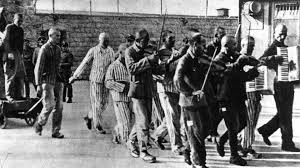 ricordare le loro vite precedenti e commentare le proprie esperienze. Fare parte di un’orchestra in un campo di sterminio permise di salvare alcune vite, anche se l’esperienza era per lo più umiliante. I musicisti erano costretti a suonare la “musica di comando”, mentre i prigionieri venivano fatti marciare ai lavori forzati ed erano anche costretti a suonare concerti per gli ufficiali delle SS e per i “dignitari” in visita. Solo quando i prigionieri suonavano musica di propria iniziativa provavano consolazione, sostegno e speranza.
 spartiti originali o stampati rubati dai nazisti.
 città di Barletta ha donato un sito di due acri, una ex-distilleria di brandy abbandonata e sta anche fornendo ulteriori 2,4 milioni di euro per la costruzione di un hotel con 30 camere nelle vicinanze per studenti, studiosi e altri per studiare la musica. Finora il governo italiano ha fornito fondi per 4,45 milioni di euro e Lotoro spera di ricevere fino a 32 milioni di euro in più. Sta anche raccogliendo fondi attraverso una campagna internazionale di raccolta fondi.