
The next 3 posts will focus on Pompeii, one of the world’s foremost archaeological sites. Today’s post describes the serious deterioration of the area in recent decades. Next week’s post will explain the Great Pompeii Project and what is being discovered about Roman life at the time of the eruption of Vesuvius, and the final post will describe specific discoveries unearthed in 2018.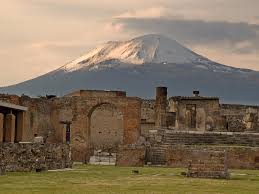
The eruption of Mount Vesuvius in 79 A.D. is probably the best-known natural disaster of all time. The ancient Roman city of Pompeii, along with Herculaneum and surrounding areas, was buried under 13 to 20 feet of volcanic ash and pumice. Most, if not all, of the 11,000 inhabitants in this region of the Bay of Naples, were entombed.
From a distance, Pliny the Younger provided the only surviving witness account of the eruption. He described an apocalyptic scene in which the sun went out “like a lamp” and “you could hear the shrieks of women, the wailing of infants, and the shouting of men.” He wrote of his uncle Pliny the Elder, a Roman admiral, who died trying to rescue the citizens of Pompeii.
 People close to the blast died hunched in the same positions in which excavators found them centuries later. Objects buried in Pompeii were well preserved for nearly 2 millennia because of the lack of air and moisture. Once organized excavations began in the 18thcentury, the site provided a wealth of material on the daily lives of these Romans. However, once exposed, Pompeii has been subject to both natural and man-made disasters, which have caused extensive deterioration.
Since the mid 19thcentury, 4 major earthquakes rocked the Bay of Naples. Allied bombings in 1943 crippled important buildings. Poor methods of excavation and reconstruction, particularly from firms controlled by organized crime, wreaked more damage than the bombs. Erosion and flooding ate away at the foundations. Budget cuts and economic meltdowns derailed repairs and restorations.
Vandalism and theft have taken a serious toll on the treasures of Pompeii. Illegal tunnels were dug to remove precious art and artifacts. In fact, in 2018, Italy’s elite squad of carabinieri assigned to protect the country’s cultural heritage, conducted a raid on a warehouse in Geneva, Switzerland. They recovered fragments of Pompeii frescoes that had been chipped off walls probably in the 1990s.
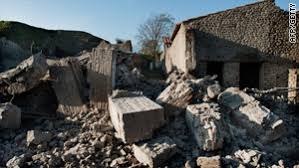 By the end of 2010, when the “House of the Gladiators” suddenly collapsed, only 13% of the site’s excavated acres were accessible to visitors. From 64 buildings open to the public in 1956, the number had been reduced to 10. “Pompeii faced acute crises on every level,” says Professor Massimo Osanna, an archaeologist who was appointed Superintendent of Excavations in 2014. “Nothing less than a total restructuring and reorganization could turn things around.”
 As perhaps the most important archaeological site in the world, Pompeii was too important to be abandoned. Despite years of abuse and neglect, it is still the fifth most visited ancient site on earth (exceeded only by the Great Wall and Xian’s terracotta army in China, and by the Coliseum and Forum in Rome). It attracts nearly 3 million visitors a year. It is a UNESCO World Heritage site. Yet in 2013 UNESCO declared that if restoration and preservation projects failed to make significant progress in 2 years, Pompeii would be placed on the List of World Heritage in Danger.
Something had to be done.
 “Nessuno mi sbarazzerà di questo prete turbolento?” Questa è una delle citazioni più famose che ci è pervenuta attraverso la tradizione orale. Oggi è spesso adattata nella moderna vita politica e nella lotta politica. Sebbene apocrifa, è originariamente attribuita al re Enrico II nel suo conflitto con l’arcivescovo di Canterbury che alla fine portò all’omicidio del prelato.
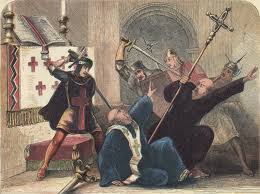 schierò contro gli interessi del re, che includevano il tentativo di stabilire la giurisdizione dei tribunali secolari sul clero. Il conflitto si intensificò e Becket scomunicò il clero che si opponeva a lui. Frustrato, il re pronunciò le parole apocrife che portarono quattro dei suoi cavalieri ad accoltellare a morte l’arcivescovo nella cattedrale di Canterbury nel 1170.
 insanguinata dell’arcivescovo, con l’obiettivo di ingraziarsi l’allora pontefice affinché canonizzasse Enrico VI. Ma poi Enrico VIII nel 1532 proclamò lo scisma da Roma. Il santuario di Becket a Canterbury venne distrutto e le ossa del santo disperse. La tunica rimase per secoli a Roma, fino ad oggi, nella Basilica di Santa Maria Maggiore.
 preparazione per l’850esimo anniversario dell’uccisione dell’arcivescovo. Una serie di celebrazioni è prevista per il 2020, tra cui una grande messa interconfessionale fra gli anglicani e cattolici e una mostra di oggetti e reliquie appartenuti a Becket. Un giornale britannico ha riferito che la Basilica è in favore di prestare la reliquia all’Inghilterra, ma l’approvazione finale deve venire dal Ministro della Cultura del Vaticano.
 La storia del re Enrico II e Thomas Becket è stata fonte di ispirazione artistica e letteraria che inizia nel 1392 con “Canterbury Tales” di Geoffrey Chaucer, una raccolta di 24 storie sui pellegrini che viaggiarono da Southwark al santuario di
  Thomas Becket nella Cattedrale di Canterbury. Nel 1884 il poeta inglese, Alfred, Lord Tennyson, scrisse l’opera teatrale, Becket,sulla famosa relazione. L’opera di Jean Anouilh, Becket,fu scritto nel 1959. Altri adattamenti moderni includono il film del 1964 con Richard Burton e Peter O’Toole, e il romanzo di Ken Follett, The Pillars of the Earth.
 Molte interpretazioni includono la supposta richiesta retorica del re Enrico II. Uno che non era il dramma in versi di T.S. Eliot, Murder in the Cathedral, eseguito per la prima volta nel 1935. Si tratta dell’’opposizione di un individuo all’autorità, lo spettacolo è stato scritto al tempo del fascismo in aumento in Europa centrale. Eliot attinse pesantemente dalla scrittura di Edward Grim in latino, un biografo che fu testimone oculare dell’evento nel 1170. Secondo Grim, scrivendo in latino, le parole del re erano “quali miserabili droni e traditori ho nutrito e allevato nella mia famiglia chi lascia che il loro signore sia trattato con un tale disprezzo da parte di un chierico di basso livello? ” Anche se questa citazione non ha lo spirito di quella tramandata dalla tradizione orale, quello che rimane oggi come spunto di riflessione è come le parole senza pensieri dei potenti possano armare la mano dei fanatici.

