
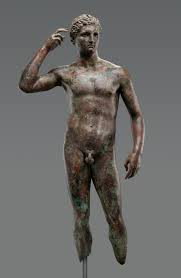
 I have written several posts about a favorite topic—art, stolen art, repatriated art, and the thorny questions surrounding who “owns” the patrimony of the art world. Now a new controversy has emerged…again between Italy and the United States. Actually, it’s not new…it’s been an ongoing controversy between the Italian government and the J. Paul Getty Museum in Los Angeles over what is now called the Getty bronze.
In 1977 the Getty Museum purchased a bronze statue called the “Victorious Athlete” from an antique dealer in Germany for $3.95 million. It is a life-size athlete crowned with an olive wreath possibly by Lysippus, a Greek sculptor from the  4thcentury B.C. (More recent scholarship has dated it to the second or third century B.C.) Life-size bronzes are very rare and this is one of the finest from the Classical era. It has been the centerpiece of the Greek and Roman antiquities collection at the museum in Malibu for the past 50 years.
Since 1989 Italy has asked the Getty to return the statue to Italy, and the Getty Museum has declined. Here’s the story. The statue was probably fashioned in Greece and was lost at sea after being stolen by the Romans. The bronze was retrieved from Adriatic waters by Italian fishermen in 1964. They realized the value of their discovery, brought it to shore in Fano (Le Marche), and buried it in a cabbage field, awaiting the right buyer. The statue was sold several times after its discovery and may have been smuggled out of Italy illegally and hidden at various points in a bathtub and even in a convent.
Before the Getty purchased the bronze in 1977, it undertook a comprehensive, five-year effort to determine that the statue could be purchased legally and in good faith. The  review included analysis of international, Italian, American, and California law, including the 1968 ruling by Italy’s highest court, the Court of Cassation, which stated that there was no evidence that this statue belonged to the Italian state. In 1973, acting on a request from Italy, German police initiated an investigation into whether the German dealer had received stolen goods. The investigation was dropped for lack of evidence of wrongdoing.
Why then is Italy so insistent that the Victorious Athlete be returned to Italy? In December 2018, the Court of Cassation decided that the museum must forfeit the bronze. While there was no published ruling explaining the reasoning, Italy believes that the statue was found in Italian territorial waters and was illegally exported from Italy, conclusions that run contrary to the Court’s 1968 ruling. Italy also believes that the statue was culturally and administratively Italian when it sank.
The Getty, on the other hand, believes that the statue was retrieved from international waters, was created outside of Italy, and is not an Italian object subject to repatriation. Furthermore, the Getty maintains that it acted in good faith and relied on a decision of Italy’s highest court when it was purchased. This case has dragged on for 10 years, and the battle isn’t over.
 The Getty must also feel a little underappreciated. In 2007, the Getty returned 40 works of art to Italy that may have been illegally acquired, including an enormous statue of Aphrodite (see “The Controversy over who owns the world’s art” post of October
  1, 2015). In 2016 it returned the terracotta Head of Hades to Sicily (see “Underworld” post of April 21, 2016), and in 2017 it repatriated a marble statue of Zeus (see “The Statue of Zeus Enthroned” post of July 13, 2017). In addition, the Getty has trained Italian scholars, curators and conservators, and provided
 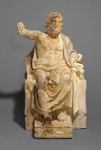 millions of dollars in support of Italian cultural organizations. In the case of the bronze, the Getty says it will continue to defend its legal right to the statue because the law and facts do not warrant restitution.
Respectable museums today do not retain works that were stolen or transferred in violation of international law. Due diligence requires, at a minimum, documentation of where it was discovered in modern times and its subsequent movement across national borders. Applying these standards is not always easy.
Stay tuned…
 Nei secoli XVII e XVIII, i più celebrati liutai di tutti i tempi lavoravano a Cremona in Italia. I nomi di Amati, Guarneri, e soprattutto Stradivari definiscono l’eccellenza nella costruzione di strumenti a corde e l’apice della produzione sonora. Come Antonio Stradivari e gli altri liutai del periodo creassero questi strumenti dal suono così straordinario è un mistero insolubile. Per centinaia di anni, gli scienziati hanno cercato di scoprire i segreti che stanno dietro alla loro manifattura. Le ricerche hanno studiato tutto, dai tipi di legno utilizzato, all’impatto del tempo sul legno, alle sostanze chimiche usate per proteggere gli strumenti contro i tarli, all’effetto delle decorazioni sulla produzione del suono. Queste teorie sono interessanti ma inconcludenti (vedete il post, “Il mistero di Stradivari,” dal 21 luglio 2016).
 Oggi Cremona presenta il Museo del Violino, che ospita alcuni dei migliori violini, viole e violoncelli creati dai maestri. Sono conservati con cura in teche di vetro, visibili ma non toccabile. Nel gennaio 2019, sono usciti dalle teche ed erano stati suonati da musicisti attentamente selezionati come parte di uno straordinario progetto per preservare il suono dei migliori strumenti a corde del mondo.
  Chiamato il “Stradivarius Sound Bank”, questo progetto è progettato per catturare i toni creati dagli strumenti della collezione del Museo del Violino. Secondo il curatore del museo, Fausto Cacciatori, ogni Stradivari ha “una sua personalità”. Ma i loro suoni distintivi cambieranno inevitabilmente e andranno persi nel giro di pochi decenni. “Fa parte del loro ciclo di vita”, ha aggiunto. “Li preserviamo e li ripristiniamo, ma dopo aver raggiunto una certa età, diventano troppo fragili per essere suonati e ‘vanno a dormire’, per così dire”.
 Ecco come il Stradivarius Sound Bank è stata concepito ed è condotto (come riportato nelle pubblicazioni italiane e nel New York Times) … con alcune sorprese lungo la strada. Tre ingegneri del suono hanno voluto creare un database di tutti i suoni possibili che gli strumenti Stradivarius possono produrre. Ciò non solo permetterebbe alle generazioni future di ascoltare questi strumenti, ma il database potrebbe essere manipolato per produrre nuove registrazioni quando il tono degli strumenti originali si sarebbe degradato. I musicisti del futuro sarebbero anche in grado di registrare una sonata con uno strumento che non funziona più. Questo sarebbe un modo per rendere immortali i migliori strumenti mai realizzati.
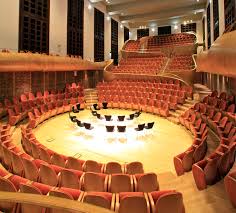 corde di 500 anni”, ha affermato. Poi hanno dovuto trovare i migliori musicisti che conoscessero gli strumenti perfettamente. Poi, l’acustica dell’auditorium nel museo dove avrebbero suonato è stata studiata. Trentadue microfoni ultrasensibili sono stati installati nell’auditorium per catturare i suoni dei 4 strumenti selezionati (2 violini, una viola e un violoncello). Nel 2017 gli ingegneri hanno pensato che il progetto fosse finalmente pronto per iniziare. Ma un controllo di suono ha rivelato un problema enorme.
 Foundation, l’ente municipale che possiede il museo. Il 7 gennaio le strade attorno al museo sono state chiuse per cinque settimane. Le strade nel vivace centro della città sono state isolate e il traffico è stato dirottato. In una conferenza stampa, Galimberti ha implorato i cittadini di evitare qualsiasi rumore. Anche a coloro che vivevano in appartamenti vicino alla piazza del museo veniva chiesto di camminare scalzi e di astenersi dal picchiare sui piatti e pentole in cucina. Un rumore improvviso e inaspettato avrebbe potuto persino una visita dalla polizia locale. All’interno dell’auditorium del museo, i sistemi di ventilazione e ascensore sono stati disattivati. Ogni lampadina nella sala da concerto è stata svitata per eliminare il debole ronzio.


