
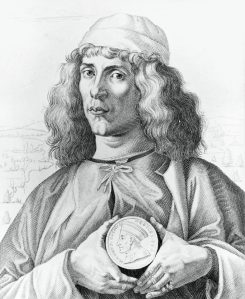
 Who killed Giovanni Pico della Mirandola? How? And why? These questions have stumped investigators since the Renaissance philosopher’s death at the age of 31 in August 1494. Even in the 21st century, new, but not necessarily conclusive, light has been shed on the shadowy circumstances at the nexus of Medici power, papal authority, and fundamentalist religious hysteria.
But first, who was Giovanni Pico della Mirandola? Even by the high standards of the Renaissance, Pico was “off the charts” in the breadth and depth of his knowledge, philosophy and writings. By the age of 20, he had studied Latin, Greek, Hebrew, Arabic, Aramaic and Chaldean at the universities of Bologna and Ferrara. At age 23 he wrote 900 Theses on religion, philosophy and magic. Soon thereafter he wrote Oration on the Dignity of Man, which is also called the “Manifesto of the Renaissance.” He had a prodigious memory. He could recite Dante’s Divine Comedy backward, starting with the last line of Paradiso.
 It was Pico’s theology and philosophy that set him apart then and seem so relevant today. To him walls did not separate Christianity, Judaism, Islam and pagan antiquity. Religions existed together, and each contributed unique thoughts. He was the founder of the tradition of Christian Kabbalah, which is the foundation of mystical religious interpretations within Judaism. In their 2014 book, “Giovanni Pico della Mirandola: Myth, Magic, Kabbalah,” scholars Giulio Busi and Raphael Ebgi focus on Pico’s intellectual and moral range, his challenge to the Church, his relationship with “the mad monk” Savonarola, and his interest in the theories of Plato and Kaballah.
Herein may lie the motive for his murder and the cast of characters under suspicion, which, in turn, bring us to the 21stcentury. In 2007, the remains of Pico, along with those of the man who may have been his lover, were disinterred from the Dominican Convent of San Marco, in Florence. Both contained toxic levels of arsenic. The results confirmed the suspicion of the doctors in 1494. This should not be surprising as poison was the murder weapon of choice in Renaissance Florence.
 Then in 2013, the detective who headed the exhumation, Silvano Vinceti, called a press conference to announce that, in his opinion, Pico was assassinated on the orders of Piero de’ Medici, the son of Lorenzo the Magnificent. Vinceti claimed to possess a new witness chronicle, which was the diary of Marino Sanuto, a Venetian historian, begun in 1496. By that year, Piero de’ Medici (called “the
  Unfortunate”) and his family were in exile. Girolamo Savonarola had taken control of Florence. Fearful that the Medici would try to regain power, he arrested those with Medici connections. Dragged in for questioning was a man who confessed that two years earlier, in 1494, he had “hastened the death of his master by poisoning.” His master was Giovanni Pico della Mirandola. Vinceti was convinced that Piero de’ Medici despised Pico because he had sided with the enemy, Savonarola.
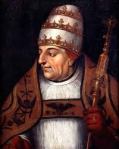 But not so fast. Scholars such as Giulio Busi (mentioned earlier) tend to dismiss Vinceti as neither a scientist nor an academic historian. They claim that the diary has long been in print and that the theory of revenge, Medici style, is at least a century old. In addition, Savonarola (and by extension, Pico) had other powerful enemies, including the Borgia Pope Alexander VI. There is also a belief that Pico’s enthusiasm of Kabbalah and magic left him susceptible to accusations of witchcraft.
Savonarola delivered “the eulogy” at Pico’s funeral. He declared that “the soul of Pico could not go to heaven at once. It was subject to a time in the flames of purgatory for certain sins.” These he failed to enumerate.
The mystery continues….
 La terza più antica azienda americana di cioccolato, La Ghirardelli Chocolate Company con sede a San Francisco, in California, è stata fondata e dedicata al
  cioccolatiere italiano Domenico Ghirardelli. Nacque nel 1817 a Rapallo, sulla Riviera italiana, in Liguria. Suo padre era un commerciante di spezie di Genova, e nella sua adolescenza, Domenico fu un apprendista presso un noto cioccolatiere di Genova. All’età di 20 anni, si trasferì prima in Uruguay e poi a Lima, in Perù, dove creò una pasticceria e iniziò ad usare il nome Domingo, l’equivalente spagnolo del suo nome italiano.
 Circa 10 anni dopo, il suo vicino di casa di Lima portò circa 275 chili di cioccolato di Domenico a San Francisco e convinse Domenico a trasferirsi a San Francisco alla ricerca della corsa all’oro. Ghirardelli aprì il suo primo negozio in un campo minerario per vendere dolci e dolcetti ai minatori. Trascorse del tempo nei campi d’oro prima di decidere di aprire un grande magazzino a Hornitos, in California, dove perfezionò le sue ricette di cioccolato tra il 1856 e il 1859. Sebbene Hornitos sia oggi una città fantasma, durante la corsa all’oro aveva acquisì una notevole notorietà. I resti del negozio di Domenico sono ancora visibili oggi a Hornitos.
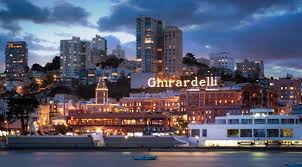 sarebbe diventata la nota Piazza Ghirardelli nell’area marina della città. Nel 1965 Piazza Ghirardelli fu dichiarata un punto di riferimento ufficiale della città. Qualche anno dopo, un operaio della fabbrica scoprì che appendendo un sacchetto di semi di cacao macinati in una stanza calda, il burro di cacao poteva fuoriuscire, lasciando un residuo che poteva essere trasformato in cioccolato macinato. Questa tecnica, nota come processo Broma, è ora il metodo più comune utilizzato per la produzione di cioccolato.
 cacao all’anno. L’azienda non vendeva solo cioccolato, ma anche caffè e spezie in Cina, in Giappone, in Messico e naturalmente negli Stati Uniti. Nel 1885 l’azienda importava ogni anno 204.000 chili di semi di cacao. Nel 1892 Domenico si ritirò lasciando la dita nelle mani dei suoi tre figli. Morì due anni dopo a Rapallo, in Italia.
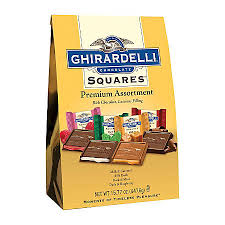 Nel ventesimo secolo, la Ghirardelli Chocolate Company non solo ampliava la sua linea di prodotti, ma è stata anche acquistata e venduta numerose volte. Uno dei loro prodotti preferiti sono le gelaterie, con la loro famosa crema calda al cioccolato fondente. Oggi è
  una consociata, interamente controllata dal pasticcere svizzero Lindt & Sprüngli. Secondo il sito web, la Ghirardelli è una delle poche aziende di cioccolato negli Stati Uniti che controlla ogni aspetto del proprio processo di produzione del cioccolato, rimandando indietro fino al 40% dei semi di cacao spediti al fine di selezionare semi di altissima qualità. L’azienda arrostisce internamente i semi di cacao, rimuovendo il guscio esterno del seme e arrostendo l’interno del seme. Il cioccolato viene quindi macinato e raffinato.
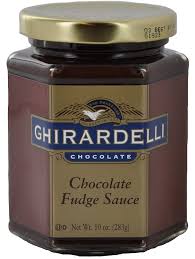 favorite products are ice cream sundaes complete with their famous hot fudge chocolate sauce. Today it is a wholly owned subsidiary of Swiss confectioner Lindt & Sprüngli. According to the Ghirardelli website, Ghirardelli is one of the few chocolate companies in the United States that controls every aspect of its chocolate manufacturing process, rejecting up to 40% of the cocoa seeds shipped in order to select the highest quality seeds. The company roast the cocoa seeds in-house by removing the outer shell on the seed and roasting the inside of the seed. The chocolate is then ground and refined.

