A Roman Classic: Rigatoni alla Zozzona

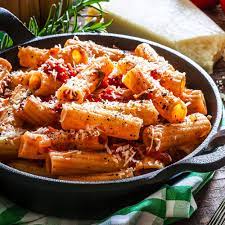
Besides such classics as artichokes and saltimbocca, the cornerstones of Roman cuisine are these pasta dishes: gli spaghetti alla carbonara, i bucatini all ‘amatriciana, and i tonnarelli cacio e pepe.  Not as well known outside of Italy are pasta alla gricia, which is like amatriciana without tomatoes, and creamy pasta alla papalina with ham.  Also in this group is rigatoni alla zozzona, which combines ingredients from the three principal classic dishes—tomatoes, guanciale, egg yolks, and Pecorino Romano cheese—plus sausage.

Mixed together, these ingredients create a robust dish that is “zozzo,” which literally means “dirty,” in Italian, but in Roman dialect means “full of good, tasty and fatty things”  Like traditional cuisine in Rome and the rest of Lazio, rigatoni alla zozzona is filling and hearty.  It is based on ingredients produced in the surrounding countryside and on the popular belief that serving sizes need to be abundant enough to feed people who once worked in the fields.

It is unlikely that rigatoni alla zozzona will be found on the menus of high-end Roman restaurants.  It is more typical fare in the trattorias of Trastevere or in the fraschette in the Castelli Romani area southeast of Rome.  Fraschette originally were taverns where people went to try new wines; lacking kitchens, they served only wines, and possibly bread and cheese.  Sometimes customers brought their own food.  Over time, stands selling food sprung up in front of the fraschette.  Today, fraschette operate more like restaurants that serve traditional Roman fare like porchetta, a local roast pork, and pasta dishes like rigatoni alla zozzona.

Here is a recipe for this pasta from the New York Times.  Some variations call for passata or peeled tomatoes instead of cherry tomatoes; almost all allow for pancetta in place of guanciale, which is sometimes difficult to find in the United States.

Rigatoni alla Zozzona

  •  Kosher salt
  • 1 pound large rigatoni
  • 2 teaspoons extra-virgin olive oil 
  • 4 ounces guanciale (or pancetta), cut into 2-inch matchsticks
  • 1 small yellow onion, minced
  • 1 pound hot or sweet Italian sausages (about 4 to 5 sausages), casings removed 
  • 2 tablespoons tomato paste
  • 3 cups cherry tomatoes (about 12 ounces)
  • 1 cup red wine
  • 4 egg yolks
  • ¼ cup grated Pecorino Romano, plus more to taste
  • 1 teaspoon freshly cracked black pepper
  1. Bring a large pot of salted water to boil. Once the water comes to a boil, cook the pasta according to package directions until al dente. Reserve ¼ cup of pasta water, then drain pasta. 
  2. Meanwhile, prepare the sauce: Add the olive oil to a deep, large skillet and heat over medium-low. Add the guanciale in an even layer and cook, stirring occasionally, until the fat renders and the strips start to crisp, about 5 minutes. Using a slotted spoon, remove guanciale to a small dish and set aside. Transfer the pan drippings to a small bowl, leaving about 1 tablespoon in the skillet.
  3. Increase heat to medium-high and stir the onion into the pan drippings, allowing it to soften, about 1 minute. Add the sausage and 1 teaspoon salt (optional) and break up the meat into small pieces. Cook, stirring occasionally, until the sausage has browned, about 5 minutes.
  4. Stir in the tomato paste, then the cherry tomatoes. Decrease heat to medium and stir in the wine. Cover the sauce with a lid and cook for 5 minutes. 
  5. Remove the lid and, using the back of a spoon, break up the tomatoes and incorporate them into the sauce. Allow the sauce to cook, uncovered, for 5 more minutes.
  6. In a small bowl, combine the egg yolks, ¼ cup cheese, the pepper and 1 tablespoon of the reserved guanciale drippings.
  7. Add the pasta and guanciale to the simmering sauce and stir to coat. 
  8. Stir 2 tablespoons of the pasta water into the egg mixture. Turn off the heat and stir the egg mixture into the pasta until coated and glossy, adding 2 tablespoons more pasta water if needed. Transfer the pasta to a serving dish and top with additional cheese, if desired.
Posted in Cucina italiana, English, Formaggio, Foto, Italia, Roma | Leave a comment

Modi di dire italiani con numeri

Le espressioni idiomatiche sono come una lingua dentro una lingua.  Per ogni paese e lingua, i modi di dire riflettono radici storiche e valori, abitudini e idiosincrasie culturali. E sono divertenti e ci si può pure riflettere.

Ci sono alcuni modi di dire italiani che hanno espressioni simili o equivalenti in inglese. Ad esempio, “one in a million” o “uno su un milione” significa una rarità o una bassa percentuale di probabilità in entrambe le lingue; “Put two and two together” o “Fare due più due” significa trarre chiare conseguenze in base alle informazioni disponibili. Grazie mille è espresso come “thanks a million” o “grazie milione” in inglese. “Due lati della stessa medaglia” diventa “two sides of the same coin” o “due facce della stessa moneta” in inglese; entrambi indicano aspetti diversi di una stessa cosa.

Ci sono molti modi di dire italiani che usano i numeri 2, 3 o 4; alcuni usano i numeri in modo intercambiabile, probabilmente a seconda della zona geografica. Ad esempio, si può dire “fare due passi” o “fare quattro passi”, come nella frase: “Dopo cena, Laura è andata a fare due/quattro passi per digerire meglio”.  Questa espressione è simile all’espressione comunemente usata, “fare una passeggiata”, spesso senza una meta.

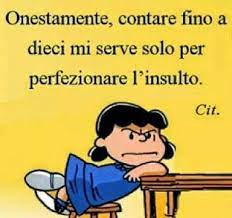
Un amico potrebbe dirti “Quando hai tempo, prendiamo un caffè e facciamo due chiacchiere”. “Fare/scambiare due o quattro chiacchiere” significa chiacchierare o parlare in modo informale e amichevole. Tuttavia, se sai che qualcuno è un pettegolezzo (chiacchierone), potresti voler parlare in privato di un argomento, e preferiresti“parlare a quatt’occhi”, e avvisarlo di non diffondere l’informazione, oppure vorresti parlare di persona con qualcuno, e non telefonicamente, per una questione importante;  non “gridare/sbandierare/strombazzare ai quattro venti”, vale a dire ai quattro punti cardinali nord, sud, est e ovest. Se lui o lei spettegola comunque, o ti ha fatto qualcosa di male, allora puoi “dirgliene quattro”, ma potresti prima voler “contare fino a dieci”.

Molti modi di dire italiani si riferiscono al lavoro duro. “Giovanna si è fatta in quattro per finire i compiti in tempo” significa che lei ha lavorato per quattro persone. “Chi ha fatto trenta può fare trentuno” è un’espressione che risale al 1517, quando papa Leone X nominò 30 nuovi cardinali e poi si accorse di aver tralasciato un uomo di tutto rispetto. Negli usi moderni, ‘Chi ha fatto trenta può fare trentuno’ significa “sei arrivato fin qui, perché arrenderti adesso?”.

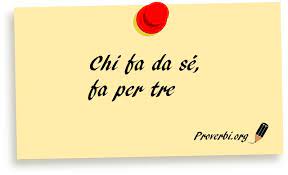
A volte diciamo in inglese “If you want something done properly, it is better to do it yourself”.   In italiano l’espressione diventa “chi fa da sé fa per tre,” che letteralmente significa qualcuno che lavora da solo, lo fa per tre persone. Se qualcuno porta a termine un compito “in less than no time”, lo fa “in quattro e quattr’otto”. E se qualcuno si è sforzato davvero tanto per fare qualcosa, quella persona può “sudare sette camicie”.

Ecco un enigmatico espressione italiana che usa un numero grande: Essere “un pezzo da novanta” (relativo a pistole e munizioni) ma si traduce come “essere un grande uomo, avere una qualità in un certo campo evidentemente spiccata”. In italiano standard è in realtà un complimento e non usato con ironia. Ma in Il Padrino, è usato in senso peggiorativo in una conversazione tra Don Corleone e suo figlio Michael:

Don Corleone: Ho lavorato per tutta la vita… e mi sono rifiutato di fare lo stupido ballando sulle corde di tutti quei pezzi grossi. Ma pensavo sempre che quando fosse arrivato il tuo momento, saresti stato tu a tenere le corde. Il senatore Corleone, il governatore Corleone, qualcosa.

Michael: Un altro pezzonovante. *

In conclusione, l’espressione “dare i numeri” oggi significa “impazzire” o “non essere abbastanza lucidi, per la stanchezza o chissà quale altro motivo”, come “perdere le biglie”:  viene da indovini che hanno usato l’astrologia e altri mezzi per prevedere i numeri della lotteria giusti da scegliere, che molto spesso si sono rivelati falsi.

*Ho sempre pensato che Michael avesse detto “Peso novanta”, “a 90-pounder” in inglese, che pensavo significasse un leggero o un uomo di poca importanza.

Posted in Abitudini, Differenze culturali, Film, Foto, Italia, Italiano, Italoamericani, La Gente, La Lingua, Mafia, New York, Sicilia, Storia, Vaticano | 1 Comment

Italian Idioms Featuring Numbers

Idioms are like a language within a language.  And for every country and language, idioms reflect historical roots, cultural habits, idiosyncrasies and beliefs.  And they are fun to ponder.

There are a few Italian idioms that have similar or equivalent expressions in English.  For example, una su un milione, or one in a million, means a rarity or low percentage chance in both languages; Fare due più due, or put two and two together, means to understand something based on information available.  Grazie mille, literally a thousand thanks, is expressed as “thanks a million” in English.  Due lati della stessa Medaglia (two sides of the same medal) becomes “two sides of the same coin” in English, but both indicate that even though two things seem different, they are the same.

There are many Italian idioms that use the numbers 2, 3 and 4; some even use numbers interchangeably, probably depending on where the idiom is spoken in the country.  For example, you can say fare due passi or fare quattro passi, as in Dopo cena, Laura è andata a fare due/quattro passi per auitare a digerire meglio, which means that after dinner, Laura went for a stroll to help digest better.  This expression is similar to the commonly used expression, fare una passeggiata, which means to take a walk, often without a destination.

A friend might say to you, Quando hai tempo, prendiamo un caffè e facciamo due chiacchiere (When you have time, let’s have coffee and a little chat).  Fare/scambiare due o quattro chiacchiere means to chat or talk informally.  However, if you know someone is a gossip (chiacchierone), you might want to talk privately about a sensitive subject or person (parlare a quatt’occhi) and warn him or her not to spread the information — Gridare/sbandiere/strombazzare ai quattro venti—literally, to spread it to the four winds, which represent the four cardinal points of north, south, east, and west.  If he or she gossips anyway, then you can tell her off –dirne quattro a lei/lui, but you might first want to count to ten (contare fino a dieci).

Many Italian idioms feature numbers that relate to working hard or efficiently.  Giovanna si è fatta in quattro per finire i compiti in tempo or Joanne worked really hard (as if she were four people) in order to finish her homework on time.  Chi ha fatto trenta può fare trentuno (literally, he or she who has done 30 can do 31) is an idiom that dates back to 1517 when Pope Leo X created 30 new cardinals and then realized he had left out a very respectable man.In modern applications, Chi ha fatto trenta può fare trentuno means “you have come this far, why give up now?” or “Go the extra mile.”

Sometimes we say in English that if you want something done properly, it’s better to do it yourself.  In Italian this becomes chi fa da sé fa per tre, which literally means someone who does work on his own, does it for three people.  If someone completes a task “in less than no time,” he or she does it in quattro e quattr’otto.  And if someone works really hard, that person can sudare sette camicie (sweat seven shirts).

Here is a puzzling Italian idiom that uses a big number:  Essere un pezzo da novanta, which literally means to be a ninety piece (relating to guns and ammunition) but translates as “to be a big shot.”  In standard Italian it is actually a compliment and not used with irony.  But in The Godfather, it is used pejoratively in a conversation between Don Corleone and his son Michael:

Don Corleone:  I worked my whole life…and I refused to be a fool dancing on the strings held by all those big shots.  But I always thought that when it was your time, that you would be the one to hold the strings.  Senator Corleone, Governor Corleone, something.*

Michael: Another pezzonovante.

In conclusion, the expression dare i numeri, which literally means to give numbers, today means “to go crazy” or “to lose your marbles.”  It comes from fortune tellers who used astrology and other means to predict the right lottery numbers to choose, which most often turned out to be false.

  • I always thought the line was “peso novanta” meaning a 90-pounder, in other words, a lightweight.
Posted in Abitudini, Differenze culturali, English, Film, Foto, Italia, Italoamericani, La Gente, La Lingua, Mafia, New York, Sicilia, Storia, Vaticano | 1 Comment