
In 1994, the Italian writer Andrea Camilleri began a series of mysteries that feature  Inspector Montalbano. At the age of 91, Camilleri has written 23 of these mysteries, about one a year. They are set in Sicily in the fictional towns of Vigàta (based on Camilleri’s home town of Porto Empedocle on the southwest coast) and Montelusa (based on Agrigento, which is famous for its Greek temples). After the first 5 books had gained much popularity in Italy, they were translated into English by Stephen Sartarelli. (I read them in English in part because the Italian version is laced with Sicilian dialect, which really is a distinctly different language.)
 Inspector Montalbano is an engaging protagonist. He is smart, decent, and loyal to the men in his department. There is humor and human nature in his character: he can be prickly in the morning, particularly if it is an overcast day; he never misses a meal (mostly of great Sicilian seafood dishes) and insists on eating in silence to focus on the food. He has a weakness for pretty women and occasionally cheats on Livia, his fiance of many years who lives in the north and with whom he often argues on the telephone and in person.
Montalbano has his own way of investigating crime, which means he sometimes deceives  his superiors, who regard him as a loose cannon. One of his stengths, however, is his ability to navigate through a murky world of shady connections and favors without compromising himself beyond what he can live with. The plots are set in the current world of economic, political, and social problems like immigration, drugs, and the mafia. In fact, Camilleri has said that social commentary “…was always my aim….I deliberately decided to smuggle into a detective novel a critical commentary on my times. This also allowed me to show the progression and evolution in the character of Montalbano.”
In 1999 episodes of the TV series, Il Commissario Montalbano, began. It is now in its 11th  season. It stars Luca Zingaretti as Inspector Montalbano and is shot almost entirely in the Sicilian city of Ragusa and surrounding towns. In 2012 Rai broadcast a prequel series, Il giovane Montalbano, starring Michele Riondino.
I have never seen the TV series but I understand that the episodes are very good. I recommend the books for bedtime and airplane reading. I hope Camilleri keeps on writing…I am up to number 19 out of 23.

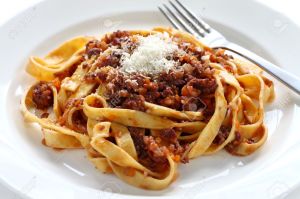 Ci sono più di 350 tipi di pasta in Italia: gli spaghetti, le orecchiette, le penne, le tagliatelle, le linguine, le farfalle, e via dicendo. Il formato va scelto in base al condimento. Quella lunga, per esempio, è adatta a sughi liquidi e cremosi, quella rigata assorbe meglio il condimento, quella corta invece è perfetta per il ragù e i sughi poco uniformi. Ci sono eccezioni: una specialità di Verona sono le tagliatelle al ragù alla bolognese. Come tutte le paste tubolari, le penne funzionano bene con sughi densi. Penne rigate detengono più salsa a causa delle creste, mentre penne lisce funzionano meglio con un condimento a base d’olio.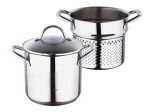
 Per 100 grammi di pasta, usate un litro di acqua e 7 grammi di sale. Per 454 grammi (one pound) of pasta, le quantità giuste sono 4.54 litri (poco meno di 5 quarts) e 31.78 grammi (poco più di 6 teaspoons) di sale. Aggiungete il sale all’inizio del bollore, mai prima né durante la cottura.
 meno. Con le lasagne, per esempio, o qualsiasi pasta al forno, è meglio bollire la pasta meno perché cuocerà più che sul fornello. E con le altre paste che saltate in padella insieme al condimento, fate finire di cuocere durante il mescolamento. Secondo lo chef Mark Ladner, che è considerato il faro dell’autentica cucina italiana a New York e osannato dai critici del New York Times, “Sono stato un fanatico della pasta e della sua precisa cottura per anni…Credo sia la postazione più difficile in una cucina perché è estremamente complicato gestire i tempi di cottura…Farò capire la squisita masticabilità di una pasta non stracotta.”
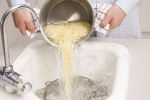 Non buttate tutta l’acqua di cottura quando scolate la pasta. Usatene un po’ quando salterete la pasta per almeno un minuto a fuoco basso con il condimento per fare amalgamare bene gli ingredienti. La quantità di acqua (tra 3 a 30 grammi) dipende dalla consistenza che volete.

