It is a black eye on America’s justice system. The story of Sacco and Vanzetti lives on and has been repeatedly revisited in the 90 years since the Italian immigrants were executed. Books, movies, and songs have kept the story of these victims alive for nearly a century. Even this year (2017), a book was published in Italy called La Marcia del dolore (The March of Pain) about their funerals.
Nicola Sacco was a shoemaker from the province of Foggia in Puglia. Bartolomeo Vanzetti was a fishmonger from Cuneo in Piedmont. In 1908, at the ages of 17 and 20 respectively, they emigrated to the United States. At his 1920 trial, Vanzetti recalls his arrival in New York on the ship La Provence: “At the immigration center I had my first surprise. The emigrants were sorted like so many animals. Not a word of kindness, of encouragement, to lighten the load of pain that weighs so much on those who have just arrived in America.” And later he wrote: “Where could I go? What could I do? This was the promised land. The elevated train that clanked overhead didn’t respond. The cars and trams passed by without a care for me.” How difficult and impersonal was the new life of immigrants in America.”
Both men were anarchists who advocated against violent and repressive government. They ended up in Boston and met each other in 1917 at a strike. Then in 1920 the Slater and Morrill Shoe Company in Braintree, Massachusetts was robbed and two men (a security guard and a paymaster) were shot and killed. In 1921, after a few hours’ deliberation, a jury convicted Sacco and Vanzetti of first-degree murder based on flimsy and circumstantial evidence. They were sentenced to death.
Appeals followed for 7 years. They were based on recanted testimony, conflicting ballistic evidence, a prejudicial statement by the jury foreman, and even a confession by a known gangster who admitted to the robbery. The judge, who repeatedly called Sacco and Vanzetti “bastards” throughout the trial, denied all appeals.
The 1920s was an era of political terror, of the “red scare.” Fear and prejudice were rampant, particularly for anarchists and immigrants. Yet, the case drew world-wide attention and became one of the largest causes célèbres in modern history. Protests were held in every major city in North America and Europe, as well as Tokyo, Sydney, São Paulo, Rio de Janeiro, Buenos Aires, and Johannesburg. Intellectuals like Albert Einstein and Bertrand Russell supported the cause. Even Benito Mussolini, despite a differing political ideology, advocated that their lives be spared. But all initiatives failed: Sacco and Vanzetti died in electric chairs in1927. More than 400,000 people turned out for the funeral wearing bracelets that read “Justice Crucified: Remember August 23, 1927.”
Here is Bartolomeo Vanzetti’s last statement before his death: “If it had not been for these things, I might live out my life talking at street corners to scorning men. I might have died unmarked, unknown, a failure. Now we are NOT a failure. Never in our full lives can we hope to do such work for tolerance, for justice, for man’s understanding of man, as now we do by accident. The taking of our lives—lives of a good shoemaker and of a poor fish peddler—all. That last moment belongs to us. That agony is our triumph.”
Fifty years after their deaths, Michael Dukakis, the governor of Massachusetts in 1977, issued a proclamation that Sacco and Vanzetti had been unfairly tried and convicted and that “any disgrace should be forever removed from their names.”
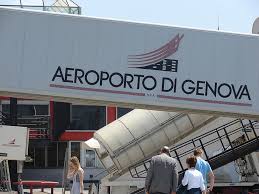 Tutti noi conosciamo la frustrazione di ritrovarsi con liquidi di oltre 100 ml confiscati al checkpoint di sicurezza all’aeroporto – dal dentifricio, profumo, bottigliette di acqua, alle lozioni per le mani. All’aeroporto Cristoforo Colombo di Genova, il pesto è uno dei prodotti più comuni vengono sottratti ai viaggiatori, spesso turisti che vogliono portare a casa uno dei gusti iconici della Liguria. Vengono gettati circa 500 vasetti ogni due o tre mesi.
 Grazie ad un’iniziativa dell’aeroporto di Genova, il pesto – un sugo fatto di basilico, pinoli, aglio, olio di oliva, e parmigiano – può adesso viaggiare in cabina insieme a voi. L’iniziativa è nata dalla sinergia di tutti gli enti coinvolti allo scopo di promuovere le eccellenze gastronomiche locali ed evitare gli sprechi. Se state partendo da Genova e volete portare un vasetto di 500 ml di pesto nel bagaglio a mano, ecco che cosa dovete sapere:
 supermercato. Può essere pesto casalingo o pesto acquistato in botteghe e negozi. Poi deve riportare l’etichetta, “Pesto è buono”, che può essere richiesta nei negozi convenzionati o alla biglietteria dell’aeroporto. Il costo di circa 50 centesimi è donato a Flying Angels, un’organizzazione di beneficenza dedicata al trasporto in volo di bambini malati dai paesi in via di sviluppo negli ospedali in tutto il mondo, tra cui l’ospedale pediatrico Giannina Gaslini a Genova.
 Fino ad ora gli unici liquidi di oltre 100 ml che potevano essere portati a bordo erano il latte materno e le medicine. A quell’elenco critico ora aggiungiamo il pesto. Un’idea molto innovativa, o, come ha detto un giornale locale, “Solo a Genova”.