In September 2017, the bronze statue of Father Junipero Serra was decapitated and smeared with red paint at the Santa Barbara Mission. It’s not the first time in California. Several weeks before, monuments of confederate general were destroyed in southern states. And recently, busts of Christopher Columbus were decapitated in New York City, Yonkers, Detroit, Lancaster, Columbus, and San Jose, and protests against the Genovese explorer broke out in various states.
Like the confederate flag, these are symbols that represent slavery and / or the cruel treatment of indigenous people and are no longer politically correct. When the Pope made Father Serra a saint, it was very controversial and he didn’t dare come to California to celebrate.
 What about the statues of Columbus and the festivities of Columbus Day? In New York City, mayor Bill De Blasio, an Italian-American (who was born with the name Warren Wilhelm Jr, but then chose the surname of his grandfather, Giovanni De Blasio) included the monument of Columbus, one of the symbols of the city in Columbus Circle, on the list of monuments to tear down. It’s discriminatory, he says. In fact, the mayor appointed a commission to examine monuments in the city that could instigate hate, division, racism, and anti-Semitism.
 I understand that the Italian navigator was not a nice person, but I have to admit that I feel a little nostalgic. The statue is found in front of the main entrance to Central Park on 59th street. It was
  erected in 1892 on the 400th anniversary of the discovery of America. Columbus Circle is the point where official distances are measured to and from New York City. As a child, Columbus Day was a school holiday, and the parade in New York was always so festive and colorful.
To tear down statues does not rewrite history. One cannot pretend that the past doesn’t exist. But statues have been destroyed for centuries in many countries.  Therefore, I did a little research. For example, what did Russia do about its Soviet past? Stalin buildings are difficult and costly to remove, but statues have little practical value. Moscow removed many from public spaces, but then gathered them in a garden and gave them an historical context with explanatory plaques. The purpose was not to glorify the past, but to document it.
What about Germany under Hitler and its Nazi past? The swastika has been banned in Germany since 1949. The government has eradicated memorials and architecture from the Nazi period.  Hitler’s bunker is now under a parking lot but has an identifying plaque. The headquarters of the Gestapo is now a museum called “The Topography of Terror.” Germany had to free itself of these symbols to be considered a valid nation. German students spend part of every year learning about the atrocities of Nazi Germany and are required to visit at least one concentration camp before they graduate.
What about Mussolini? His legacy lives on throughout Rome. He and a team of architects constructed many buildings, including sports complexes, post offices, apartment buildings, and schools; they remade the road system. These improvements would be difficult and costly to eradicate. Certainly, there is a commemorative plaque in the Milan piazza where Mussolini and his mistress were hanged. I am not sure about statues of the dictator except for one that I read about recently. Apparently in a small Italian city, a bust of Mussolini was for years overgrown with plants and trees. When it was discovered recently, the citizens thought that they might have a tourist attraction on their hands.
 Now, what about Columbus Day in America? Columbus Day, which falls on the second Monday of October, has different meanings for different people. It was celebrated for the first time in New York City in 1866 and became a federal holiday in 1937. Celebrations vary throughout the country from large parades to nothing. While it celebrates the “founding” of America, it has also become an occasion for Italian-Americans to celebrate their heritage. Now many cities are abolishing it. Los Angeles has substituted “Indigenous
  and Native People Day,” a festival of indigenous, aboriginal, and native populations who were victims of genocide. In my opinion, this is appropriate; Italian-Americans still have the Feast of San Gennaro, Ferragosto, and other days to celebrate their history. And personally, I believe that the confederate flag belongs only in a museum and should not fly on public and government buildings in the South.

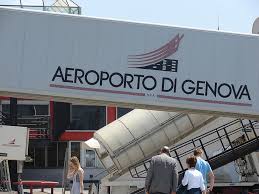 We all know the frustration of having liquids of more than 100 ml (3.5 ounces) confiscated at security checkpoints at the airport—everything from toothpaste to cologne, from water to hand lotion. At the Cristoforo Colombo airport in Genoa, pesto is one of the most common things separated from owners, often tourists who want to take home an iconic taste of Liguria. About 500 jars are thrown away every couple of months.
 Thanks to an initiative of the Genoa airport, pesto — a sauce made from basil, pine nuts, garlic, olive oil, and parmesan — can now travel in the cabin with you. The initiative arose from the synergy of many entities involved in the goal of promoting local gastronomic excellence and preventing waste. If you are departing from Genoa and want to take a 500 ml (about 16 ounces) jar of pesto in your hand luggage, here is what you need to know:
 First of all, it must be genuine pesto Genovese, not some mass-produced stuff bought at a supermarket. It can be homemade or acquired in small shops and stores. Then it must bear a label,
  “Pesto is good,” which can be bought at participating stores or at the ticket counter at the airport. The cost of about 60 cents is donated to Flying Angels, a charity dedicated to flying ill children from developing countries to hospitals around the world, including Giannina Gaslini pediatric hospital in Genoa.