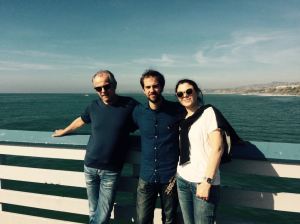
Cesare, Tommaso, and Agnese in Santa Barbara
Agnese and Cesare Maganzani recently came to California for the wedding of one of their sons, Nicolò. The other son Tommaso is a pianist friend of Jacopo Giacopuzzi, whom I have often mentioned in my posts. The entire family is delightful; Agnese and Cesare shared with us the story of their award-winning gelateria, one of the very best in Italy!
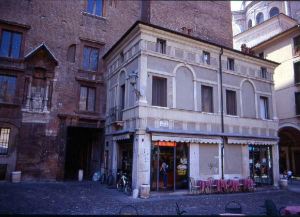
Cesare and Agnese founded the gelateria “Loggetta” in 2013 in the Renaissance city  of Mantua, which is located in the Lombardy region about 40 kilometers (25 miles) south of Lake Garda and Verona. It is in a beautiful building in Piazza Broletto, where long lines form to taste their artisanal creations. Less than 10% of Italy’s gelaterias are artisanal, but here you will find everything is made by hand using traditional methods.
 Cesare is head of production in the laboratory on the second story of the facility. He buys all the ingredients and uses only fresh products of high quality. As a perfectionist, he never uses chemical substances harmful to one’s health and he never uses prepared pastes or powders. He maintains the highest quality standards; he uses only fresh fruits of each season, and he uses as little sugar as possible in his recipes.
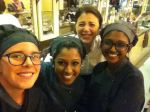 Agnese, who has a radiant smile, is the “face” of the store. She is responsible for all contact with the public. She manages sales, personnel, and schedules, and works with three attractive servers. Both husband and wife have long days as the store is open from 11 am to midnight seven days a week.
 At any one time, Loggetta sells 24 flavors that vary according to season and product availability. Classic flavors include fior di
  latte, hazelnut, chocolate, and gianduja (a chocolate-hazelnut combination). Spring and summer flavors include strawberry, raspberry, melon, watermelon, and peach. Fig is available in August and September; pear, apple, and pomegranate are available in October, November, and December. Loggetta also makes its own gourmet specialties, such as a peach / amaretto / chocolate gelato, green apple with cinnamon, and a beautiful lime-ginger sorbet. And Loggetta also serves vegan sorbet.
 Most gelaterias display the gelato flavors in open containers, which certainly catch the eye of both children and adults alike and probably increase impulse buying. But Cesare maintains that the air ruins the consistency of the gelato in an hour or two. Instead, they serve the gelato from the covered pozzetti (containers) in which they are made and set them in a refrigerated counter that is maintained at less than 11-12 degrees centigrade (around 52 degrees Fahrenheit).
When asked how Italian gelato compares with American ice cream, Cesare rolls his eyes. He says it’s like comparing shoes with hats, or cars with horses—they are two completely different things. True artisanal gelato has real fresh flavor, is not overly sweetened, and has a dreamy, creamy consistency, rather than a hard, frozen one. You don’t find that in America…or any other place. And to prove it? Loggetta’s fior di latte won La Coppa del Mondo del Gelato (the World Cup of gelato) in 2013.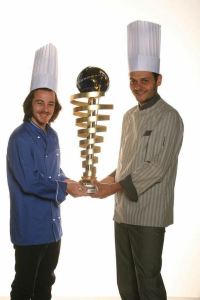
 ristorante di Roma nel 2009, lo staff è rimasto scioccato quando lei ha chiesto una borsa per gli avanzi del cane. Mentre questa è una pratica comune negli Stati Uniti, viene ancora considerata un tabù in Italia ed in Europa. Nel Regno Unito, è più comune ma di solito è accompagnata da una dose di vergogna britannica. In Spagna e Italia, la gente potrebbe tranquillamente portare a casa l’osso della carne da dare al cane, ma culturalmente non è mai stato fatto. Per essere onesti, le porzioni dei ristoranti sono più piccole di quelle americane e spesso non ci sono avanzi.
 Secondo un sondaggio della Coldiretti, l’associazione dei contadini italiani, uno su quattro italiani credono che l’idea di portare a casa gli avanzi della loro cena sia un segno di povertà, maleducazione, e anche volgarità. Ma i tempi stanno cambiando. Per prima, la Francia ha passato una legge nel 2016 che vieta ai supermercati di gettare il cibo. Devono darlo in beneficenza o, se non è più commestibile per l’uomo, renderlo disponibile per l’alimentazione animale, il compost, o la bioenergia. Ci sono multe severe se non ci si conforma.
 dei cani ai clienti, e rimuove gli ostacoli legali alle aziende che desiderano donare il cibo. Gli alimenti possono ora essere donati dopo la loro data di scadenza, o se sono stati erroneamente etichettati (ma sono ancora al sicuro). I costi sono stati abbattuti per gli agricoltori che vogliono fornire cibo direttamente agli enti di beneficenza e riceveranno agevolazioni fiscali per le loro donazioni.
 importante per gli italiani come il cibo, e gli incentivi diminuiranno gli sprechi industriali? Lo spreco alimentare è ora all’ordine del giorno internazionale, ma culturalmente sprecare cibo e servire porzioni enormi nei ristoranti dovrebbe diventare inaccettabile. Le stime attuali variano dagli 11 miliardi di euro ai 13 miliardi di euro di rifiuti alimentari in Italia ogni anno. La legge prevede 9 milioni di euro per lanciare una campagna promozionale, ma meno di 1 milione per finanziare l’innovazione nell’utilizzo degli sprechi alimentari.
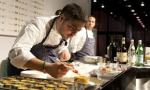 Per iniziare, una borsa per cani viene chiamata “borsa di famiglia” in Italia per aiutare a de-stigmatizzare la pratica. E ora diversi chef di alto profilo stanno sostenendo la causa. Lo chef stella Michelin Matteo Baronetto, dello storico ristorante Del Cambio di Torino, ha dichiarato in un’intervista che non dovrebbe esserci vergogna nel richiedere di portare gli avanzi a casa. “Non è uno scandalo, piuttosto l’opposto … è la scelta del cliente ed è il suo pasto da quando ha pagato per questo”. Bruno
 Barbieri, un MasterChef nella televisione italiana, fa un passo avanti definendo “figo” chiedere una borsa per cani (o di famiglia). “Voglio dire ai miei clienti, se mi chiedete di portare a casa il cibo che vi ho preparato, mi fate un regalo. Significa che vi è piaciuto, che per qualche motivo non lo riuscite a finire lì, ma che lo volete comunque terminare. Per chi cucina questa richiesta è gratificante, non sminuente”. E nella sua cucina nulla è sprecato. “Ad esempio, il pane avanzato nei cestini dei clienti è usato per preparare il pranzo della brigata. Il vino delle bottiglie aperte lo utilizziamo per i fondi o per sfumare il risotto o ce lo beviamo noi a fine servizio”.
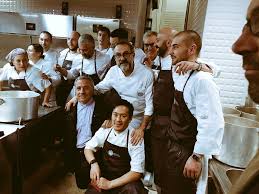
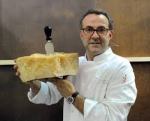 Uno dei sostenitori più vocali su questo tema è Massimo Bottura, che è stato recentemente nominato il miglior chef del mondo. Durante l’Expo di Milano nel 2015, ha aperto una cucina sperimentale con un’organizzazione benefica cattolica che utilizzava il cibo che era stato avanzato dalla mostra come parte di una campagna di sensibilizzazione sugli sprechi alimentari. Durante i Giochi Olimpici di Rio de Janeiro, ha allestito una cucina e una caffetteria “anti-spreco” per sfamare le persone che vivono nei bassifondi di Rio.
 Il Festival Internazionale del Cinema di Santa Barbara del 2017 ha presentato il documentario “Teatro della vita”, che parla del Refettorio Ambrosiano, la mensa dei poveri di Bottura a Milano, dove ha invitato 60 dei migliori chef del mondo a unirsi per cucinare per rifugiati e senzatetto di Milano. Come dice Bottura, “gli chef non possono più cucinare per l’élite ignorando le questioni etiche relative all’alimentazione del pianeta”.