
Italy’s enchanting hilltop towns are as fundamental to the country’s identity as its grand, artistic cities. They represent the essence of Italian history and the country’s artisanal traditions. While the government has done little to help preserve them, local citizens and mayors have come up with some ingenious ideas. Some are funny; some are sad, borne from the desperation at hand; some are creative; and some are heart-warming. Here is a sampling:
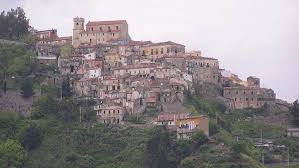 Sellia (Calabria): In 1960 there were 1,300 residents in the town; in 2015 there were only 537 with 60% over the age of 65. That year Davide Zicchinella, the local mayor and pediatrician, published a decree stating that “it is forbidden to get sick and die in the town.” He was hoping to prompt elderly residents to adopt healthier lifestyles. He opened a free medical center and offered locals a tax break if they went in for a check-up. He also opened an adventure park with a giant zip line to lure visitors.
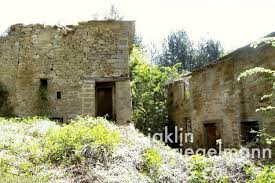 Pratariccia (Tuscany): Just 25 miles east of Florence, this hilltop hamlet and adjoining land have been uninhabited since the early 1960s. Some of the houses made from the traditional Tuscan stone have collapsed, and grass is growing out of the abandoned ones. Several years ago, it was listed on eBay for $3.1 million; the listing mentioned that it was “in need of restoration.” While the outcome has not been revealed, the area has the potential for a luxury holiday development.
 Gangi and Salemi (Sicily) and Carreghi (Liguria): Mayors of these towns have resorted to selling abandoned houses for 1 euro each, provided that buyers agree to rebuild them within a specified period of time. The offers are luring holiday home hunters from around the world, as well as supporting local builders and trades people.
Sutera (Sicily): The population of this isolated town dwindled from 5,000 in 1970 to 1,500 in 2013 when the mayor opened the town’s doors, and its empty houses, to the survivors of the catastrophic Lampedusa shipwreck, which killed more than 360 refugees, 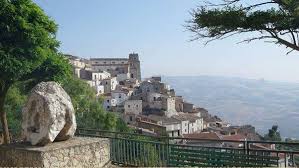 most of whom were from sub-Saharan Africa. The mayor recognized the humanitarian and economic opportunity that the migrants could provide. To help them, he paired them with local families, and required them to take Italian lessons. (The European Union provided funding for food, clothing and housing.) Initially there was some resistance, which disappeared with the energy that these newcomers brought to the area. Today, Nigerians take their morning espresso alongside the old men, and local children kick soccer balls with their new playmates. The town hosts a festival each summer that features the traditional food, music, and dance of the immigrants.
 Riace (Calabria):The famous Riace bronzes (see Post of —-) were discovered off the coast of this town and are now housed in a new archeological museum in Reggio Calabria. Riace’s population had fallen to around 800 from 2,500 after WW II. Today there are 1,500 inhabitants with migrants from over 20 countries. Some are apprenticing artisans, learning endangered skills like embroidery, glass mosaic and pottery, thus helping to keep Italian culture alive. Domenico Lucano, the town’s mayor, was named one of Fortune’s “World’s 50 Greatest Leaders” in 2016 after he took in Kurdish refugees in 1998. In an interview, he said “Multiculturalism, the variety of skills and personal stories that people brought to Riace have revolutionized what was becoming a ghost town.” Here is another example of an act of self-preservation that has become an act of humanity.
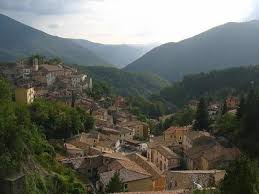 Fillettino (Lazio): A tiny town (population of 598) east of Rome, Fillettino is hoping to start its own country independent of Italy. Following an Italian government announcement in 2011 that all villages with fewer than 1,000 residents must merge with nearby villages to cut administrative costs, the mayor, Luca Sellari, started a campaign for Fillettino to become an “independent state” under a monarch. The town is now producing its own t-shirts, liquor (though apparently just name brands relabeled), and even its own currency (the “fiorito”). According to Sellari, “If this is what it takes to keep the town autonomous and protect its resources…we’ll do it. Besides, it’s everyone’s dream to be a prince.”
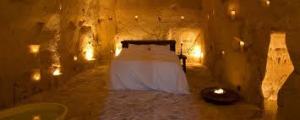 Santo Stefano di Sessanio (Abruzzo):Formerly a bustling center of wool production, the town began to shrink when the Italian wool industry was crippled by competition from abroad. By the 1990s the town had only about 100 inhabitants. In the 1990s, Daniele Kihlgren, the renegade scion of an Italian concrete fortune, discovered this semi-abandoned town with its medieval character and architecture completely intact.
 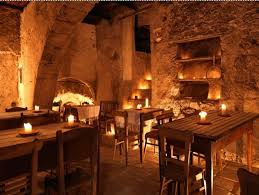 He wondered how places like this could be revitalized without destroying their exquisite beauty and historic identity. He began buying many empty buildings and created one of the most novel forms of hospitality anywhere, an albergo diffuso (scattered hotel) called Sextantio. The rooms of the luxury hotel are in ancient buildings all over town and are served by a central reception area. Local industry, jobs, and tourism have thrived — from the wool blankets on beds to the ingredients in the recipes served in the hotel’s restaurant, to the ceramic dishes they are served on.
 Cività di Bagnoregio (Lazio): This town is the “poster child” of re-invention. It sits atop a steep pinnacle of continuously eroding volcanic rock and is billed as “Italy’s Dying City.” Originally along an ancient trade route, Cività di Bagnoregio was prosperous from Roman times through the late Middle Ages. After a devastating earthquake in 1695, many residents fled, and the city’s long decline began. For the last 50 years, the population has hovered around 10. Then, about 20 years ago, fashionable Romans and expats, drawn by the proximity to Rome, “discovered” the hilltop town and made summer houses or weekend places of its deserted buildings. Cività has become a destination for tourists who pay a small fee to enter the town via a long bridge. Up to 5,000 people a day visit a town that at most can sleep 100. Despite no Starbucks or McDonalds, it does have a Disney feeling. In April of 2017 we climbed the hill with Jacopo’s parents, Patrizia and Claudio Giacopuzzi.
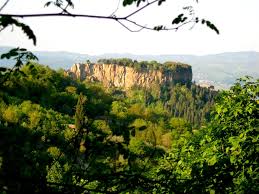 Come abbiamo viaggiato in molte città collinari in Umbria l’anno scorso, siamo rimasti colpiti, naturalmente, dalla bellezza dell’architettura e il carattere di queste città di pietra. Siamo rimasti colpiti dalle viste stupende nel cuore verde d’Italia. Ma mentre giravamo, c’era anche una sensazione inquietante—raramente vedevamo qualcuno in giro, e vedevamo molti insegni “Vendesi” sugli edifici.
 L’esodo iniziò nel tardo diciannovesimo secolo quando la povertà spinse molti, in particolare nel sud, ad emigrare verso altri paesi. Dopo la seconda guerra mondiale, il declino economico delle comunità rurali italiane portò gli abitanti ad emigrare verso le maggiori città dove i posti di lavoro erano più abbondanti. Una confluenza di fattori—povertà, urbanizzazione, emigrazione di massa e disastri naturali come i terremoti—devastò molte città che avevano prosperato per secoli.
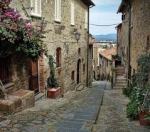 Questi luoghi rurali sono indissolubilmente legati alla campagna circostante, poiché i loro abitanti lavoravano come contadini e mercanti, artigiani e pastori. Quando queste città muoiono, anche le tradizioni e le abilità uniche associate a ciascun luogo. Questo fenomeno non è unico in Italia. Le piccole città di tutto il mondo sviluppato, compresi negli Stati Uniti, vengono lasciate indietro mentre le tecnologie e le economie cambiano, rendendo obsolete le industrie e il know-how artigianale. Ciò che è unico in Italia è il carattere architettonico squisito delle sue città collinari, così come la qualità della maestria e delle tradizioni che sono nate e perfezionate lì.
 Le statistiche dipingono un quadro desolante. Mentre il 30% della popolazione mondiale risiedeva in aree urbane nel 1950, la percentuale è cresciuta al 54% nel 2014. Si prevede che aumenti fino al 66% entro il 2050. In Italia cosa accadrà alle fortezze medievali, alle chiese affrescate, e alle piazze affascinanti delle città collinari?

