
 Gorgonzola is one of the oldest blue cheeses in the world. It was developed about the same time as Roquefort in France. Its ancestor dates back to the Roman age when, in the fall, the cows were herded down from the Alps to the valleys of the Po River. They arrived in the fields near the city of Gorgonzola from the valleys of Bergamo to eat the fresh grass.
 It is said that cheese was created to conserve the milk from the overwhelming number of cows in the area. However, according to a legend that dates back to the XV century, it is the product of a romantic escapade of a young cowherder. Distracted by his lady-love, young Romeo abandoned his cheese curds, which drained overnight. The next morning, hoping to hide his mistake, he mixed them with new curd creating a cheese that remains soft even when aged. The cheese was punctured with sticks to allow it to dry out. The air channels created space for mold to grow, giving it its signature look and flavor.
Today, Gorgonzola is made using whole cow’s milk, starter bacteria, and spores of the mold Penicillium glaucum. During the aging process metal rods are quickly inserted and  removed creating the air channels that allow the mold spores to grow, which causes the characteristic veining. Gorgonzola Dolce, which is sweet, milky, and creamy with hints of spice, is aged about three months. Gorgonzola Piccante, which is aged about a year, is more piquant, firm, and crumbly.
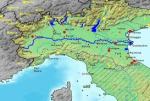 The Po River flows eastward through the regions of Piedmont and Lombardy. Today both regions make Gongonzola and Taleggio, another delicious cheese. Lombardy is also home to Mascarpone, Provolone, and Grana Padano. Gorgonzola produced in designated provinces of these two regions has DOP status; Denominazione di Origine Protetta is a European Union mark that guarantees the product and all phases of production are carried out in a strictly defined geographical area according to certain standards of reliability, quality and tradition.
 Gorgonzola is eaten in many ways. Dolce can simply be spread on bread or paired with figs, pears, or walnuts or almonds. Piccante can be paired with honey on a cheese platter. Either can be served with pasta, usually short pasta like penne or rigatoni, and as an ingredient in pizza ai quattro formaggi.It can be melted into a risotto in the final stage of cooking or served with polenta.
 No, niente a che vedere con la musica o il cibo, almeno non direttamente. Rossini è un gatto rosso che è diventato celebre a Rovigo, una città nel Veneto, a circa 80 chilometri a sudovest di Venezia. Mentre la sua reputazione si è diffusa in lungo e in largo, Rossini deve ora gestire lo status di celebrità e la stampa con una pagina Facebook e un profilo Instagram. Ha migliaia di seguaci.
 Che cos’ha di così speciale (non che ogni gatto non sia speciale)? È l’incedere regale? È che adora la compagnia degli esseri umani? O è lo spirito zingaro che lo porta a girovagare ovunque da mattina a notte—fra bar e ristoranti, ai concerti, alle riunioni del municipio, alle case private? Dovunque va, riceve il trattamento “tappetto rosso” – bocconcini prelibati, ciotole d’acqua, e grattini dietro le orecchie.
 attività da un momento all’altro. Ecco Rossini che si è sdraiato in prima fila ad ascoltare il concerto jazz. Ecco Rossini in vetrina nella libreria in centro adagiato sopra i libri di Wilbur Smith. Ed ecco Rossini tra le braccia del sindaco alle riunioni del consiglio comunale. (Ciò che non è pubblicato è la foto di Rossini che fa pipì nel salone del Municipio.)
 Si dice che il suo calendario sia più pieno di quello del sindaco. Ammiratori gli scrivono da tutta Italia: “Ciao Rossini, ti seguo da Roma, sei un amore,” scrive un utente di Facebook. “Io sono di Taranto, ma vorrei venire a Rovigo solo per incontrarti,” posta un altro ammiratore.
 Tutti amano Rossini… forse con l’eccezione dei vigili del fuoco di Rovigo, che hanno perso il conto delle volte che si sono mobilitati per salvare Rossini da vari luoghi impervi—sul tetto di un palazzo, in cima alla chiesa, e dentro un vecchio carcere. Come sia arrivato lì nessuno lo sa. Le chiamate da parte dei cittadini al dipartimento del fuoco sono almeno settimanali: “Correte Rossini è bloccato”. “Presto, Rossini è in pericolo”.
 Nonostante una bella casa, Rossini ama i grandi spazi della città. La strada è il suo mondo. Dopo ogni guaio, torna a casa, fa le fusa per Valentina, poi riparte per nuove avventure.
 from moment to moment. Here is Rossini sprawled in the first row to hear a jazz concert. There he is in the window of the central bookstore resting on the books of Wilbur Smith. And here he is in the arms of the mayor at the town hall council meetings. (What is not posted is the picture of Rossini making pee-pee in the salon of the Town Hall.)

