
Superstitions are beliefs or actions that are contrary to science but are widely held throughout the world. They are taught from an early age and are part of popular tradition. The first use of the Latin superstitio is found in the writing of historians Livy and Ovid (1stcentury BC). At that time the term “superstition” was used in Italy mostly to characterize an excessive fear of gods or an unreasonable religious belief, as opposed to religio,the reasonable awe of the gods. Throughout history, Italian culture has been rich with superstitions for good or evil. The origins are disparate, from ancient Rome to the traditions of grandparents that are passed down from generation to generation.
Evil Eye (Malocchio): This is one of the most ancient superstitions in Italy; it is even mentioned in one of the Purgatory cantos in Dante. Every region in Italy has its own version of the curse and some take it more seriously than others. Universally, however, 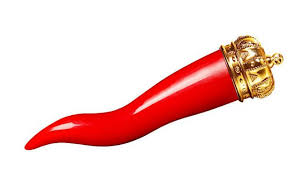 the source is said to be envy directed at you, which can cause headache, fatigue, and dizziness. There are two ways to ward off the evil eye. The first is to wear a corno,or devil’s horn, which is a twisted phallic- or chili-shaped red, gold, or silver amulet. (It is also worn by men to ward off curses of their manliness.) Related to the corno is a hand gesture where you extend only the pinkie and index finger like a pair of horns. To ward off malocchio, you point the fingers down. A rude gesture is to point those fingers directly at someone to either curse that person or to suggest that his wife or girlfriend is straying.
The second custom to ward off the evil eye is a special ceremony performed by someone, 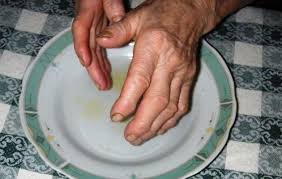 usually a grandmother, who has been ordained in this ancient ritual. In the presence of the afflicted individual, she mixes olive oil and water in a shallow platter. If the oil forms one large drop in the middle, it’s a sure sign of the presence of the evil eye. After chants and appeals to the appropriate saints, she induces the oil to break up into droplets and disperse, breaking the curse.
Lucky and Unlucky Numbers: The number 13 is lucky in Italy, particularly in a gambling setting. The number is also associated with the Goddess of Fertility and lunar cycles; it is believed to bring prosperity. However, 13 people at the dinner table is unlucky. There were 13 at the Last Supper—the 12 apostles and Jesus. It is said that Judas Iscariot, who betrayed Jesus, was the 13thman to take his place at the table.
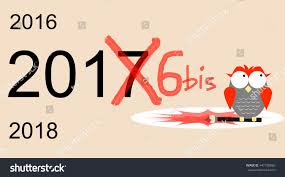 The number 17 is considered unlucky in Italy; in fact, some hotels don’t have a 17th floor. When 17 is written in the Roman numerals XVII, it can be rearranged to spell the Roman word XIVI meaning “I have lived,” which is found on ancient tombstones and is associated with death. When 17 is written using Arabic numerals, it is unlucky because it resembles a man (1) hanging from the gallows (7).
Olive Oil and Salt: In ancient times olive oil and salt were very precious and spilling either meant losing money. (The term salary derives from salt.) If a cook has mani di ricotta (ricotta hands) and spills olive oil, one remedy today is to pour salt over it.
 Lentils: Every culture has its New Year’s traditions, like eating grapes in Spain as the clock strikes down. In Italy one must eat lentils after the clock strikes midnight to avoid bad luck. Lentils are cooked in many different ways depending on the region or city but they will always be served on New Year’s Eve or Day. The tradition dates back to Roman times when bags full of lentils were given as a good omen for the new year. In fact, their shape reminds one of coins.
 Toasting: There are many taboos and traditions surrounding your “cin-cin.” First, never raise a glass that is full or water and don’t cross arms with the person next to you when you clink glasses. Remember to take a sip before setting your drink down, but first of all, remember to look into each other’s eyes during the cin-cin. Legend has it that during the Middle Ages it was customary to look into guests’ eyes to prevent them from pouring poison into your drink.
Black Cats: Cats were adored by the Ancient Egyptians but lost their status in the Middle Ages. Horses were frightened by the yellow eyes of cats at night and legend grew that they were somehow tied to the devil. Then Pope  Gregory IX, in his cultural war against pagan symbols, called them Satan’s servants. They began to be exterminated. According to some historians, this caused the spread of diseases carried by rats, such as the bubonic plague of 1348. Even the Puritans in 1600 were convinced that black cats were supernatural demons. In some countries today, such as Japan, England, and Scotland, black cats are a sign of prosperity.
Ladders: The ladder is a symbol that dates back to the Egyptians. In some tombs, small nine-peg stairs were found, symbolizing the gods. Together with Osiris, god of the underworld, they indicated the closure of a life cycle. For the ancient Christians, for whom every triangle represented the Trinity, to pass under a ladder was to break the holy symbol. Today, the phobia has a more practical meaning: who wants to risk being hit on the head by paint, tools, or debris?
Hat on the Bed:Putting a hat at the foot of the bed is considered unlucky. Doctors, or priests who visited the dying to administer last rights, often abandoned their hats on the bed.
Others: There are many other superstitions too numerous to name. Think of breaking mirrors or opening umbrellas in the house. In the United States we knock on wood to avoid tempting fate. But in Italy you tocca ferro or “touch iron.” And remember in Italy you should avoid saying “good luck.” It’s better to say “in bocca al lupo” (literally, “into the wolf’s mouth”), which originated among hunters who wished each other to be in dangerous situations. It then became an idiom used in opera and theatre to wish the actors good luck. It is like saying “break a leg.” After you wish in bocca al lupo,the response should be “crepi il lupo,” which means “let the wolf die!”
 Ci sono molti tipi della pasta tubolare; il più comune sono le penne. La forma tubolare consente alla salsa di entrare nella pasta e coprire una superficie più ampia. Originarie della Campania in Italia, le penne vengono tagliate con un angolo che assomiglia alla punta di una penna. Gli ziti sono più grandi delle penne; il nome deriva probabilmente da una variante per maccheroni di zita, letteralmente, i maccheroni della sposa. Più
  grandi ancora sono i rigatoni, che vengono tagliati in diverse lunghezze e diametri. Il nome deriva dalla parola italiana, rigato, che significa increspato o foderato. Le paste increspate (tra cui sono le penne rigate) tendono a contenere più salsa rispetto alle paste lisce. Due altre paste bucate sono degne di nota. Uno delle più popolari a Roma sono i bucatini, che assomigliano a grandi spaghetti ma hanno un piccolo buco nel mezzo della sua lunghezza (vedete il post del 5
  marzo 2015 per una ricetta con i bucatini all’amatriciana). Gli anelletti provengono da Palermo ed è l’unica pasta originaria della Sicilia. Gli anelletti vengono spesso serviti in famiglie (piuttosto che in ristoranti), soprattutto nelle giornate di festa.
 trattamento più delicato nei ristoranti di fascia alta. E poi ci sono anelli di calamari fritti. È diventato un comune antipasto nei ristoranti americani. Risale a un articolo del New York Times del 1975, che stimolò la sua popolarità negli anni ’80 e oltre. Prima di allora, era un piatto offerto solo in ristoranti esclusivi in città come New York e Boston.
 origini. Il significato può essere ricondotto a una tradizione pasquale perché la sua forma rappresenta il cerchio della vita e la rinascita del Signore. Un ciambelloneè una torta italiana semplice e solare con la scorza di limone cotta in una teglia. In America, la ciambella è un alimento per la colazione molto calorico, spesso decorato con più sostanze zuccherine. La sua origine è dibattuta: alcuni sostengono che l’inventore fosse il capitano della marina, Hansen Gregory, alla fine del diciannovesimo secolo. L’idea era di forare semplicemente un impasto per torte per renderlo più maneggevole.
 Un altro cibo per la colazione comune negli Stati Uniti e nell’Europa centro-settentrionale è il bagel, che risale al lavoro di una comunità ebraica a Cracovia, in Polonia, nel 1610. Il pane era dato in omaggio alle donne che hanno partorivano perché la forma circolare rappresenta il cerchio della vita che inizia con la nascita di un bambino.
 Ma è associato alla tradizione tedesca ed è generalmente accompagnato da tipiche salsicce tedesche. Il significato simbolico dei pretzel è che i tre fori tipici rappresentano la Santissima Trinità, mentre la sua forma richiama le braccia incrociate dei monaci. Inizialmente consumato quasi crudo, la leggenda vuole che l’attuale preparazione in cottura sia dovuta a un fornaio che si è addormentato al lavoro.
 Simile alla consistenza di un bagel, pretzel o grissini sono i taralli italiani, uno spuntino comune nel sud Italia, in particolare in Puglia. Hanno la forma di anelli o ovali, da 1 pollice a 5 e possono essere dolci o salati. I taralli salati possono essere aromatizzati con cipolla, aglio, semi di sesamo o di papavero, finocchio, pepe o sale. I taralli dolci e semplici vengono spesso immersi nel vino.
 Polo, che è diventato famoso per il suo motto: “Polo, il buco con la menta intorno”. Il bonbon è stato appositamente progettato con questa particolare forma per far entrare l’aria che dà un senso di freschezza a tutta la bocca. Nel 2010 è stata probabilmente la caramella più venduta nel Regno Unito.

