
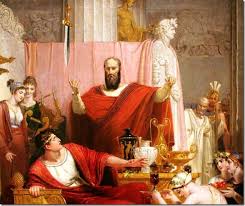
 La Repubblica recently called the Trump administration’s threat of tariffs on European wine producers “the sword of Damocles.” According to the leggend, Damocles was an obsequious courtier to Dionysius II of Syracuse, a 4th-century BC tyrant of Sicily. After Damocles repeatedly flattered Dionysius as a fortunate man of great power and authority, Dionysius offered to change places for a day. Damocles eagerly accepted and sat on the king’s throne surrounded by luxury. But Dionysius had made many enemies during his reign; to show Damocles what it’s like to be king under these circumstances, he arranged to hang a huge sword above the throne held by the single hair of a horse’s tail. Damocles begged to depart understanding that with great power also comes great danger.
Over time this tale has come to mean more generally a sense of foreboding caused by a precarious situation. And this is precisely how President Trump governs. He threatens serious repercussions in both his foreign and domestic policy, and then just as suddenly retreats or changes direction. But the mere threat has serious implications to so many people along the way.
 Take the threat of 100% tariffs on European wines (and other products). First of all, this all started with a dispute over airlines and technology. Trump wants to retaliate against the European Union’s subsidies to the European aerospace company Airbus, and for a new European tax that he says unfairly targets American technology companies. The fallout – whether the tariffs are realized or not – is happening on both sides of the Atlantic Ocean.
Wine tariffs of any size affect everyone along the chain in the beverage and hospitality industry, not to mention the end users. On the European side, large and small producers  who market to the United States have already been affected. Some American importers have postponed orders fearing that shipments in transit will require a huge lump payment on arrival, and then they may not be able to sell the goods at inflated prices. European producers not only will have to find other markets, but will also have to decide what to do with cancelled orders. These changes threaten jobs from the vineyards to the dockworkers.
Likewise, on the American side, those in the industry who specialize in European wines are threatened, from the importers to the distributors, from the specialty stores to the restaurants and the sommeliers. Moreover, high tariffs on European wines will not be a boon to the American wine industry. California vineyards, large and small, rely on the same distribution networks, which will then be consumed with finding new producers to replace the wines they will no longer be able to sell. They will be distracted as they search for new markets, and there will be a lot of turnover among the salespeople who are almost all paid on commission.
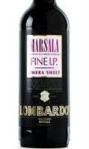
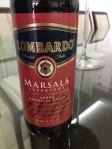 Our cousin Frank Vollero is a national brand manager for Lombardo marsala from Sicily. He works with importers and distributors in the United States, whose business and employees will be severely affected by high tariffs. Since the 1980s, Lombardo grew to become the second or third largest marsala brand in the United States; and the United States is Lombardo’s
  major market. As Frank says, “we are working on contingency plans. Plus, let’s remember that Europe may retaliate if the Trump administration – now or in the future – enacts these threatened tariffs. And that will cause even more chaos.”
May the sword of Damocles, as originally intended, hang over the head of the powerful.
 Da Venezia a Matera e in tutta Italia, la pioggia, il vento e le mareggiate hanno provocato danni incalcolabili negli ultimi mesi. Oltre alle vite umane e animali, ai capolavori d’arte e ad altri tesori, anche i crostacei sono rimasti vittimi di queste intemperie. Migliaia di lupini erano spiaggiati lungo le coste di Chioggia. A rischio sono gli spaghetti tradizionali con le vongole, che vengono apprezzati da innumerevoli italiani e italo-americani alla vigilia di Natale. È questo il periodo dell’anno in cui le vongole vengono maggiormente raccolte sia in Italia, che negli Stati Uniti.
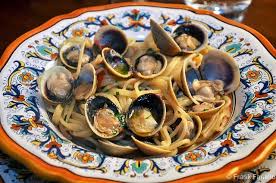 Era tradizione comune che si mangiassero molluschi solo nei mesi che avevano la lettera “R.” Ciò significa che si dovevano evitare ostriche, cozze e vongole a maggio, a giugno, a luglio e ad agosto. La regola ‘R’ si applicava generalmente nell’emisfero nord, ma questa piccola perla di saggezza americana potrebbe non applicarsi rigorosamente nei paesi in cui mesi sono scritti in modo diverso (ad esempio, in gennaio manca la lettera richiesta). Gli storici rintracciano l’origine di tale tradizione in un antico detto latino, apparso per la prima volta in un libro di cucina inglese del 1599.
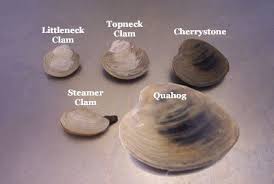 Negli Stati Uniti sono presenti diverse varietà. Le littlenecks e le cherrystones (sono della stessa specie, ma le cherrystones sono più grandi) provengono dall’Oceano Atlantico sulla costa orientale. Le vongole di Manila provengono dalla costa occidentale. A Pismo Beach, in California, a circa 85 miglia a nord di Santa Barbara, la vongola Pismo era così apprezzata che si è estinta quasi 20 anni fa a
  causa della eccessiva raccolta. Oggi le Pismo si stanno riproducendo, ma sono ancora troppo piccole e le leggi vietano a chiunque di raccoglierle. Tuttavia, una delle tradizioni che viene mantenuta nei ristoranti di Pismo Beach è quella di servire la zuppa di molluschi (usando altri tipi di vongole) in ciotole di pane a lievitazione naturale.
 Esistono almeno due metodi per pulire le vongole e assicurarsi che non trattengano la sabbia. È possibile mettere le vongole in acqua salata (circa 1 cucchiaio di sale per litro d’acqua) o in una miscela simile usando però farina di mais. Lasciarle in immersione per circa 2 ore, facendo attenzione di porle in un univo strato, in una padella capiente o nel lavandino. Poi sciacquarle con acqua fredda e strofinare i gusci con uno spazzolino da denti per rimuovere lo sporco.

