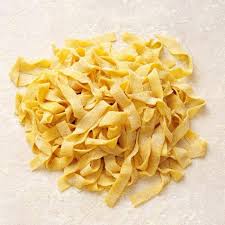
 Durante la quarantena, molte persone stanno scoprendo o ritornando a pratiche antiche come fare il pane e la pasta, è il motivo per cui è diventato difficile trovare farina e uova al supermercato. Anni fa ho scoperto che l’esperienza tattile nel fare la pasta fresca era rilassante per l’anima. Ho imparato di nuovo oggi, ho trovato molti video su YouTube che mi hanno guidato.
Certo, ci sono molte ricette, molte tecniche e molti insegnanti. Per me, gli insegnanti meno utili sono stati quelli che facevano tutto a occhio; molto probabilmente hanno imparato a fare la pasta da piccoli, dalle mamme o dalle nonne. Poiché una gran parte della cucina italiana è regionale, le ricette di pasta spaziano dalla pasta rustica, senza uova del sud, alla ricca, solo tuorlo d’uovo del Piemonte. Non è necessario utilizzare una macchina per la pasta: è possibile stenderla manualmente, il che è più semplice se si utilizza la farina “00”. Ecco alcuni suggerimenti, basati sulla ricerca e sui miei errori.
Ingredienti e dosi per la pasta all’uovo
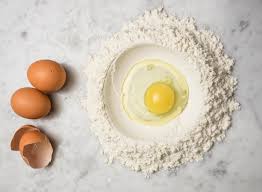 Secondo molte persone, è possibile utilizzare o la farina multiuso americana, o unicamente la farina “00” che proviene dall’Italia o mescolata con un po’ di semolino, che conferirà una consistenza più granulosa. Il tipo “00” è più fina della farina multiuso ed inoltre la pasta non ingrigisce con questo tipo di farina. La regola generale è utilizzare un uovo per ogni 100 grammi di farina. Per essere più precisi, puoi pesare gli ingredienti.
Le quantità che seguono sono per circa 8 porzioni: 300 grammi di farina e 185 grammi di ingredienti “bagnati” a partire da 2 uova intere più 3 tuorli d’uovo e acqua o un altro uovo. (Una altra opzione: un uovo ogni 100 grammi di farina o un 80 grammi di farina + 20 grammi di farina di grano duro, e una spruzzatina di succo di limone se si vuole togliere il sapore forte dell’uovo.) La maggior parte delle ricette richiede circa un cucchiaino di sale e alcune gocce di olio d’oliva, ma sono opzionali.
È vero che è possibile usare un robot da cucina, ma la maggior parte delle ricette consiglia questo procedimento: mettere la farina sulla spianatoia e rompere le uova al centro della fontana di farina (fare uno spazio nella farina in modo da accogliere le uova), mescolare con una forchetta, incorporando gradualmente la farina attorno ai bordi. Quando la pasta sarà diventata più pesante, aggiungere il resto della farina e lavorarla con le mani, fino a che l’impasto non sarà omogeneo.
Impastare e riposare
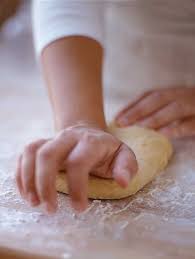 Questa fase è molto importante per far sviluppare il glutine e l’elasticità dell’impasto. Esistono diverse tecniche di impasto descritte come “piegatura e laminazione” o “piegatura, pressatura e rotazione”. È meglio guardare i video se non si ha esperienza. Ma la regola generale qui è impastare costantemente per almeno 10 minuti. Impostare il timer; farete anche un ottimo ginnastica per i tricipiti! Impastare fino a quando il composto sarà liscio ed elastico. Potete fare la prova del dito: premere l’impasto con un dito, se il composto ritorna nella sua forma originale, vuol dire che va bene.
Ora, cospargere con un velo farina la palla di pasta e avvolgerla in una pellicola trasparente per alimenti. Lasciarla riposare per 20 o 30 minuti, alcuni dicono in frigorifero, ma io la tengo a temperatura ambiente sul bancone della cucina.
Stendere la pasta e tagliarla
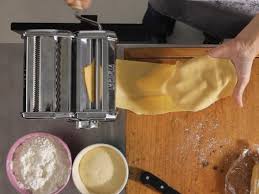 Taglia la pasta in 2, 3 o 4 parti a seconda della quantità preparata. Cospargere la farina l’impasto durante le fasi successive di lavoro è molto importante per evitare che si attacchi. Ogni cuoco ha una diversa raccomandazione su come usare la macchina per la pasta, ma, francamente, penso che funzionino tutte bene. Non preoccupatevi di quante volte si passa l’impasto nella macchina. La regola generale: forse 3 o 4 volte sullo spessore più grande, fino a una sullo spessore più sottile. Il punto è che alla fine dovreste essere in grado di vedere in trasparenza la tua mano attraverso l’impasto o “leggere una lettera d’amore attraverso l’impasto”. Crescerà quando cuocerà nell’acqua.
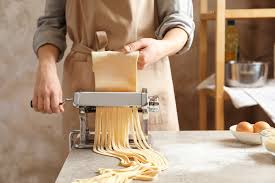 Potrebbe essere necessario tagliare la pasta in modo da lavorarla con strisce di lunghezza gestibile. Spolverare le strisce con la farina, prima di passarle nella macchina (la mia macchina produce fettuccine e spaghetti) o stendere manualmente la pasta con un matterello e usare un coltello per fare le pappardelle o le fettuccine. Se decidete di adottare questa seconda opzione, sappiate che sarà necessario molto “olio di gomito”, oltre a una buona tecnica. Una volta fatte le tagliatelle, stenderle su un vassoio o metterle a matassa (come un nido) sempre su un vassoio, avendo cura di non metterle troppo vicine, affinché non si attacchino. Cuocere subito la pasta o lasciarla asciugare per 2 o 3 ore, per consumarla entro un giorno o due al massimo.
È possibile conservare la pasta in congelatore mettendovi il vassoio coperto con della pellicola trasparente per circa 2 mesi.
Cucinare la pasta
È molto importante salare l’acqua – “il sapore del mare” – dopo che ha iniziato a bollire. La pasta fresca cuoce in circa un minuto e non necessità della stessa quantità di tempo della pasta secca per assorbire il sale. La regola generale: circa 85 grammi di sale da cucina per 6 litri di acqua. Assaggiare la pasta per sentire il punto di cottura, sollevandola con una forchetta, naturalmente sarà migliore se “al dente”. Scolare la pasta. Ricorda di conservare un po’ d’acqua di cottura nel caso in cui il sugo non sia sufficiente o sia un po’ secco.
Sono ancora un principiante, ma quella esperienza sensoriale nel fare la pasta mi piace, e spero che la pratica continui a creare quell’intuizione che così tanti italiani hanno nel loro DNA.

 Nanni Moretti is an Italian film director, producer, screenwriter and actor, probably best known for his films Caro diario and La stanza del figlio. He makes humorous and eccentric films and does not shy away from featuring his politically leftist views. His 2018
  film, Santiago, Italia is neither eccentric nor humorous; in fact, it is a straightforward documentary. It does contain a political point of view, and it does give a unique angle to a well-known historical period in Chile’s past.
 The film opens showing the Chilean people exuberant over the democratic election of their president Salvador Allende in 1970. He was a socialist politician and physician with progressive plans for free education for all children, the elimination of illiteracy, and a better life for all workers. Just three years later, joy turns to shock as radios announce the military takeover of the country. On September 11, the Chilean Air Force bombs the presidential palace, La Moneda, and Allende is killed…possibly by suicide or murder.
 interviewer. In one sequence, however, a former military officer who is serving a prison term complains that it is not an impartial interview. Moretti suddenly appears before the camera and sternly silences him saying, “But I am not impartial.”
 The heart of the film occurs more than half way through. The focus shifts to the sprawling, beautiful Italian embassy in Santiago and the key role it played in protecting more than 250 people who sought refuge there. We hear about terrified Chileans making daring jumps over the two-meter high walls, of children thrown over the wall into the arms of someone on the other side. Nobody was turned away. While other embassies offered asylum in the beginning, none provided asylum to so many for so long.

