Is this really progress?

With technological advancements, there are always pros and cons, pluses and minuses.  Think of social media, for example.  There were two announcements recently about food “advances” that only time will tell whether people will accept and adopt them.
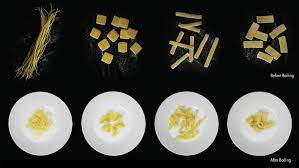
The first—reported in the New York Times— comes from researchers at a Carnegie Mellon University laboratory in Pennsylvania. Researchers there designed a flat pasta noodle that when boiled turns into three-dimensional shapes.  Their project didn’t start out as a culinary endeavor, but the researchers ending up focusing on one of the world’s most popular foods:  they found that pasta is not only simple and ubiquitous, but also rich in shape design.

In the food industry today, pasta is made by folding or squeezing dough through a metal die and then into the desired shape—elbow, twist, or tube.  The research team in this project began with a conventional recipe of semolina flour and water, and then used a classic roller to create sheets of dough.  Then they stamped the flattened dough to create tiny patterned grooves in its surface.  The grooved surfaces expand less than the smooth ones during cooking, thus creating different shapes.  However, the process is more complex that just swelling—computer modelling predicted the final designs based on other factors including how heat and water changes the dough’s gluten and starch during the cooking process.

Of course, the proof will be in the eating.  The researchers say that flat-to-plump pasta is fun to make, uses less packaging, and has a smaller carbon footprint than traditional dried pasta.  It also cooks in 7 minutes…making it al dente, which is a good start.
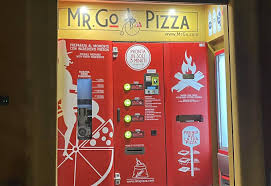
The other announcement comes from Rome, as reported by CNN.  Near Piazza Bologna in via Catania, stands a bright new red vending machine.  But this one doesn’t dispense classic snacks, drinks or daily necessities.  Instead, it produces freshly cooked pizza in just three minutes.  From “Mr. Go Pizza,” clients can choose from four kinds of pizza that cost between $5.20 and $7.20: Margherita, quattro formaggi (four cheeses), alla diavola (spicy salame), or pancetta (bacon).  The machine kneads and tops the dough, and then customers can watch the pizza cook behind a small glass window.  The pizza is dispensed in a carton, just like at a takeaway restaurant. 

The Mr. Go technology comes from an international start up that operates in the food tech sector; The Food Labs of Bolzano participates in the project, which has been working to implement the efficiency and quality of the machinery for ten years.  The result?  Mostly thumbs down.  Among the comments— “not hot enough,” “not enough toppings,” “tastes more like a piadina (an Italian flatbread).  The Mr. Go Facebook page responds to some of the detractors: “The flour mix used contains a very small amount of leavening agent and sugar that activate the leavening process during the cooking phase.”  But cooking this machine-made pizza at 380 degrees is nowhere near the 800-degree minimum of a wood-burning pizza oven.  And the machine cannot generate the joy from watching a pizzaiola knead the dough and cook it in that oven within sight of your restaurant table.  On the positive side?  The machine is open all night, and maybe for students in the area, Mr. Go is just the right thing.

Posted in Abitudini, Cucina italiana, English, Formaggio, Foto, Italia, Roma | 2 Comments

Ann Goldstein, traduttrice di Elena Ferrante

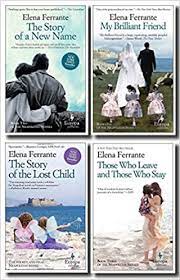
I traduttori ricevono raramente lo status di celebrità. Ma in questo caso, Ann Goldstein ha ricevuto tanto successo, quanto la scrittrice dei suoi libri, Elena Ferrante.  La sua notorietà è sostenuta anche dal saldo anonimato di Elena Ferrante, che è in realtà solo uno pseudonimo. Apparentemente, diffidando dello status di celebrità, la Ferrante si rifiuta di fare interviste e autografi. Pertanto, Ann Goldstein è stata occasionalmente una “sostituta” dell’autrice. Le sue traduzioni in inglese, vale a dire la serie di quattro libri, hanno venduto più di un milione di copie nei paesi anglofoni. E più recentemente, la Goldstein è apparsa in discussioni virtuali su La vita bugiardi degli adulti della Ferrante sponsorizzato da Europa Editions, editore americano della scrittrice.

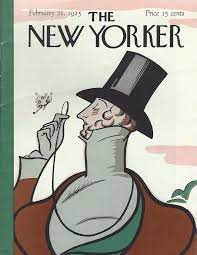
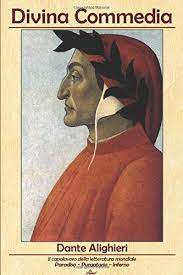
Come è iniziato tutto questo? Dalla metà degli anni ’70, la Goldstein ha iniziate a lavorare nel reparto di redazione del prestigioso settimanale The New Yorker, diventando capo dipartimento dalla metà degli anni ’80. In quel periodo lei e diversi colleghi prendevano lezioni serali per imparare l’italiano. Al college era rimasta incantata da Dante; nel giro di tre anni, grazie allo studio seriale della lingua italiana, ha potuto leggere completamente La Divina Commedia in lingua originale. Poi, nel 1992, la Goldstein ha tradotto un saggio di Aldo Buzzi nel libro, Cechov a Sondrio,  per il settimanale The New Yorker. È stata la prima traduzione pubblicata dalla traduttrice.

Nel 2004, quando la Europa Editions era alla ricerca di un traduttore per I giorni dell’abbandono di Elena Ferrante, la società ha chiesto ai candidati di inviare pagine di prova, e Ann Goldstein è arrivata prima.  Finora la Ferrante ha dato alla luce quasi una dozzina di libri e lei ne è ancora la traduttrice. I suoi colleghi e revisori lodano la sua umiltà e il suo stile di traduzione: “Le virtù di un redattore le servono molto anche per essere traduttrice … lei scompare, in un certo senso … allo stesso modo in cui un redattore è un setaccio per lo scrittore e la lingua, così lo è anche per un traduttore”. Tuttavia, tradurre implica anche essere una scrittrice e Ann lo è. 

La Goldstein si descrive come una traduttrice altamente letterale, un approccio che ben si adatta allo stile di prosa idiosincratico della Ferrante. La Ferrante è nota per le sue frasi lunghe ed emotive, e lo stile della Goldstein rimane fedele ciò che l’autrice scrive in lingua originale. “Penso che il mio lavoro debba essere il più trasparente possibile in modo da far sentire la voce dell’autore. Anche se non credo sia necessario avere un’affinità per lo scrittore, ma con Ferrante ce l’ho”. Eppure, la Goldstein non ha mai incontrato Elena Ferrante. Se ha una domanda, comunica via e-mail con l’editore. 

Sebbene la Goldstein sia strettamente associata alla Ferrante, è traduttrice di molti altri libri, tra cui “Le opere complete di Primo Levi”, “Petrolio” di Pasolini e opere di Elsa Morante, Giacomo Leopardi e Jhumpa Lahiri. Per la Goldstein, lavorare alle traduzioni durante la pandemia e la quarantena è stato un modo per evadere e alimentare il desiderio, cioè. “Il desiderio viene dall’essere tagliati fuori, letteralmente, dal paese della lingua per cui si lavora. Ma mentre si lavora, sei assolutamente trasportato dentro.” 

In un’intervista su Corriere della sera, la Goldstein conclude dicendo: “La lingua italiana dovrebbe assolutamente essere studiata, da chiunque. Apre ad altre culture, ad altri punti di vista, per non parlare di altre letterature. Ma può anche consentire di vedere la propria lingua e cultura da una prospettiva diversa, il che può essere un’esperienza illuminante. Quindi penso che non importi da dove si parta: studiare o imparare l’italiano è prezioso”.

Posted in Abitudini, Arte, educazione, Italia, Italiano, La Lingua, Libri, Napoli, New York, Uncategorized | Leave a comment

Ann Goldstein, translator of Elena Ferrante

Translators rarely attain celebrity status.  But as Elena Ferrante has achieved worldwide acclaim through her books, so too has Ann Goldstein.  Her notoriety is spurred by the steadfast anonymity of Elena Ferrante, which is a pseudonym.  Apparently distrusting the celebrity status of authors, Ferrante refuses to do book signings and interviews.  Therefore, Ann Goldstein has occasionally been a “stand in” for the author.  Her English translations of the Neapolitan quartet have sold more than a million copies in English-speaking countries.  And more recently, she has appeared in virtual discussions of Ferrante’s The Lying Life of Adults sponsored by Europa Editions, the American publisher of her works in English

How did it all start?  Since the mid 1970s, Goldstein has worked in the copy department of the prestigious weekly magazine, The New Yorker, becoming the department head since the mid 1980s.  About that time, she and several colleagues formed an evening class to learn Italian.  She had been enchanted by Dante in college; within three years of studying the Italian language, the evening class had read The Divine Comedy in the original language.  Then, in 1992, Goldstein translated an essay from Chekhov in Sondrio, a book by Aldo Buzzi, for The New Yorker.  It was Goldstein’s first published translation .

In 2004, when Europa Editions was seeking a translator for Elena Ferrante’s The Days of Abandonment, the company asked candidates to submit sample pages.  Ann Goldstein won the job.  Nearly a dozen Ferrante books later, she is still on the job.  Her colleagues and reviewers praise her humility and her translation style: “The virtues of a copy editor serve her well as a translator…she disappears, in a sense…in the way that a copy editor is a sieve for the writer and the language, the same is true of a translator.”  Yet, translating also involves being a writer, and Ann imparts that talent as well.

Goldstein describes herself as a highly literal translator, an approach that serves well Ferrante’s idiosyncratic prose style.  Ferrante is known for her long, emotive sentences, and Goldstein’s style closely represents what the author wrote in the original language.  “I feel my work should be as transparent as possible so that you hear the voice of the author. While I don’t think it’s necessary to have an affinity for the writer, with Ferrante I do.”  Yet, Goldstein has never met Ferrante.  If she has a question, she communicates via e-mail with the publisher.

While Goldstein is most closely associated with Ferrante, she has completed many other translation projects, including The Complete Works of Primo Levi, Pasolini’s Petrolio and works by Elsa Morante, Giacomo Leopardi and Jhumpa Lahiri.  For Goldstein, working on translations during the pandemic and quarantine have created feelings of both escape and longing.  “The longing comes from being cut off, literally, from the country of the language you are working in.  But as you’re working, you are absolutely being transported.”

In an interview with Corriere della sera, Goldstein concludes by saying, “The Italian language should absolutely be studied, by anyone.  It opens up to other cultures, other points of view, not to mention other literatures.  But is can also allow you to see your language and culture from a different perspective, which can be an enlightening experience.  So I think it doesn’t matter where you start from: studying or learning Italian is precious.”

Posted in Abitudini, Arte, Differenze culturali, English, Foto, Italia, La Lingua, Libri, Napoli, New York | 2 Comments