LavAzza (in English)

What kind of coffee do you crave at this moment?  A morning cappuccino?  An afternoon espresso?  A caffé americano or a caffè corretto?  Do you prefer your coffee served by a barista or made in your own Moka or Gaggia or even Nespresso machine?

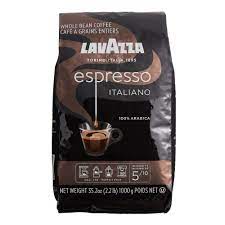
The coffee culture is important in Italy and even for many people in the United States.  Just as important as the process and the enjoyment of coffee is the brand that one chooses. Beloved Italian coffee brands range from Lavazza and Illy to Kimbo, Caffè Borbone and Caffè Passalacqua.  Lavazza is branded as “Italy’s Favorite Coffee” with a market share today of more than 36%. 
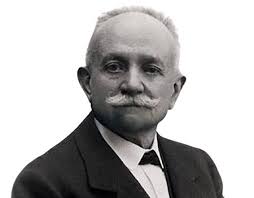
Young Luigi Lavazza sought his fortune in Turin in the late 1800s.  In 1895 he transformed his grocery store business into a coffee roaster, and today third and fourth generation family members run the world’s seventh largest coffee business.  Lavazza is number 1 in the world for espresso and its coffee is sold in 90 countries.  It has been selling coffee in the United States since the late 1980s.

Italy itself does not actually grow or produce any green coffee because the growing conditions are not ideal. Like other coffee brands, Lavazza must import coffee and does so from Brazil, Colombia, Guatemala, Costa Rica, Honduras, Indonesia, and other countries.  The company today has six production sites, three in Italy and one each in France, India and Brazil.  Lavazza claims that its long-roasted coffee beans give it its distinctive Italian espresso taste, and also credits the company for inventing the concept of blending (miscella) different types of coffee from different geographical areas to produce distinctive products, which include Qualità Oro, Qualità Rossa, Il Perfetto Espresso, Caffè Crema, Gran Aroma Bar, and Super Crema. 
Through the Lavazza Foundation, the company works with coffee farmers around the world to improve the livelihood and well-being of coffee-growing communities.  Set up in 2004, the foundation funds projects in 17 countries, helping more than 94,000 coffee producers to improve crop yield, coffee quality, and the living conditions of the workers.

Lavazza, like many other companies, is tackling a complex and challenging 2022.  The company suspended all its activities in Russia and also was forced to temporarily halt coffee distribution in Ukraine.  Global supply chain issues and weather events spiked price increases in coffee, packaging and energy.   Both companies and consumers shoulder the risks from the current geopolitical situation.

Posted in Abitudini, Cucina italiana, English, Foto, il Caffé, Italia, Piemonte, Storia | Leave a comment

La Gioconda di Montecitorio

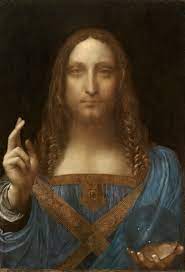
Ci sono relativamente pochi dipinti sopravvissuti sino a noi di Leonardo da Vinci. Solo circa 8 grandi opere gli sono universalmente attribuite; alcune sono state attribuite alla sua bottega, ai suoi assistenti e alle sue pennellate. Molte altre sono opere incomplete, altre ancora risultano di complessa attribuzione, come il Salvator Mundi, che ha fatto scalpore negli ultimi anni, sia per la storica vendita all’asta, sia per la rivelazione dell’acquirente era il principe saudita Mohammed bin Salman (vedi il post del 9 dicembre 2021: “Salvator Mundi: La saga in corso”).

Ora, a Roma è iniziata una nuova storia: il caso della Gioconda di Montecitorio. Ci sono molte copie del capolavoro che oggi è appeso al Louvre. La Gioconda di cui parliamo era nella collezione di Palazzo Montecitorio, sede della Camera dei Deputati italiana. Misura 70 cm x 50 cm, quindi più piccolo della sorella del Louvre. Ma quando e da chi sia stata dipinta rimangono ancora questioni controverse in quanto non ci sono documenti per ricostruire le origini del dipinto.

Il dipinto fu menzionato per la prima volta nell’inventario di Torlonia del 1814 come “copia della ‘Monna Lisa’ di Leonardo da Vinci”. Denominato la Gioconda Torlonia, era di proprietà di una nobile famiglia romana (vedi post del 1° luglio 2021: “I Marmi di Torlonia”). Ad un certo punto il dipinto fu attribuito a Bernardo Luini, che lavorò con Leonardo; infatti, alcuni studiosi ritengono che il Luini abbia creato il Salvator Mundi. Nel 1892 il dipinto entrò a far parte della collezione della Galleria Nazionale d’Arte Antica di Palazzo Barberini. L’opera fu concessa alla Camera dei Deputati nel 1927 dove rimase per molti anni appesa in un ufficio sopra un termosifone. Oggi si trova nella sala Aldo Moro al primo piano di Palazzo Montecitorio.

La polemica di oggi è iniziata nel 2019 quando la Torlonia Gioconda restaurata è stata protagonista della mostra “Leonardo a Roma: Influenze ed Eredità” all’Accademia dei Lincei per celebrare i 500 anni dalla morte di Leonardo. I curatori della mostra affermano che la copia romana potrebbe essere stata realizzata nella bottega di Leonardo e che gli smalti, l’effetto chiaroscurale e la raffinata tecnica pittorica suggeriscono un possibile intervento del maestro stesso.

Cinzia Pasquali, restauratrice del dipinto, è una delle restauratrici d’arte più famose al mondo. Ha lavorato per 25 anni al Louvre e ha condotto il “restauro del secolo” nel dipinto di Leonardo, La Vergine col Bambino e Sant’Anna. Secondo lei il dipinto risale alla prima metà del XVI secolo e non è di Leonardo ma potrebbe essere stato realizzato nel suo studio.

Storici dell’arte, critici d’arte e persino parlamentari avevano opinioni forti sul dipinto, dal “modesto” al “valore decorativo dei mobili” a “mi toglie il fiato quanto sia brutto questo dipinto. Non una goccia di Leonardo”. Un’espressione più misurata è arrivata da un ex sovrintendente di Roma: “non sembra avere l’impronta di una mano eccellente come quella di Leonardo”.

Un membro della Camera dei Deputati italiana ha annunciato che sarà effettuato uno studio completo sul dipinto.

Posted in Arte, Foto, Italia, Italiano, Roma, Storia | Leave a comment

The Mona Lisa of Montecitorio

There are relatively few known surviving paintings by Leonardo da Vinci.  Only about 8 major works are universally attributed to him; there are some that are attributed to his workshop, assistants, and his brushstrokes. There are many incomplete works, and many whose attributions are quite complicated like the Salvator Mundi, which has made headlines in the last few years, first for its historic sale at auction, and then for the revelation that the buyer was Saudi Prince Mohammed bin Salman (see the post of December 9, 2021: “Salvator Mundi: The ongoing saga”).

Now a new story unfolds in Rome: It is the case of the Mona Lisa of Montecitorio.  There are many copies of the masterpiece that today hangs in the Louvre, and this one had been known to exist in the collection of the Palazzo Montecitorio, the seat of the Italian Chamber of Deputies.  It measures 70 cm x 50 cm (less than 28” by 20”), which is smaller than its sister in the Louvre.  But when it was painted and by whom remains controversial as there are no documents to reconstruct the origins of the painting. 

The painting was first mentioned in the Torlonia inventory in 1814 as “a copy of Leonardo da Vinci’s ‘Mona Lisa.’” Called the Torlonia Gioconda, it was owned by a noble Roman family (see the post of July1, 2021: The Torlonia Marbles).  At some point, the painting was attributed to Bernardo Luini, who worked with Leonardo; in fact, some scholars believe that Luini created the Salvator Mundi.  In 1892, the painting became part of the collection of the National Gallery of Ancient Art at Palazzo Barberini.  The work was granted to the Chamber of Deputies in 1927 where it hung for many years in an office above a radiator.  Today it is in the Aldo Moro room on the first floor of the Palazzo Montecitorio.

Today’s controversy started in 2019 when the restored Torlonia Gioconda was featured in an exhibition, Leonardo in Rome: Influences and Legacy at the Accademia dei Lincei to celebrate the 500th anniversary of Leonardo’s death.  The exhibition’s curators claim that the Roman copy could have been created in da Vinci’s studio and that the glazes, the chiaroscuro effect and the refined painting technique suggest a possible intervention by the master himself. 

Cinzia Pasquali, the painting’s restorer, is one of the most famous art restorers in the world.  She has worked for 25 years at the Louvre and conducted the “restoration of the century” in Leonardo’s painting, The Virgin with Child and St. Anne. According to her, the painting dates from the first half of the 16th century and is not by Leonardo but it could have been created in his studio.

Art historians, art critics, and even parliamentarians had their strong opinions about the painting, from “modest” to “the decorative value of furniture” to “it takes my breath away how ugly this painting is.  Not a drop of Leonardo.”  A more measured expression came from a former superintendent of Rome: “it does not seem to have the imprint of an excellent hand like that of Leonardo.”

A member of the Italian Chamber of Deputies announced that a comprehensive study will be carried out on the painting.

Posted in Arte, English, Foto, Italia, Roma, Storia | 1 Comment