More Silicon, Less Cement

According to some sources, Los Angeles is the most congested city in the world, followed by New York and Moscow.  Angelenos spend an average of 102 hours in traffic jams during peak hours, costing each driver $2,828 a year and the city $19.2 billion from direct costs (eg, fuel and time wasted) and indirect costs (eg, freight and business fees from company vehicles idling in traffic).  These fees are passed on to you and me.

What’s frustrating in Los Angeles is policymakers’ inability to do anything about the problem.  In the past, the answer has been to add lanes to freeways, but this is not a permanent solution and actually adds to further congestion and pollution.  In New York, the city of the Yellow Cab, Uber and Lyft are also contributing to the increasing gridlock.

A group of researchers from Italy and the United States are trying to find a solution.   Based in Rome, The National Research Council (Il Consiglio Nazionale delle Ricerche or Cnr) is the largest research institute in Italy; it conducts studies on demographic and migration issues, among other things.  It teamed up with researchers from MIT’s Senseable City Lab and Cornell University.  They selected NYC as the first to study.  The team tracked all Manhattan taxi rides for a year.  Every single taxi trip was “tagged” with the times and the GPS coordinates of departure and arrival.  They then developed an algorithm to calculate the sequence of routes that could be served by a single vehicle.

The results:  By optimizing routes, NYC could eliminate almost half its current fleet of taxis.  The routes would not have to be shared and the result would be almost optimal service levels.  This is the result of organization, of an operation that could be performed with a smartphone app.

According to Paolo Santi, a researcher at Cnr and MIT and the team’s leader, “Taxi systems today are self-managed by the taxi driver himself, everyone has his own strategy, and there is no centralized system.  Taxi drivers tend to concentrate in some more populated areas, neglecting others, creating an excess in certain areas and a lack in others.”  The key to organizing them lies in the distribution of routes in such a way that each vehicle makes the shortest possible route without a passenger.  According to Carlo Ratti, director of MIT’s Senseable City Lab, “If we take Manhattan as a whole, we could theoretically satisfy demand for mobility with 140,000 cars, about half of those circulating now.  This means that the problem of tomorrow’s mobility cannot be tackled with more infrastructures, but with more intelligence:  in other words, with more silicon and less cement.”

Can the study be replicated in other cities in the world, like Rome and Milan?  Santi continues, “We have a considerable amount of data from many cities in the world but not from Italian cities.  In Europe there is much more fragmentation and very restrictive privacy rules that make it difficult to test these models.  We chose New York where data is accessed through only one authority.”  But scientists are optimistic that they can expect to see similar reductions in terms of efficiency in European cities.

The landscape of city mobility is continuing to change with on-demand and transport-sharing services and with self-driving cars beginning to take hold.  Computerized management of movement will prove to be fundamental. One day there could be an algorithm to direct traffic.  Santi points out, “we analyzed the taxi system, but our approach applies equally to Uber and Lyft and in the future to self-driving cars.  Thanks to these studies we will be able to properly size the fleets.”  And there will be less demand for cars, decongesting the traffic and limiting the emissions of greenhouse gases and pollutants.

Posted in Abitudini, California, English, Foto, Italia, New York, Roma | 1 Comment

Giorgio Perlasca: Un eroe italiano per Ungaro

Giorgio Perlasca è uno dei grandi eroi non celebrati dell’Europa.  Ha salvato migliaia di ebrei dalle camere a gas naziste grazie al suo coraggio, astuzia, fascino, e perseveranza.  E ha rischiato la propria vita ad ogni svolta in questa storia.

La giovane vita di Perlasca non ha mai data sintomi del suo ruolo futuro.  In realtà, suggerisce che avrebbe potuto prendere la strada opposta. Nacque a Como nel 1910, da adolescente a Padova si innamorò di Gabriele D’Annunzio, le cui idee e credenze influenzarono il fascismo e Benito Mussolini.  Si offrì volontario per combattere in una delle guerre di conquista di Mussolini nel 1935 e, poi come volontario fascista, per combattere a nome di Franco nella guerra civile spagnola.

Ma quando tornò in Italia, Perlasca si ritrovò disilluso con Mussolini.  Detestava l’alleanza dell’Italia con la Germania ed aborriva le leggi razziali italiane contro gli ebrei.  All’inizio della seconda guerra mondiale, riuscì a evitare il servizio militare, lavorando come agente di bestiame procurandosi rifornimenti per l’esercito italiano.  Viaggiò molto in Europa dell’est, prima a Zagabria e a Belgrado, dove vedeva massacri di ebrei, serbi, e altre minoranze.

Poi nel 1942 fu inviato a Budapest.  Un uomo alto e bello, usava il suo fascino e le capacità di negoziazione per fare buoni affari per gli italiani.  E gli piaceva l’ambiente del teatro e del ristorante della città, spesso in compagnia dei suoi amici ebrei.  Ma le cose cambiarono nel 1943 con la caduta di Mussolini.  Perlasca fu imprigionato come un nemico alieno vicino al confine austriaco.  Tre mesi dopo fuggì, tornò a Budapest, e immediatamente andò all’ambasciata spagnola per la protezione.  Come ex-soldato pro-Franco, gli fu dato la cittadinanza spagnola, un passaporto, e un nuovo nome—Jorge.  Fuori dall’ambasciata, notava migliaia di persone che si aggiravano intorno.  Gli fu detto che erano ebrei che invocavano “lettere di protezione” che la Spagna e altri governi neutrali emettevano per proteggere gli ebrei dalla deportazione alle camere a gas.  L’ambasciata spagnola non poteva tenersi al passo con le richieste, quindi Perlasca si offrì volontaria per aiutare.  Stabilì contatti chiave con i funzionari nazisti—corrompendoli, ricattandoli e incantandoli per l’aiuto, o almeno non interferendo con le sue attività.

Nel 1944, con i russi in avvicinamento a Budapest, il consolato spagnolo fuggì in Svizzera lasciandosi dietro uffici vuoti, ma anche il sigillo dell’ambasciata.  Perlasca convinse sfacciatamente le autorità ungheresi che lui era il nuovo ambasciatore spagnolo.  Poi si mise al lavoro non solo stampando lettere di protezione con il sigillo dell’ambasciata, ma ospitò anche gli ebrei in otto palazzi in affitto dove batté bandiera spagnola.  Il bluff funzionò.  Ma doveva pattugliare le case giorno e notte per assicurarsi che le bande di nazisti ungheresi non si intromettessero e uccidessero le persone protette.

Le esecuzioni quotidiane sulle rive del Danubio significarono che solo un quarto degli 800.000 ebrei ungheresi sopravvisse alla guerra.  Alla fine del 1944, il Ministro degli Interno decise di trasferire tutti gli ebrei dagli appartamenti consolari al ghetto e poi di dargli fuoco.  Perlasca si precipitò all’ufficio del Ministro per pregarlo di fermarsi.  Quando gli argomenti umanitari caddero nel vuoto, passò alle minacce.  Avvertì che se al governo spagnolo non fossero assicurato che gli ebrei sotto la sua protezione non sarebbero stati danneggiati, tutti gli ungheresi in Spagna sarebbero stati incarcerati e le loro proprietà confiscate.  Aggiunse anche che i governi brasiliani e uruguaiani farebbero lo stesso.  I piani del ministro furono abbandonati.

Perlasca rischiò la sua vita molte volte.  Una volta, mentre stava rimuovendo due adolescenti da un treno diretto ad Auschwitz, un ufficiale delle SS gli puntò addosso una pistola.  Raoul Wallenberg, l’eroico diplomatico svedese che stava lì vicino, gridò che non poteva trattare un diplomatico spagnolo così.  Poi un ufficiale SS di livello più elevato arrivò e chiese cosa stava succedendo.  Disse al giovane ufficiale di non fare nulla di più perché “prima o poi avremo comunque i bambini”.  Questo ufficiale era il famigerato Adolph Eichmann.

Quando le truppe sovietiche entrarono a Budapest nel 1945, gli ebrei riuscirono finalmente a lasciare gli appartamenti.  I russi costrinsero Perlasca a lavorare come spazzino.  Poco dopo, fu in grado di andare a Istanbul e poi di nuovo in Italia. Nonostante le sue capacità negoziali, poche persone a casa credevano la sua storia, inclusa sua moglie.  Quindi smise semplicemente di palarne e svanì nell’oscurità…cioè finché un gruppo di donne ebree ungheresi non ricordò l’incubo della guerra durante una riunione di famiglia a Berlino nel 1986.  “Ricordate quel console spagnolo”?

Vad Vashem Museo a Gerusalemme

a Budapest

Alla fine lo trovarono a Padova e iniziarono i riconoscimenti.  Perlasca, ex-fascista, aveva salvato la vita di almeno 5.500 ebrei, più di quattro volte il numero che il celebrato Oskar Schindler aveva salvato. Perlasca è stato premiato con medaglie e decorazioni da governi italiani, spagnoli, ungheresi, americani e israeliani per il suo coraggio e le sue azioni.  Un suo busto si erge orgoglioso a Budapest.  Ma Perlasca ha sottovalutato il suo eroismo fino alla fine (è morto nel 1992) sostenendo di non aver fatto altro che raccontare molte bugie.


Posted in Abitudini, Comunità ebrea, Foto, Italia, Italiano, Storia, Veneto | Leave a comment

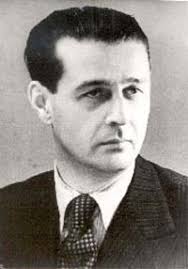
Giorgio Perlasca: An Italian Hero for Hungary

Giorgio Perlasca was one of Europe’s great unsung heroes.  He saved thousands of Jews from the Nazi gas chambers through his bravery, cunning, charm, and persistence.  And he risked his own life at every turn in this story.

Perlasca’s early life gives no clue as to his future role.  In fact, it suggests that he might have taken quite the opposite path.  Born in Como in 1910, as a teen in Padua he became enamored by Gabriele D’Annunzio, whose ideas and beliefs influenced fascism and Benito Mussolini.  He volunteered to fight in one of Mussolini’s wars of conquest in 1935 and, then, as a fascist volunteer, to fight for Franco in the Spanish Civil War.

But when he returned to Italy, Perlasca became quite disillusioned with Mussolini.  He detested Italy’s alignment with Nazi Germany and abhorred the Italian race laws against the Jews.  At the outbreak of World War II, he managed to avoid military service by working as a livestock agent procuring meat and supplies for the Italian army.  He travelled widely in Eastern Europe, first in Zagreb and Belgrade, where he saw massacres of Jews, Serbs, and other minorities.

Then in 1942 he was sent to Budapest. As a tall, handsome man, he used his charm and negotiating skills to make good business deals for the Italians.  And he enjoyed the theatre and restaurant life of the city, often in the company of his Jewish friends.  But things changed in 1943 with the fall of Mussolini.  Perlasca was imprisoned as an enemy alien near the Austrian border.  Three months later he escaped, returned to Budapest, and immediately went to the Spanish embassy for protection.  As a former pro-Franco soldier, he was given Spanish citizenship, a passport, and a new name—Jorge.  Outside the embassy he noticed thousands of people milling around.  He was told they were Jews pleading for “letters of protection,” which Spain and other neutral governments issued to protect Jews from deportation to the gas chambers.  The Spanish embassy couldn’t keep up with the requests, so Perlasca volunteered to help. He made key contacts with Nazi officials—bribing, blackmailing, and charming them into helping him, or at least not interfering with his activities.

Then in 1944 with the Russians approaching Budapest, the Spanish consulate fled to Switzerland leaving behind empty offices, but also the embassy seal.  Perlasca brazenly convinced Hungarian authorities that he was the new Spanish ambassador.  Then he set to work not only stamping letters of protection with the embassy seal, but also housing the Jews in eight rented apartment blocks where he flew the Spanish flag.  The bluff worked.  But he had to patrol the houses day and night to make sure that bands of Hungarian Nazis did not break in and murder the protected people.

Daily executions on the banks of the Danube meant that only a quarter of Hungary’s 800,000 Jews survived the war. At the end of 1944, the Ministry of the Interior decided to move all Jews from the Consular apartments to the ghetto and then set fire to it. Perlasca rushed to the Minister to beg him to stop.  When humanitarian arguments fell on deaf ears, he switched to threats.  He warned that if the Spanish government was not assured that the Jews under its protection would not be harmed, all Hungarians in Spain would be imprisoned and their property confiscated.  He even added that the Brazilian and Uruguayan governments would do the same.  The Minister’s plans were abandoned.

Perlasca had many other close calls.  Once when he was removing twin adolescents from a train bound for Auschwitz, an SS officer pointed a pistol at him.  The heroic Swedish diplomat Raoul Wallenberg, who was standing nearby, shouted that he could not treat a Spanish diplomat like that.  Then a more senior SS official arrived and asked what was happening. He told the young officer to do nothing more because “sooner or later we’ll get the children anyway.”  This officer was the notorious Adolf Eichmann.

When Soviet troops entered Budapest in January 1945, the Jews were finally able to leave the apartments. The Russians forced Perlasca to work as a street cleaner.  Soon thereafter, he was able to go to Istanbul and then back to Italy.  Despite his negotiating skills, few people back home believed his story, including his wife.  So he simply stopped talking about it and faded into obscurity…that is, until a group of Hungarian Jewish women recalled the nightmare of wartime Budapest at a family gathering in Berlin in 1986.  “Do you remember that Spanish consul?”

Vad Vashem Museum in Jerusalem

They eventually found him in Padua, and the recognitions began.  Perlasca had saved the lives of at least 5,500 Jews, more than four times the number that the heralded Oskar Schindler saved.  Perlasca was awarded medals and decorations from Italian, Spanish, Hungarian, American, and Israeli governments for his courage and actions. A bust of him stands proudly in Budapest.  But Perlasca downplayed his heroism to the end (he died in 1992) claiming that he had done nothing more than tell a lot of lies.


Posted in Abitudini, Comunità ebrea, English, Foto, Italia, La Gente, Politica, Storia, Veneto | 4 Comments