
 On a pillar of the façade of the Basilica in Padua stands the figure of Saint Anthony, created in the first half of the 14thcentury. Slightly less than life size, he almost feels physically present with a gesture of blessing that seems to emphasize the interaction between the painted figure and the faithful who approach him. On his left arm he holds a book, the symbol of his doctrine.
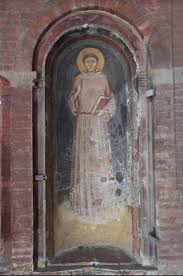 The fresco needs restoration and was chosen to inaugurate a collaboration between Veneranda Arca, the entity that oversees the conservation of the Basilica, and LoveItaly, a non-profit that uses Crowdfunding to raise funds for the protection and restoration of the artistic heritage of Italy. Called “RestaurAntonio,” the intent is to go beyond the simple mechanism of fundraising and invite all involved to remain updated on how their contributions are working. Each donation is recognized and is reciprocated with tributes and activities tied to the Basilica, from public acknowledgment on the web site, to inscription of names on a donors’ plaque, to tickets to the Museum, to special visits to places in the Basilica generally not accessible to the public.
This campaign prompted me to look at the life of Saint Anthony and the story of the Basilica. Saint Anthony was born Fernando Martins de Bulhões in Lisbon in 1195. After his ordination into the Augustan order, he traveled widely. He met some Franciscan friars and was attracted by their simple lifestyle. He received permission from the church to join the Franciscan Order. In Forli in 1222, on the occasion of an ordination, he was entreated to preach, and his sermon created a lasting impression. Listeners were captivated not only by the theme and substance of his discourse, but also by his rich voice and arresting manner. Everyone was also impressed by his knowledge of scripture.
Saint Anthony is known as the most celebrated follower of Saint Francis of Assisi. He is the patron saint of Lisbon, Padua, and many places in the former Portuguese empire. He is the patron saint for the recovery of lost items; the reason is traced back to an incident that occurred in Bologna. According to legend, Anthony had a book of psalms that was important to him because it contained notes he used in teaching his students. (In addition, before the invention of the printing press, any book was quite valuable.) A novice who had decided to leave took the psalter with him. When Anthony realized it was missing, he prayed that it would be found. The thief was moved to restore the book to Anthony and to return to the Order. The stolen book is preserved in the Franciscan friary in Bologna.
Anthony died in Padua in 1231 and was canonized in 1232, one of the most quickly canonized saints in church history. He is buried in a chapel within the large basilica that was built, starting also in 1232, to honor him. Several legends surround his death. One claims that when he died, the children cried in the streets and all the church bells rang of their own accord. Another concerns his tongue, which is displayed in the Basilica’s large reliquary, along with his jaw and vocal cords. When Anthony’s body was exhumed 30 years after his death, all had turned to dust except for the tongue, which supposedly glistened, considered at the time to be a sign of his gift of preaching.
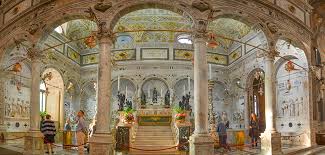 The Basilica of Saint Anthony of Padua, also known as “il Santo,”is one of eight international shrines recognized by the Holy See. It was completed in 1310 with many modifications over the years. Today it is a giant edifice without a unified architectural style. It began as a single-naved church, like that of St. Francis of Assisi. The exterior style is a mixture of Romanesque and Byzantine elements, with some Gothic features. A Treasury chapel was built in the 17thcentury in the Baroque style. The domes, like the domes of St. Mark’s Basilica, were raised in height externally, giving a Byzantine appearance to the building overall.
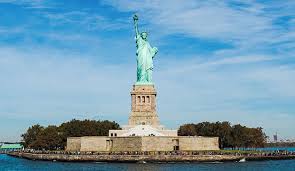 La storia della statua della libertà è la storia di 3 paesi—Francia, Stati Uniti e Italia, è connessa ai tempi difficili nel corso del 1800 e dei legami che questi paesi condiviso allora e condividono ancora. Come la maggior parte degli americani sanno, La libertà illuminando il mondo è stato un regalo dei francesi in onore del centenario dell’indipendenza americana. Donata nel 1886, la statua si erge a 305 piedi di altezza e domina la baia di Manhattan a New York.
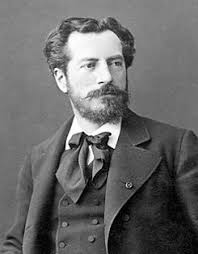 La statua fu realizzata nel 1870 dallo scultore francese Fréderic Auguste Bartholdi dopo l’istituzione della Terza Repubblica Francese, per dimostrare il sentimento fraterno tra la repubblica statunitense e quella francese. La Seconda Repubblica Francese era crollata dopo la guerra franco-prussiana. La città natale di Bartholdi, in Alsazia, era passata sotto il controllo tedesco e tale evento dette origine al grande interesse di Bartholdi per l’indipendenza, la libertà e l’autodeterminazione.
 Lady Liberty” dalla statua che erge sul balcone, sopra l’entrata principale, del Duomo di Milano. Scolpito da Camillo Pacetti nel 1810, questa statua è 75 anni più vecchia che quella a New York. Entrambe tengono una torcia con la mano destra ed entrambe indossano una corona ed una tunica. L’unica differenza è ciò che tengono nella mano sinistra. Quello a Milano tiene una croce, e quella a New York tiene in mano un libro con la data dell’indipendenza.
 Recentemente si racconta che la statua di Bartholdi a New York potrebbe essere “la sorella minore” di un monumento custodito nella Basilica di Santa Croce a Firenze. “Libertà della Poesia” fu scolpita da Pio Fedi e collocata nel 1883 nella chiesa come monumento funebre in onore del patriota risorgimentale Giovanni Battista Niccolini. Fu poeta e drammaturgo del movimento di unificazione italiana; il suo dramma del 1846 “Arnold di Brescia” fu scritto a sostengo dell’unificazione.
 come la bandiera o un’aquila calva. Il libro nella mano sinistra di Lady Liberty non è la Costituzione degli Stati Uniti; invece rappresenta la Dichiarazione di Indipendenza, la dichiarazione radicale della libertà individuale e nazionale firmata dai rivoluzionari americani. Sei anni dopo l’installazione della Statua, viene aperta Ellis Island nelle vicinanze di New York, attraverso la quale oltre 2 milioni di immigrati sono passati per una nuova vita in America. Il centro di immigrazione è stato chiuso nel 1954 ma sul suo posto si trova ora il Museo nazionale dell’Immigrazione.
 È qui che una mostra speciale, “Sisters in Liberty” si terrà nel 2020, sponsorizzata congiuntamente da Firenze e dagli Stati Uniti. Una scansione 3D ad altissima risoluzione, consentirà una perfetta riproduzione della statua di Firenze. La mostra è anche legata al bicentenario della presenza del Consolato americano a Firenze: “C’è un legame profondo che unisce Santa Croce con gli Stati Uniti … e la vicinanza tra le due statue sorelle è simbolo di questo legame, oggi più forte che mai”.
 The statue was conceived in the 1870s by French sculptor Fréderic Auguste Bartholdi after the establishment of the French Third Republic to show the fraternal feeling between the republics of the United States and France. The Second French Republic had collapsed after the Franco-Prussian War. Bartholdi’s hometown in Alsace had passed into German control, which supposedly influenced Bartholdi’s great interest in independence, liberty, and self-determination.
 The inspiration for the statue brings us to Italy. Until now, many people thought that Bartholdi modeled Lady Liberty after a statue that stands on the balcony above the main entrance to the Duomo in Milan. Sculpted by Camillo Pacetti in 1810, this statue is 75 years older than the one in New York. Both hold a torch with their right hand, and both wear a crown and a tunic. The only difference is what they hold in their left hand. The one in Milan holds a cross, and the one in New York holds a book with the Independence Day date on it.

