Paper and Art

Paper first came to Europe in the 11th century but it was expensive and of poor quality and difficult to erase.  Hence, drawing was not an art form during the Middle Ages.  But by the Renaissance this had all changed.  The availability of better and less expensive paper opened up the possibility of the sketch.  Renaissance artists were able to sketch their work before they drew, painted, or sculpted it.  This meant they could plan and experiment with ideas on paper, and it raised their art to a new level.

According to Mark Kurlansky in his 2016 book, “Paper: Paging through History,” during the Renaissance, “artists drew and sketched with varying degrees of skill.  Leonardo da Vinci was legendary for his skills as a draftsman.  Michelangelo, known for his frescoes and sculptures, was equally brilliant as a draftsman…though most of his drawing was scribbled chaotically on sheets of paper not intended for public view.  Both artists used Fabriano paper at least some of the time.

“Michelangelo used a great deal of paper, [and]…almost any piece of paper he used contained a few sketches.  A few are finished drawings.  A stunning drawing of the resurrection of Christ is also marked with a shopping list.  Masterful drawings were folded up, with notes about the banal ephemera of everyday life jotted on the reverse side. … Michelangelo may have been among the first to jot down quick ideas for himself.  Some 2,000 letters from and to Michelangelo have been collected.  Letter writing is another practice that blossomed with the widespread use of paper.

“Leonardo da Vinci was notorious in his lifetime for his inability to complete projects. … Fortunately, there was paper, on which Leonardo could capture his genius.  Though he is usually thought of as a painter, only 15 paintings, some unfinished, have been found, along with two damaged murals.  He also attempted some sculpture, though he never finished one piece.  But he left behind 30 bound notebooks.  Unlike Michelangelo, he did not want people to see this work on paper, including notes he made in his mirror-image script – a curious response to being left-handed.  He left drawings depicting all kind of inventions, and notes on literature, arts, mythology, anatomy, engineering, and, most of all nature….

“Leonardo also left behind 4,000 sheets of drawings of staggering beauty.  He was the first artist to be recognized for his drawings on paper.  Leonardo’s work became the standard for art in Renaissance Florence.  Studying art now meant working on paper, learning to draw.  Leonardo had learned art that way himself, in the workshop taught by Andrea del Verrochio.”

Artists have been trained on paper ever since.

Posted in Arte, English, Firenze, Foto, Italia, Storia, Toscana | Leave a comment

Mediterraneo (in italiano)

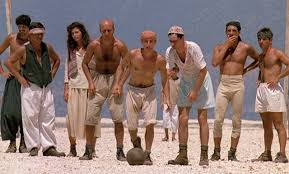
Il film Mediterraneo (1991) diretto da Gabriele Salvatores racconta la storia di un piccolo gruppo di soldati italiani inviati in una piccola isola greca nel 1941 con il compito di stabilirvi un presidio. Il tenente Raffaele Montini racconta le scene iniziali in cui introduce il “plotone di disadattati come me”: ci sono un mulattiere, due fratelli montanari, un sergente e un disertore, tra le altre persone eccentriche. È passato un anno dall’adesione dell’Italia alla Germania contro gli Alleati, e il tenente dice che la nostra missione è “osservare e riferire”, la nostra importanza strategica … zero.

L’isola, chiamata Megisti nel film, è stata girata sull’isola greca di Castelrosso (Kastellorizo ​​in greco). Si trova nel Mar di Levante nel Mediterraneo orientale, non lontano da Rodi e soli 2 chilometri dalla Turchia. Quando arrivano i soldati italiani, l’isola sembra deserta. La prima notte vedono bombardamenti all’orizzonte e tramite intercettazioni radio, scoprono che la nave che avrebbe dovuto raccoglierli è stata distrutta. A poco a poco, i locali greci ricompaiono nel villaggio. Dicono di essersi nascosti perché i tedeschi avevano preso tutti i loro uomini, ma visto che gli italiani erano assolutamente innocui, hanno deciso di tornare alla loro vita normale.

I soldati italiani sono assorbiti dalle vite degli isolani greci e le giornate sono idilliache, piene di amicizia e amore. Il prete ortodosso locale chiede al tenente, che è un pittore dilettante, di restaurare i murales nella chiesa. I fratelli degli uomini di montagna fanno amicizia con un’adorabile pastora, che a sua volta li ama allo stesso modo. Il sergente, l’unico con uno spirito di guerra, impara i balli popolari. E il soldato più timido si innamora della prostituta dell’isola, Vasilissa (che significa “regina” in greco). Si sposano … lei in un elegante abito da sposa greco … e alla fine aprono un ristorante insieme. In effetti, ci sono molti elementi culturali italiani e greci nel film, come il caffè e il calcio, che rafforzano il tema di “una faccia, una razza”.


Tre anni dopo, un aereo da ricognizione effettua un atterraggio di emergenza sull’isola. Il pilota racconta loro cosa è successo in Italia, dalla caduta del fascismo alla liberazione alleata del Paese. La fine del film racconta il ritrovo di alcuni di questi soldati sull’isola greca molti anni dopo.

Questo film ha vinto molti premi, tra cui un Oscar per il miglior film straniero nel 1992. Tuttavia, molti critici cinematografici all’epoca hanno trovato il film “superficiale” e senza “alcun valore redentore”. Questi critici non hanno vissuto di certo una pandemia, altrimenti avrebbero desiderato fortemente un senso di normalità, di bellezza e di pace. Né potevano prevedere che la gente avrebbe voluto viaggiare … anche solo per due ore … verso un’isola greca assolutamente idilliaca.

Posted in Film, Foto, Italia, Italiano, Politica, Storia, Vacanze | 1 Comment

Mediterraneo (in English)

The film Mediterraneo (1991) directed by Gabriele Salvatores tells the story of a small group of Italian soldiers sent to a small Greek island in 1941 to establish a garrison there.  Lieutenant Raffaele Montini narrates the opening scenes in which he introduces the “platoon of misfits like me”:  There is a mule driver, two brothers who are mountain men, a sergeant and a deserter, among other quirky people.  It’s one year after Italy joined Germany against the Allies, and the Lieutenant says our mission is to “observe and report,” our strategic importance…zero.

The island, called Megisti in the film, was shot on the Greek island of Castelrosso (Kastellorizo in Greek).  It is located in the Levant Sea in the eastern Mediterranean not far from Rhodes and only 2 kilometers from Turkey.  When the Italian soldiers arrive, the island appears to be deserted.  The first night they see bombing on the horizon and by radio interception, they discover that the ship that had been intended to pick them up was destroyed.  Gradually, people reappear in the village.  They say they hid because the Germans had taken all their men, but seeing that the Italians were absolutely harmless, they decided to return to their normal lives. 

The Italian soldiers are absorbed into the lives of the Greek islanders, and the days are idyllic, full of friendship and love.  The local orthodox priest asks the lieutenant, who is an amateur painter, to restore the murals in the church.  The mountain men brothers befriend a lovely shepherdess, who, in turn, loves them equally.  The sergeant, the only one with a spirit for war, learns folk dancing.  And the shyest soldier falls in love with the island’s prostitute, Vasilissa (which means “queen” in Greek).  They marry…she in an elegant Greek bridal gown…and eventually open up a restaurant together.  In fact, there are many Italian and Greek cultural elements in the film—like coffee and soccer—that reinforce the theme of “one face, one race.”

Three years later, a reconnaissance plan makes an emergency landing on the island.  The pilot tells them what happened in Italy, from the fall of fascism to the allied liberation of the country.  The ending of the film is the reunion of some of these soldiers on the Greek island.

This film won many awards, including an Oscar for the Best Foreign Film in 1992.  However, there were many film critics at the time who found the film “superficial” and without “any redeeming merits.”  These critics were not living though a pandemic in which people were craving a sense of normalcy, beauty and peace.  Nor did they anticipate that people would want to travel…if only for two hours…to an absolutely idyllic Greek island.

Posted in Differenze culturali, English, Film, Foto, Italia, Politica, Storia, Vacanze | 1 Comment