The Oldest Bank in the World

The English word “bank” comes from the Italian word “banco” or “banca,” which originally referred to a bench with a back, then a bench’s wooden seat.  The word evolved to mean a shop counter in the 1300s, then a craftsman’s workbench in the 1500s.  Finally, it evolved from meaning the counter where money was exchanged to meaning the institution itself that offers financial services.

The modern banking industry was born and developed in Italy during the Middle Ages and early Renaissance.  Italy was Europe’s main economic power.  Rich northern cities like Florence, Siena, Milan, Venice, Genoa and Lucca were centers of commerce, trading with foreign states.  As international trade increased, journeys by land and sea to the rest of Europe and to the Orient were very long and hazardous.  The establishment of banks in the trading centers was crucial to facilitating commerce.  Letters of credit, which were simply the first checks, were created in order to free merchants from the dangers of being robbed and killed while carrying great amounts of cash or valuable goods during their lengthy travels.  Florentine bankers invented these letters of credit, and, by the early 15th century, Florence was home to about 80 banks, which lent money to kings, emperors and popes.
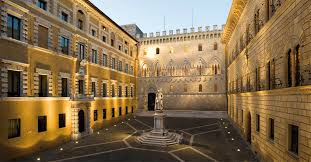
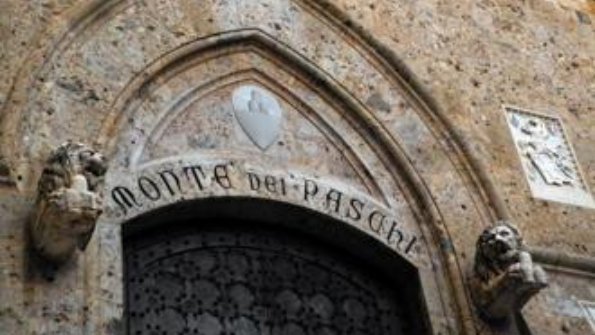
It is the city of Siena in Tuscany that is home to the world’s oldest continuously operating bank.  Founded in 1472, Banca Monte dei Paschi di Siena became over more than six centuries enmeshed in the identity of Siena.  It has been the city’s largest employer, and its foundation has bestowed bank profits on many civic activities, including kindergartens, the university, and ambulance, hospital and health services.  It has provided the costumes that rival clans wear in the processions preceding the Palio, the bareback horse race usually run twice each summer in Siena’s central plaza.  The bank was known by many as Babbo Monte (“Daddy Monte”), that is, a member of the family.

But the bank is now in serious trouble stemming from a long-running saga of ill-fated deals, financial shenanigans, criminal wrongdoing and even a mysterious death.  Its troubles began in 2008 after it paid more than it could afford to acquire a rival bank.  In 2013 allegations were investigated that bank executives hid mounting losses from regulators and shareholders.  The bank’s head of communications was found dead in an alley below his office window in an apparent suicide; the police did not find evidence of foul play.  In 2019 bank executives were convicted of illegally using complex derivatives to cover up the bank’s problems. 
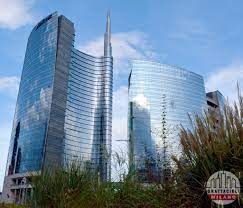
And now Banca Monte dei Paschi has failed a stress test of its finances and has earned a new distinction as Europe’s weakest lender.  Negotiations are under way for a sale to UniCredit, although talks stalled in late October 2021. If it goes through  The bank’s operations would be managed from UniCredit’s headquarters in Milan rather than from the vaulted, stone-lined room with medieval and Renaissance artwork in Siena’s 15th-century fortress in the city’s old quarter.  Many jobs would be lost, and the psychological toll on Siena would be high.

But Siena doesn’t have to search far to find a new mission—health care.  A British drug maker has a major research center in Siena, which develops vaccines for diseases like typhoid that are prevalent in poorer countries.  Toscana Life Sciences, a nonprofit in Siena, helps start-up companies to get on their feet.  One of its research labs is developing an advanced monoclonal antibody treatment for coronavirus.  If it is successful, it would be less expensive than other treatments and could be administered without hospitalizing patients.  
Posted in Architecture, English, Firenze, Foto, Genova, Italia, Medicina, Milano, Storia, Toscana | Leave a comment

Cinecittà (in italiano)

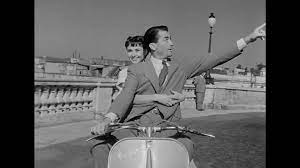
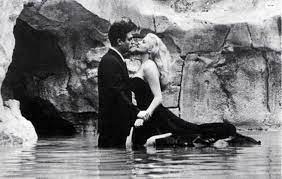
Cinecittà, il complesso di edifici cinematografici italiani dislocati su più di 40 ettari a 9 km dal centro di Roma, è ricco di storia del cinema quanto i backlot di Hollywood di Paramount, MGM e Warner Brothers. È qui che Gregory Peck e Audrey Hepburn sfrecciavano in vespa per la città in “Vacanze romane” (1953). È qui che Charlton Heston correva su un carro in “Ben-Hur” (1959) sul set più grande mai costruito per un film. È qui che Elizabeth Taylor e Richard Burton accesero la frenesia dei tabloid con la loro relazione fuori campo durante le riprese di “Cleopatra” (1963). È qui che Marcello Mastroianni e Anita Eckberg si divertirono nella Fontana di Trevi in “La dolce vita” (1960). Ed è proprio per tutti questi motivi che nacque il termine “paparazzi”. Veniva da un immaginario fotografo di notizie di nome Paparazzo ne “La Dolce Vita”.

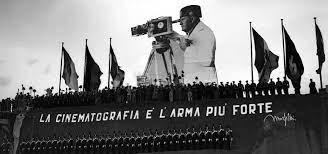
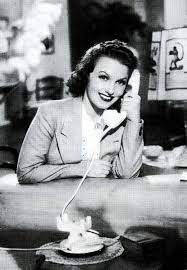
Le origini di Cinecittà risalgono agli anni ’30, quando Benito Mussolini non solo voleva rinvigorire  l’industria cinematografica italiana, ma voleva anche creare ciò che Hitler aveva sviluppato: una macchina di propaganda. Mussolini mandò suo figlio Vittorio a Hollywood per conoscere le fabbriche dei sogni americane e per replicarle a Roma. Cinecittà fu costruita in un anno e mezzo, una fusione architettonica tra l’art déco di Hollywood e il minimalismo dell’era fascista. Si dice che più di 100.000 bobine di notizie prebelliche siano conservate nei caveaux dello studio, inclusa la dichiarazione di guerra di Mussolini agli alleati. Tra il 1937 e il 1943 furono realizzati 279 film, alcuni dei quali mostravano i progressi tecnologici degli studi. Altri erano conosciuti come film del “telefono bianco” perché presentavano ambientazioni lussuose e stili di vita eleganti, che pochi italiani avevano potuto sperimentare nella loro vita quotidiana.

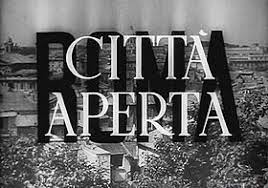
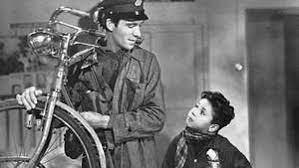
Durante la seconda guerra mondiale, Cinecittà fu bombardata dagli Alleati e saccheggiata dai nazisti. Nel 1944, la produzione cinematografica si fermò e gli studi furono utilizzati come campo profughi. L’America chiuse Cinecittà nel 1945 vietando la produzione di film come punizione per l’alleanza dell’Italia con i nazisti durante la guerra. L’ironia del divieto fu che ciò dette origine al Neorealismo, poiché registi come Roberto Rossellini e Vittorio De Sica scesero in strada per realizzare film come “Roma, città aperta” e “Ladri di biciclette”. In questi film classici, gli standard di Hollywood furono evitati, furono scelti attori dilettanti e le scene furono girate in luoghi autentici. Il plauso della critica per questi film attirò l’attenzione non solo sull’industria cinematografica italiana, ma anche su Cinecittà come alternativa per i produttori di Hollywood, i quali cercavano di abbassare i costi di produzione. 

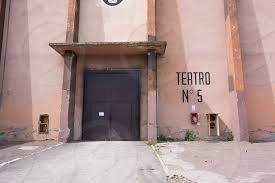
Negli anni ’50 Cinecittà tornò in attività e si affermò su entrambe le sponde dell’Atlantico. Era ed è tuttora il più grande studio cinematografico d’Europa, i registi si riversarono sulla “Hollywood sul Tevere”, come era conosciuto durante gli anni gloriosi degli ’50 e ’60. Per i film italiani, “La Dolce Vita” fu visto come un ponte tra il Neorealismo e i film di arte moderna. Per il resto della sua vita, Federico Fellini girò quasi tutti i suoi film sul palco 5, il più grande teatro di posa d’Europa.

Dopo la morte di Fellini, gli Studi iniziarono a perdere attrattiva. Il governo italiano infatti ha privatizzati nel 1997, vendendo una quota dell’80%. Gli investimenti hanno reso Cinecittà ancora una volta capitale del cinema.  Tanto che, dal ’90 al 2020, possiamo menzionare film come “Il paziente inglese”, “Gangs of New York”, “La passione di Cristo” e “I due papi”. Tuttavia, la concorrenza si profila sempre all’orizzonte; altri studi offrono servizi all’avanguardia e agevolazioni fiscali per ridurre i costi di produzione. Ma Cinecittà è l’unico studio al mondo con pre-produzione, produzione e post-produzione completa su un unico lotto. Quindi, si può entrare con una sceneggiatura e si può uscire con un film completato.

Nel corso degli anni, a Cinecittà sono stati girati più di 3.000 film, di cui 90 hanno ricevuto una candidatura all’Oscar e 47 di questi l’hanno vinto. Mentre il futuro di Cinecittà resta incerto, vivranno per sempre scene de a “la dolce vita” degli anni ’50 e ’60 e gli splendori del passato.

Posted in Architecture, California, Film, Foto, Italia, Italiano, Roma, Storia | 2 Comments

Cinecittà (in English)

Cinecittà, the Italian film studio located on 99 acres less than 6 miles from the center of Rome, is as rich in cinema history as Hollywood’s backlots of Paramount, MGM and Warner Brothers.  It is where Gregory Peck and Audrey Hepburn zipped around the city on a Vespa in “Roman Holiday” (1953).  It is where Charlton Heston raced in a chariot in “Ben-Hur” (1959) on the single largest set (18 acres) ever built for a movie.  It is where Elizabeth Taylor and Richard Burton ignited a tabloid frenzy with their off-screen affair during the filming of “Cleopatra” (1963).  It is where Marcello Mastroianni and Anita Eckberg frolicked in the Trevi Fountain (a foam replica) in “La Dolce Vita” (1960). And because of all this, it is where the term “paparazzi” was coined.  It came from a fictional news photographer named Paparazzo in “La Dolce Vita.”

The origins of Cinecittà date back to the 1930s when Benito Mussolini not only wanted to revive the languishing Italian film industry, but also wanted to create what Hitler had developed—a propaganda machine.  Mussolini sent his son Vittorio to Hollywood to learn about America’s dream factories and to replicate them in Rome.  Cinecittà was built in a year and a half—an architectural fusion of art deco from Hollywood and Fascist-era minimalism.  It is said that more than 100,000 pre-war news reels are stored within the studio’s vaults, including Mussolini’s declaration of war on the allies.  Between 1937 and 1943, 279 films were made, some of which showcased the technological advances of the studios.  Others were known as “white telephone” films because they featured ritzy settings and posh lifestyles that few Italians experienced in their daily existence.

During World War II, Cinecittà was bombed by the Allies and looted by the Nazis.  By 1944, film production stopped, and the studios were used as a refugee camp.  America closed down Cinecittà in 1945 forbidding films to be made there as a punishment for Italy’s alliance with the Nazis during the war.  The irony of the ban was that it gave rise to Neorealism, as filmmakers like Roberto Rossellini and Vittorio De Sica took to the streets to make films like “Rome, Open City” and “The Bicycle Thief.”  In these classic films, Hollywood standards were eschewed, amateur actors were used, and scenes were shot in authentic locations.  Critical acclaim for these films not only drew attention to the Italian film industry, but also elevated Cinecittà as an alternative for Hollywood producers seeking to lower production costs.

By the 1950s Cinecittà was back in business and established a great reputation on both sides of the Atlantic.  It was and still is the largest film studio in Europe, and directors flocked to “Hollywood on the Tiber,” as it was known during the glory years of the ‘50s and ‘60s.  For Italian films, “La Dolce Vita” was seen as a bridge between Neorealism and Modern Art films.  For the rest of his life, Federico Fellini made nearly all his movies on Stage 5, the largest soundstage in Europe. 

After Fellini’s death in 1993, Cinecittà began to languish.  The Italian government privatized it in 1997, selling an 80% stake.  Investments have made Cinecittà a cinema capital once again.  Since the 1990s, films produced there have included “The English Patient,” “Gangs of New York,” “The Passion of Christ” and “The Two Popes.” However, competition always looms on the horizon; other studios offer state-of-the-art facilities and tax breaks to lower production costs.  Cinecittà, however, is the only studio in the world with pre-production, production, and full post-production on one lot. Thus, one can walk in with a script and walk out with a completed movie.

Over its lifetime, more than 3,000 movies have been filmed at Cinecittà, of which 90 received an Academy Award nomination and 47 of these won.  While the future for Cinecittà remains uncertain, there will always be “la dolce vita” days of the ‘50s and ‘60s and the splendors of the past.

Posted in Architecture, English, Film, Foto, Italia, Roma, Storia | 1 Comment