The Roseto Effect

Roseto Valfortore

Roseto Valfortore

In 1882, a group of 11 men departed from Roseto Valfortore in the Puglia region of Italy to escape the extreme poverty of their mountain village. They emigrated to America and, in the end, settled in Pennsylvania in the foothills of the Poconos. Others from Roseto joined them over time. They built a community in America, which they called Roseto, similar to the one they had left behind.

Roseto, Pennsylvania

Roseto, Pennsylvania

They recreated their life from the old country. They were a very tight-knit community. The Welsh, the English, and the Germans from nearby towns shunned the Italians. Slate quarries were the main local industry. The Anglosaxon owners doled out the worse work to the Italians.

For decades Roseto remained a safe haven from hostile external forces. The Rosetans built their own church and their own school. They constructed blouse mills in the town where the women went to work. Two cousins managed bakeries in their basements and furnished the entire town with bread, pizza, and pasta. They made their own wine and grew their own vegetables.

By the 1960s, 95% of the inhabitants of Roseto were descendents of Roseto Valfortore. Roseto in Pennsylvania was one of the most homogeneous immigrant enclaves in America.newspaper At that time, Roseto captured the attention of two doctors who wanted to understand why almost nobody in Roseto died of a heart attack or showed signs of cardiac disease. For years, researchers studied the medical records of Rosetans as well as those of inhabitants of nearby towns. They also studied their life styles.

Quarry Workers

Quarry Workers

The Rosetans seemed to break every health rule in the book: They smoked cigars and cigarettes. Both sexes drank wine with seeming abandon. They fried their sausages and meatballs in lard. They ate salami and cheese high in cholesterol. The researchers also studied genetics, the drinking water, and the availability of medical care, but could not find an explanation. Moreover, the men worked in the toxic environment of the slate quarries.
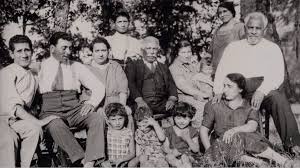
Family Life

Tightly-knit Families

The research concluded that family and social ties protected the Rosetans from cardiac disease. The inhabitants had a social life centered on the family. It was intergenerational and interdependent. Everyone worked, there was no crime, nor was there any request for public assistance. Everyone helped everyone else. The rich never flaunted their wealth; their clothes and housing were like everyone else’s. Everyone supported the local businesses. In other words, nobody was alone in Roseto. No one seemed unhappy or too stressed.

The researchers also made a prescient observation in 1963: They believed that as the Rosetans became more “Americanized” (in the sense of less close, less modest, and less interdependent), they would also become less healthy. The loss of the famous “Roseto Effect” would become evident within a generation. And so it was. A study in 1992, published in the American Journal of Public Health, confirmed this sad prediction.

Posted in Abitudini, Differenze culturali, English, Foto, Italia, Italoamericani, Puglia, Storia | 4 Comments

L’inglese: La lingua comune per l’Unione Europea?

Di quando in quando, gli europei sollevano la questione di una lingua comune nella costruzione di una democrazia transnazionale europea. Alcuni osservatori ritengono che puntare su un’unica lingua, segnatamente l’inglese, sia la scelta giusta per permettere l’emergere di un sentimento di solidarietà continentale. La tesi secondo cui una democrazia ha bisogno di una lingua comune per funzionare, nella filosofia moderna, rimonta a John Stuart Mill.

Ma è lecito essere scettici a riguardo. È davvero possibile che l’idea non ha validità generale e che non si è dimostrata adatta a tutte le circostanze. Per funzionare le democrazie hanno bisogno di una comunicazione efficace e inclusiva, ma non necessariamente una sola lingua in comune. La Svizzera mostra che è possibile avere una democrazia multilingue solida ed economicamente rigorosa. La Spagna e la Belga mostrano invece che imporre una lingua nazionale sulle altre rischia di generare tensioni sociali e politiche.

Nell’Unione Europea l’inglese è la lingua materna di circa il 13 per cento dei cittadini. Quindi l’inglese non è e può essere una lingua “neutra” come il latino medioevale o l’esperanto. In una Europa anglofona i madrelingua inglesi godrebbero di vantaggi indiscutibili, ma per molti versi inaccettabili. La posizione egemone dell’inglese in Europa frutta al Regno Unito nel risparmio sulle spese di insegnamento delle lingue straniere e sulle traduzioni. E l’inglese permetterebbe anche ai paesi al di là della Manica di attirare più facilmente personale altamente qualificato e studenti rispetto agli altri Stati europei.

Non è chiaro in che modo la promozione dell’inglese come unica lingua comune gioverebbe alla causa della democrazia continentale e alla solidarietà fra popoli. Se bastasse una lingua unica come l’inglese per rendere i popoli “più europei,” i britannici dovrebbero già essere i maggiori sostenitori dell’Europa unita. Il 56 per cento dei tedeschi e 51% dei greci dichiara di avere una conoscenza almeno scolastical dell’inglese, ma ciò non ha impedito che in occasione dello scoppio della crisi del debito nella zona euro sorgesse una reciproca e profonda diffidenza fra le opinioni pubbliche dei due Paesi.

Diversi studi invece mostrano che l’utilizzo prevalente dell’inglese come lingua unica in Europa per le faccende politiche ed economiche ostacola la costruzione di una vera democrazia europea più di quanto non la favorisca. L’inglese è infatti una lingua conosciuta molto bene solo da una esigua minoranza dei cittadini europie. Nonostante decenni di insegnamento nelle scuole solo il 7-8 per cento della popolazione europea non madrelingua inglese dichiara di avere una conoscenza molto buono di questa lingua, cioè una competenza linguistica adequata a partecipare alle attività politiche in una democrazia anglofona. Non ci sono grandi differenze tra le generazioni, mentre la conoscenza tende a concentrarsi fra i cittidini europei appartenenti alle fasce della popolazione più istruite e con reddito da lavoro più elevato. Insomma una politica monolingue creerebbe diseguaglianze fra Stati membri e fra ceti sociali, alimentando sentimenti di lontananza verso le istituzioni europee.

La politica multilingue dell’Ue, il rispetto delle diversità e un diffuso insegnamento di diverse lingue europee nelle scuole e nelle università, invece, rendono possibile una gestione più efficace e inclusive della comunicazione transnazionale europea. Gli europei continuano e continueranno a vivere e lavorare all’interno dei confini geografici e mentali degli stati nazionali. La situazione tipica che si osserva in pratica non è quella di un calabrese che dibatte di austerità fiscale con uno slovacco, ma quella di un calabrese che discute con un campano degli effetti sull’economia italiana del rigore fiscale tedesco. Avere informazioni in italiano su quello che accade nelle istituzioni a Bruxelles o Francoforte e sapere un po’ di tedesco, in questo caso, è quello che serve.

Investire su lingue quali Tedesco o francese è strategico non solo per i motivi legati alla costruzione europea ma anche per motivi commerciali. In primo luogo, Germania e Francia sono le principali destinazioni delle esportazioni italiane. Inoltre, l’inglese non è l’unica lingua a essere remunerata sul mercato del lavoro. Secondo alcuni recenti studi sulla redditività delle competenze linguistiche sul mercato del lavoro europeo, in Italia la conoscenza del tedesco e del francese, in termini di reddito individuale, rende di più in percentuale rispetto all’inglese, e questo accade proprio perchè si tratta di competenze più rare e quindi più remunerate.

Il problema non è l’inglese in sè, ma l’egemonia di una lingua ufficiale dell’Unione sulle altre. Le istituzioni europee nate dopo la fine della seconda guerra mondiale sono state create proprio con l’intento di neutralizzare le spinte egemoniche di un Paese sugli altri delegando alcuni poteri a istituzioni comuni sovranazionali che rappresentano tutti gli Stati membri. Il multilinguismo istituzionale non è altro che il corollario linguistico di questa idea. A chi obietta che garantire la comunicazione nelle 24 lingue ufficiali dell’Unione è troppe caro va fatto notare che il multilinguismo costa ai contribuenti solo lo 0.0085% del PIL dell’insieme dei 28 Stati membri, meno dell’1% del bilancio delle istituzioni europee e poco più di due euro all’anno a cittadino. È difficile ritenere che si tratti di costi insostenibili, specialmente se confrontati con i costi delle diseguaglianze di un’Europa monolingue.

Questo articolo è si basato su un’intervista che è apparso sul Corriere della Sera lo scorso anno . Purtroppo , non riuscivo a trovare il nome dell’autore.

Posted in Abitudini, Italiano, Politica | Leave a comment

English: A Common Language for the European Union?

From time to time, Europeans raise the question of the importance of a common language in building a multinational European democracy. Some observers believe that aiming for a uniform language, specifically English, would allow for the emergence of a feeling of continental solidarity. In modern philosophy, the theory that a democracy needs a common language in order to function dates from John Stuart Mill. The following opinions are based on those expressed in an article in Corriere della sera. (Unfortunately, it was a long time ago, and I couldn’t find the author’s name.)

But it is useful to be skeptical of the importance of a common language for the EU. And it is indeed possible that the idea has no general validity, as it has been shown not to be adaptable in all circumstances. In order to function, democracies need effective and inclusive communication, but not necessarily only one common language. Switzerland shows that it is possible to have a multilingual democracy that is also economically vigorous. Spain and Belgium show instead that to impose a national language on others generates social and political tensions.

In the European Union, English is the mother tongue of about 13% of the citizens. Therefore, English is not and cannot be a “neutral” language like Medieval Latin or l’esperanto. In an English-speaking Europe, Great Britain would enjoy indisputable advantages, while others would experience unacceptable disadvantages. The leadership position of English in Europe would bear fruit for the United Kingdom in savings on the expenses of teaching foreign languages and translation. And the use of English would also allow the countries on the west side of the English Channel to more easily attract highly qualified personnel and students compared to other European nations.

It is not clear just how the promotion of English as a common language would contribute to the cause of continental democracy and to the solidarity of the people. If a unique language like English were enough to make the people “more European,” then the British would already be the major supporters of European unity. About 56% of Germans and 51% of Greeks claim to have a knowledge (at least nominally) of English, but at the outbreak of the debt crisis in the Eurozone, this did not prevent the rise of a reciprocal and profound distrust in public opinion between the two countries.

Different studies show instead that the prevalent use of English as the only language in Europe for political and economic matters could hinder the construction of a true European democracy more than it favors it. English is in fact a language known well by a very small minority of European citizens. Notwithstanding years of education in school, only 7-8% of the European population whose mother tongue is not English claim to have a very good knowledge of this language, that is, a linguistic competence adequate to participate in political activities in an English-speaking democracy. There are not large differences between generations, but knowledge of English tends to be concentrated among more educated European citizens with higher incomes. Therefore, a one-language policy would create an inequality among member states and among different social classes, fueling feelings of being distanced from European institutions.

Instead, it can be argued that the multilingual policy of the EU, with respect to diversity and the educational spread of different European languages in schools and universities makes possible a more effective management and more inclusive communication across European countries. At least for the foreseeable future, Europeans will continue to live and work within the geographic and psychological boundaries of their nation. The typical situation is not a Calabrese who debates fiscal austerity with a Slovak, but rather a Calabrese who discusses with a paisano some of the effects on the Italian economy of a rigorous fiscal German policy. To have information in Italian on what happens in Brussels and Frankfurt institutions and to know perhaps a little German, in this case, is what it takes.

To invest in languages such as German or French is strategic not only for reasons tied to building Europe but also for commercial reasons. Germany and France are the principal destinations of Italian exports. And English is not the only language to be compensated in the workplace. According to some recent studies on the incomes of those linguistically competent in the European workplace, in Italy the knowledge of German and French, in terms of individual income, repays more with respect to English, and this happens because it’s a matter of a rarer competence and therefore is paid more.

The problem is not the English language itself, but the hegemony of one official language in the European Union over others. European institutions born after the end of the Second World War were created specifically with the intent of neutralizing the domination of one country over others by delegating some powers to institutions that represent all of the member states. Having multilingual institutions is the linguistic corollary of this idea. Those who object that to guarantee communication in 24 official languages of the Union is too expensive should note that multilingualism costs contributors only 0.0085% of the GDP of the 28 member states, less than 1% of the balance sheet of European institutions, and much less than 2 Euros annually per citizen. It is difficult to maintain that these are unsustainable costs, especially in light of the costs of inequality under a one-language Europe.

Posted in Abitudini, English, Politica | Leave a comment