
Italians’ passion for coffee is well known throughout the world. In fact, coffee is so integrated into Italian culture and its “rules” are so precise that foreigners often struggle to understand how to order the national drink. For a review, see the post, Il Culto del Caffè, June 16, 2016.
Recently, our Santa Barbara Italian conversation group took a language course from a delightful teacher. Eight of us talked non-stop, cooked together, studied grammar, and learned about Italian history, culture, and customs. We shared “Dieci modi di bere il caffè in Italia”—10 ways to drink coffee in Italy:
- Caffè
 Espresso is the “normal” coffee. In other words, espresso is the default setting. If don’t want to wave your foreign passport in public, it’s better not to use the word “espresso” but instead to ask for “un caffè, per favore” at the bar.
- Ristretto
Caffè ristretto or basso (restricted or short) has less water and is therefore a very small coffee, at times only a few drops.
- Lungo
Caffè lungo is prepared by adding more water than usual, thus obtaining a coffee with more caffeine than normal. If it is served in a large cup, you have American coffee, which Italians sometimes call acqua sporca (dirty water).
- Macchiato
This type of coffee comes from an ancient Milanese custom, which consisted of diluting coffee in milk to make it drinkable even for children. It is served in a small cup.
- Cappuccino
 This is prepared in a large cup with coffee and whipped milk and foam. It is consumed almost exclusively at breakfast. If the milk is not whipped and is served in a glass, you have a caffellate. Italians never order either after lunch or dinner because they shiver at the thought of hot milk hitting a full stomach. If foreigners want to break this rule, it would be polite to excuse yourself to the barista.
- Marocchino
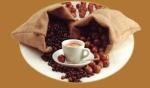 It looks like a small cappuccino, but in reality, it is prepared with coffee, liquid cream and cocoa. You can drink it almost exclusively in Turin or Milan. Another regional coffee is caffè alla nocciola (hazelnut coffee) from Naples, which is a frothy espresso with hazelnut cream.
-
 Mocaccino
A mocaccino is a cappuccino with chocolate and sometimes served with the addition of cocoa powder. It is prepared in a glass in order to show the layers of coffee, chocolate, and milk foam.
- Corretto
 In a caffè corretto (corrected or laced), you add a dose—large or small—of grappa, brandy, or other alcoholic beverage.
- Shakerato
This is coffee made very cold with ice. It can be consumed sweetened or bitter.
- Hag
Hag espresso coffee is decaffeinated coffee.
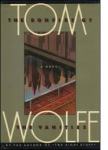 “Bonfire of the Vanities” è un romanzo satirico americano del 1987 di Tom Wolfe. È un dramma sull’ambizione, il razzismo, la classe sociale, la politica, e l’avidità a New York negli anni ’80. Il titolo è un riferimento ai storici roghi delle vanità, che avvennero nella Firenze rinascimentale sotto il dominio di Girolamo Savonarola, che ordinò la combustione di oggetti considerati peccaminosi, come cosmetici, specchi, libri, strumenti musicali, e arte.
 Chi era questo Savonarola, le cui statue raffigurano una figura spaventosa, incappucciata, e gesticolante? Nato a Ferrara nel 1452, Savonarola proveniva da una famiglia nobile. Iniziò i suoi studi in medicina, ma presto lasciò per diventare frate domenicano. Nel 1982 conquistò i fiorentini con le sue prediche appassionate. I suoi seguaci furono chiamati “piagnoni” per le lacrime versate durante i sermoni di Savonarola.
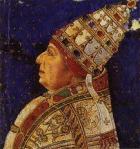 Si oppose ai Medici, signori di Firenze, e la chiesa dei Borgia. Al tempo la Chiesa Cattolica attraversava un momento di estrema decadenza. Sotto la guida di Alessandro VI, aveva toccato il fondo. Aveva trasformato Roma in una città-bordello che poi Lutero paragonò a Sodoma. Il critico più aspro di tale degenerazione fu proprio Savonarola: “Nella lussuria ti sei fatta meretrice sfacciata, tu sei peggio che bestia, tu sei mostro abominevole”.
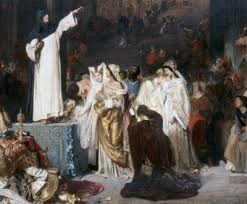 Savonarola era noto per le sue profezie di gloria civica e per la sua denuncia della corruzione del clero, del dominio dispotico, e dello sfruttamento dei poveri. Alla sua esortazione, i Fiorentini espulsero i dominanti Medici e stabilirono una breve repubblica. Savonarola istituì un’estrema campagna puritana. Il Papa lo tollerò per un po’ e poi lo bandì dalla predicazione. Savonarola sfidò il Papa e continuò i roghi delle vanità. Il Papa allora lo scomunicò.
 L’opinione popolare si rivoltò contro il predicatore. I Fiorentini lo catturarono e richiesero il ritorno dei Medici. Nel maggio del 1498, il frate domenicano fu impiccato e poi bruciato sul rogo a Firenze con i suoi fratelli Domenico e Silvestro, con l’accusa di eresia. Le ceneri furono poi disperse nell’Arno dal Ponte Vecchio.
 religiose. A metà del diciannovesimo secolo, i “nuovi piagnoni” trovarono ispirazione negli scritti e nei sermoni del frate per il risorgimento italiano. Sottolineando il suo attivismo politico sul suo puritanesimo e sul suo conservatorismo culturale, restaurarono la voce di Savonarola per un cambiamento politico radicale. L’enciclopedia cattolica su Girolamo Savonarola conclude: “All’inizio Savonarola era pieno di zelo, pietà, e sacrificio per la rigenerazione della vita religiosa, ed era portato a scagliarsi contro queste virtù a causa del suo fanatismo, ostinazione e disobbedienza. Non era eretico in materia di fede”.

