Domino’s è in Italia?

Come si dice chutzpah in italiano? Il mio dizionario suggerisce temerarietà, sfrontatezza, e faccia tosta. È vero che Domino’s è la più grande catena di pizzerie al mondo con oltre 17.000 negozi in 90 paesi. Ma pensare che l’azienda potesse conquistare gli italiani proprio nel paese che ha inventato la pizza sembrava una mossa d’affari kamikaze.

Domino’s nasce a Milano nel 2015 con 29 negozi nelle principali città e ne prevede l’apertura di altri 880. Secondo un resoconto, sperava di conquistare clienti con ingredienti “puramente italiani”, tra cui salsa di pomodoro “autentica”, prosciutto di Parma, gorgonzola, grana padana e mozzarella di bufala. Un altro account ha affermato che Domino’s ha pianificato di convertire il gusto degli italiani nella pizza attraverso creazioni come la pizza all’ananas, la pizza con cheeseburger e la pizza con pollo barbecue.
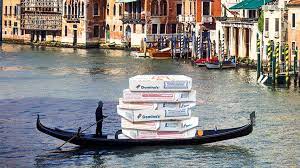
Qualunque sia il menu, Domino’s ha anche pianificato di distinguersi fornendo un servizio strutturato di consegna nazionale. Poi è arrivata la pandemia. Quando la ristorazione è stata chiusa, pizzerie e altri ristoranti in Italia hanno aumentato le consegne a domicilio, utilizzando servizi di terze parti come Deliveroo, Just Eat Takeaway e Glovo.

Domino’s ha affermato che i suoi problemi erano il risultato di un “livello di concorrenza notevolmente aumentato nel mercato delle consegne di cibo con catene organizzate e ristoranti “mamma e papà” che consegnavano cibo per sopravvivere”. Tuttavia, anche quando le restrizioni pandemiche sono state allentate e i consumatori sono tornati a sedere ai ristoranti, Domino’s non ce l’ha fatta proprio a sopravvivere. A sette anni dal debutto in Italia, il colosso americano della pizza chiude formalmente i suoi negozi nel luglio 2022.

Alcune catene americane hanno avuto più successo in Italia. Starbuck’s ha aperto a Milano nel 2018. Anche se Starbuck’s è stato originariamente ispirato dalla cultura italiana del caffè, infiltrarsi nel paese che ha portato l’espresso nel mondo sembrava di sicuro un po’ folle. Il metodo di tostatura di Starbuck è diverso da quello del caffè italiano, ad esempio, le quantità sono enormi (insieme ai prezzi) e la cultura dei locali per il caffè è diversa da quella dei bar italiani. Tuttavia, la Torrefazione Riserva di Milano è tanto un museo e un mercato (con cornetti e panini e altri prodotti genuini italiani) quanto una caffetteria. Nella città internazionale della moda, questa sembra funzionare, forse con più clienti stranieri che italiani. Chissà dove li porteranno i piani di espansione di Starbuck’s?

Nel frattempo, l’impronta di Domino’s nella patria della pizza sta scomparendo. I social media abbondavano di commenti come “Divertente pensare che Domino pensasse di poter conquistare l’Italia”, “Follia”, “Cercare di aprire Domino’s Pizza in Italia è come cercare di vendere la neve al Polo Nord”.

Posted in Abitudini, Cucina italiana, Differenze culturali, Foto, il Caffé, Italia, Italiano, Milano | Leave a comment

Domino’s in Italy?

How do you say chutzpah in Italian?  My dictionary suggests temerarietà, sfrontatezza, and faccia tosta.  It’s true that Domino’s is the largest pizza chain in the world with more than 17,000 stores in 90 countries.  But to think that the company could win over Italians in the very country that invented pizza seemed like a kamikaze business move.

Domino’s began in Milan in 2015 with 29 branches in the major cities and with plans to open 880 more stores.  According to one account, it hoped to win customers with “purely Italian” ingredients, including “authentic” tomato sauce, Prosciutto di Parma, Gorgonzola, Grana Padana and Mozzarella di Bufala.  Another account said that Domino’s planned to convert Italians’ taste in pizza through creations like pineapple pizza, cheeseburger pizza and BBQ chicken pizza. 

Whatever the menu, Domino’s also planned to distinguish itself by providing a structured national delivery service.  Then the pandemic hit.  When in-person dining was shut down, pizzerias and other restaurants in Italy scaled up home delivery, using third-party services such as Deliveroo, Just Eat Takeaway and Glovo.

Domino’s said its troubles were the result of a “significantly increased level of competition in the food delivery market with both organized chains and ‘mom and pop’ restaurants delivering food to survive.”  However, even when pandemic restrictions were eased and consumers returned to sit-down restaurants, Domino’s still couldn’t survive.  Seven years after its debut in Italy, the American pizza giant formally shut its stores in July 2022.

Some American chains have been more successful in Italy.  Starbuck’s opened in Milan in 2018.  Even though Starbuck’s was originally inspired by Italy’s coffee culture, infiltrating the country that brought espresso to the world seemed a bit crazy.  Starbuck’s roasting method is different from Lavazza’s, for example, the serving sizes are gigantic (along with the prices), and the store culture is different from the bar scene in Italy.  However, its Reserve Roastery in Milan is as much a museum and market (with cornetti and panini and other genuine Italian products) as it is a coffee store.  In the international city of fashion, this one seems to be working, possibly with more foreign customers than Italians.  Who knows where Starbuck’s expansion plans will take them?

In the meantime, Domino’s footprint in the home of pizza is disappearing.  Social media abounded with comments like, “Hilarious to think that Domino’s thought they could conquer Italy,” “Madness,” “Trying to open Domino’s Pizza in Italy is like trying to sell snow in the North Pole.” 

Posted in Abitudini, Cucina italiana, Differenze culturali, English, Foto, il Caffé, Italia, Milano | 1 Comment

The Messner Mountain Museum

Reinhold Messner is widely considered one of the greatest mountaineers of all time.  Born in 1944 in South Tyrol, he made the first solo ascent of Mount Everest; then, along with another climber, he made the first ascent of Mount Everest without supplemental oxygen.  He was the first climber to ascend all 14 peaks over 8,000 meters (26,000 feet) above sea level.  He was the first to cross Antarctica and Greenland with neither snowmobiles nor dog sleds.  He also crossed the Gobi Desert alone.

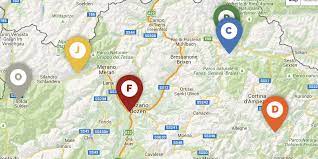
In 2003, Messner began working on a mountaineering museum.  The Messner Mountain Museum (MMM) is a series of 6 museums spread across the Dolomite Mountains in Italy.  (Technically, the Alps include the Dolomites.  Locals call the mountain range in Italy’s northeast corner the Dolomites, while those in the northwest, in the Valle D’Aosta, call them the Alps.)  The six museums—Ortles, Dolomites, Ripa, Juval, Firmian and Corones—present the science of mountains and glaciers, the history of rock climbing and mountaineering, the history of mythical mountains, and the history of mountain-dwelling people.  Here are the six museums:

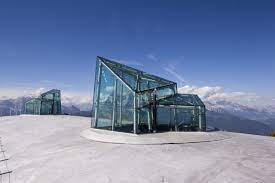
MMM Dolomites, also called “the museum in the clouds,” is housed in a renovated World War I fort on Monte Rite in the heart of the Dolomites.  At an altitude of 2,181 meters (7,156 feet), this museum is sensational for the views alone: From the plateau at the summit there is a 360° panorama of the most spectacular mountains in the Dolomites.  The theme is “rock” and “the vertical world” of the mountains.  The exhibitions illustrate the conquest of the Dolomites with reference to first ascents, new routes, and those natural scientists and mountaineers who wrote alpine history with their discoveries. As Messner has written, “I have climbed some 3,500 mountains in my life…Yet I have never seen more beautiful rock formations in the world than those of the Dolomites.”

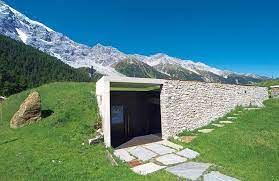
MMM Ortles, the museum devoted to the world of ice, is located beneath a glacier at Sulden am Ortler at an elevation of 1,900 meters (6,234 feet) above sea level.  Skiing, ice-climbing and expeditions to the Poles are the themes of this museum.  Visitors are literally inside the mountain where they experience the worlds of ice mountains, the Arctic and Antarctic, and Mount Everest (“the third Pole”), as well as the power of avalanches.

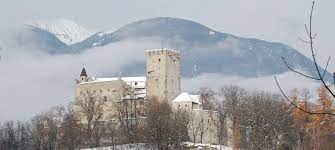
MMM Ripa, a museum located in the castle above the town of Bruneck, is devoted to the mountain peoples of Asia, Africa, South America and Europe.  As Messner says, “It is the people in the mountains who give them life and a history.”  Exhibitions focus on the daily lives, dwellings, cultures and religions of people who live on the brink of life…including the Sherpas, South American Indians, Tibetans, Mongols and Hunzas.

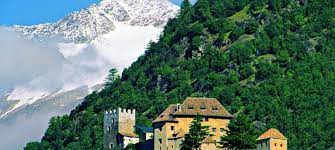
MMM Juval is located in a castle in Vinschgau and is perched like an aerie on a rocky promontory.  This museum is dedicated to the myth and magic of the mountains.  It houses several fine art collections, including a gallery of paintings of the world’s holy mountains, a collection of masks from five continents, and even a Tantra Room where the traditions of Hinduism and Buddhism are explored, such as mantras, meditation and yoga.

MMM Firmian, the museum located in Sigmundskron Castle near Bozen, addresses man’s encounter with the mountains.  It is organized as an itinerary along paths, stairs and towers for viewing works of art, installations and relics.  From exploring the depths of the mountains to the religious significance of their peaks as an aid to orientation and a bridge to the beyond, this museum also includes the history of mountaineering and of the alpine tourist industry.

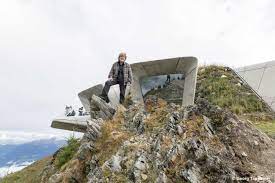
MMM Corones is the final act in the Messner Mountain Museum project and is dedicated to mountain history and mountaineering.  In this museum, Messner presents the development of modern mountaineering, 250 years of progress in the evolution of equipment, and the triumphs and tragedies on the world’s most famous peaks.  Corones is situated on the summit plateau of Kronplatz at 2,275 meters (7,464 feet). It is on the edge of the most magnificent viewing platform in South Tyrol with panoramas extending throughout the Alps.

It is this museum that attracted the attention of CNN, which featured it in “10 scenic and remote museums worth the trip;” each offers stunning natural beauty and artistic value around the world.  This museum was designed by Zaha Hadid (1950-2016), the British-Iraqi architect widely believed to be one of the foremost architects of the late 20th and early 21st centuries.  Her major works include the London Aquatics Centre for the 2012 Olympics, the Broad Art Museum in Los Angeles, Rome’s MAXXI Museum and the Guangzhou Opera House.

Messner sums up Corones this way: “South Tyrol’s famous mountain for skiers and hikers and a perfect launchpad for hanggliders and paragliders is now home to the crowning piece of my mountain museum project…It is a place of withdrawal that opens up the human senses for the above and beyond, where the mountains become an experiential space and a part of our culture.  In mental flights beyond all summits, they are revealed anew.”

Posted in Alpe, Architecture, Arte, English, Foto, Italia, Lo Sport, Storia, Vacanze | Leave a comment