
 It was October 16, 1943, shortly after 5:00 a.m. On duty at the Fatebenefratelli Hospital, on the Tiber Island in Rome, were Giovanni Borromeo, the head physician, Vittorio Sacerdoti, a young practicing physician, and Adriano Ossicini, a medical student. From the nearby Jewish ghetto, the sounds of shouts and gunshots arrived. The “Saturday of Shame” had begun. It was the round-up of Jews by Nazi troops, which led to the capture of about 1,200 men, women and children; they were crammed into 18 wagons bound for Auschwitz-Birkenau where many were immediately murdered in the gas chambers.
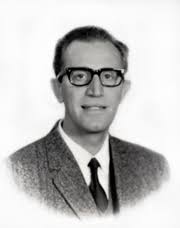 In his later testimony, Ossicini said, “I still remember the heartbreaking cry of a mother on that dawn morning exhorting her little son, ‘Run away, beautiful mamma’s baby, run away!’” Ossicini and his fascist-fighter friend ran to the Ghetto. They managed to bring about 20 young Jews, before they were loaded onto trucks, back to the hospital. Many other fugitives arrived there on their own initiative.
This was not the first time that Fatebenefratelli Hospital served as a sanctuary for Jews. Under Borromeo’s direction, the hospital sheltered and cared for partisans, wounded airmen and Jews throughout the war. In fact, Borromeo had an illegal radio transmitter installed in the basement to aid the partisans. But October 1943 was different. To hospitalize the Jews, they needed to fill out their medical records. They had to write something on the chart to distinguish them from other patients as a protective measure from a Nazi search. Sacerdoti came up with the idea of the “K syndrome” not only because various diseases begin with the letter K, but also as an ironic allusion to the Nazi officer Kesselring, who led the Italian occupation, and Kappler, who had been appointed Rome’s chief of police. “Syndrome K” was purported to be a highly contagious disease whose symptoms included convulsions, paralysis, dementia and ultimately death by asphyxiation.
That night the Nazis arrived on the island. The three doctors welcomed them with masks over their mouths, explaining that a serious epidemic of the K-disease had broken out and that it was highly contagious and deadly. They had instructed patients to cough loudly and appear very ill. While the Nazis combed the hospital looking for people to round up, they carefully avoided any rooms of patients with the K-disease. Then they quickly departed.
This act of bravery on the part of the physicians did not come to light for more than 50  years. And by that time, their accounts varied somewhat—each attributed the idea of the K syndrome to one of the other doctors. While the final tally on the number of Jews who were saved is uncertain, the ingenuity of these doctors offered a glimmer of hope for humankind at a time when happy endings were in short supply. In 2004, Borromeo received recognition posthumously as “Righteous Among Nations” by Yad Vashem, a World Holocaust Remembrance Center in Israel. In 2016, Fatebenefratelli Hospital was recognized as a “House of Life” by the International Raoul Wallenberg Foundation.
A few personal notes about the three physicians: Dr. Borromeo, a staunch anti-Fascist, had turned down stewardship of other hospitals because they required him to join the  Fascist Party. Fatebenefratelli Hospital, which was run by Catholic friars, was considered private and exempt from this requirement. Borromeo hired other physicians who had been discriminated against, like Dr. Sacerdoti, who was a Jew and who was unable to practice at other hospitals but was able to practice at Fatebenefratelli under a different name. Dr. Ossicini was a psychiatrist and staunch anti-fascist; he and Dr. Sacerdoti provided medical assistance to resistance fighters. Because he was in danger anyway, Dr. Sacerdoti often went to the woods around Rome to tend to wounded partisans. He also provided care and medicine to the Jews in the ghetto.
The illicit radio in the basement? When the doctors realized that the Nazis were on their trail, they jettisoned the equipment into the Tiber.
In 2014 Borromeo’s story became part of a documentary called “My Italian Secret: The Forgotten Heroes,” narrated by Isabella Rossellini, Italian actress and filmmaker, who is the daughter of Swedish actress Ingrid Bergman and Italian neorealist film director Roberto Rossellini.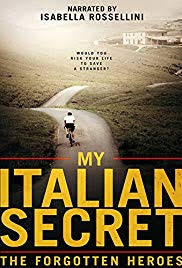
 Nel 20 ° anniversario anno dell’uscita sull’euro, la Banca centrale europea (Bce) ha emesso nuove banconote da 100 e da 200 euro. Completa la seconda serie di banconote, chiamate
  serie Europa, che sono state introdotte gradualmente negli ultimi due anni. Le banconote devono essere aggiornate di volta in volta per prevenire la contraffazione. La Bce ha smesso di stampare la banconota da 500 euro nel 2016, a volte chiamato il “Bin Laden”, dopo che la ricerca ha collegato il suo uso al riciclaggio di denaro, all’evasione fiscale e al finanziamento del terrorismo.
 La nuova caratteristica di sicurezza sulle banconote da 100 e 200 euro è un ologramma con satellite, con piccoli simboli in euro che circondano il numero 100 o 200. Come la banconota da 50 euro,
 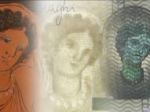 le nuove presentano anche immagini dell’Europa in un altro ologramma e nella filigrana. Nella mitologia greca, Europa era la consorte di Zeus che, sotto forma di toro, la rapì. Europa identificava nella mitologia greca le terre come figure femminili.
 Le banconote sono anche più forti rispetto alla prima serie. Resistono ai picchi di temperatura, alle abrasioni, agli accartocciamenti e alla luce del sole. Possono anche essere lavati in lavatrice e stirate. Ciò significa che queste banconote dovranno essere sostituite meno frequentemente, riducendo così i costi e l’impatto sull’ambiente.

