
I recently read an article in The Washington Post about the impact of television on populist politics in Italy. The story really begins with the opening of Italy’s airwaves by Radiotelevisione italiana (RAI), which is the national public broadcasting company owned by the Ministry of Economy and Finance. Known until 1954 as Radio Audizioni Italiane, much of its programming following WWII was influenced by the BBC. The emphasis was on educational content. Programs like Non è mai troppo tardi and Un viaggio al Po introduced people to life in other parts of the country at a time when most people couldn’t afford to travel.
Then in the 1980s, an aggressive and unabashedly unsophisticated channel called Mediaset entered the market and quickly spread across the country. It countered RAI’s educational mission with cartoons, soap operas, sports, movies and other light entertainment. Mediaset provided almost three times as many hours of movies and entertainment as RAI did and, by contrast, offered almost no news or educational programming. By 1990 half the country had access to Mediaset, which allowed researchers, in various studies, to analyze the impact of television on the country’s politics.
The results are disheartening. Without delving into the researchers’ methodologies, the data (from many sources by many researchers from many countries in many studies) show that continued exposure to Mediaset’s “trashy” programming led to solid support for populist candidates selling simple messages and easy answers. Of course, we know that Mediaset’s founder and controlling owner is Silvio Berlusconi, populist politician and former prime minister. But the researchers emphasize and prove that the relationship between popular media and populist politics is not just a Berlusconi effect. It extends to his competitors, particularly the Five Star Movement. This party was founded by comedian Beppo Grillo a decade ago and has become the second largest party in Italy’s Parliament since the 2018 election.
Television’s role in the populist movement comes not from political messaging but from entertainment. The electoral effect is about 10 percentage points among the two groups that watched Mediaset the most—those under the age of 10 and those 55 and older. Researchers found that young people who watched this programming during their formative years grew up to be “less cognitively sophisticated and less civically minded and less politically active” than their counterparts who had access to public broadcasting. As adults they had math and reading scores significantly worse than those of their peers. Their populist views came from the similarity between the simplicity of the programming and the simplicity of the language and messages of the populist politicians.
“Brain-numbing” effects weren’t as pronounced in Italians exposed to Mediaset later in life; their test scores were similar to those of their peers. Their populist views were influenced by the news which they tended to watch on Mediaset rather than from other broadcasters.
The questions and research continue…including the potential impact of Fox News in the United States on populist views. The question in my mind is whether the connection is causation or correlation. One would think that there are other factors at play. But as the Washington Post article says, “this is a story about how the lowest common denominator of popular media paved the way for the lowest common denominator of populist politics.”
 Da appassionata di baseball, mi non sono sorpresa nel sapere che la squadra Chicago Cubs ha recentement reclutato un giocatore dominicano di nome Robel Garcia. Dopo tutto, molti giocatori di baseball americani provengono dalle isole dei Caraibi. Ma sono rimasta sbalordita nel sapere che lui è stato scoperto in Italia e che aveva giocato per il campionato italiano di baseball.
 Ho iniziato la mia ricerca. Ho scoperto che il livello di competizione nel campionato italiano di baseball è considerato il più alto in Europa e che la Major League Baseball statunitense ricerca e seleziona i propri giocatori in Italia per formare squadre negli Stati Uniti. Non sorprende che i giocatori che sognano di giocare nelle Major amano allenarsi in Italia – per il cibo, il clima, la bellezza e la cordialità, per non parlare poi degli alti standard di gioco.
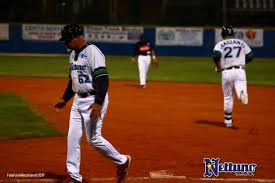 Il campionato italiano di baseball oggi è composto da 8 squadre che sono controllate dalla Federazione Italiana Baseball e Softball (FIBS) a Roma. Metà delle squadre proviene dalla regione Emilia-Romagna. Nel campionato c’è anche una squadra della Repubblica di San Marino. I nomi delle squadre corrispondono solitamente al nome della città (ad esempio, Parma, Bologna, Nettuno) e allo sponsor aziendale della squadra, proprio come nel baseball giapponese.
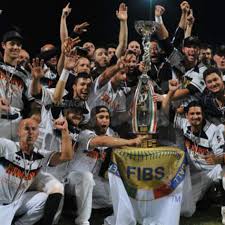 Italia nel 1948 e oggi il campionato è completo con una serie di playoff, in cui le squadre si sfidano nel campionato per vincere lo Scudetto. Secondo le regole FIBS, oggi ognuna delle 8 squadre gioca due serie da 3 partite contro tutte le altre squadre, per un totale di 42 partite in una stagione. (Negli Stati Uniti, ci sono 30 squadre che giocano 162 giochi durante la stagione regolare.) Le quattro squadre che terminano con il miglior record della stagione si qualificano per un round-robin. I primi e secondi classificati del round-robin giocano una serie dei migliori-di-sette per vincere lo scudetto. La FIBS stabilisce anche il numero di visti sportivi concessi ai giocatori stranieri non UE e anche il numero di giocatori stranieri sul campo in qualsiasi momento.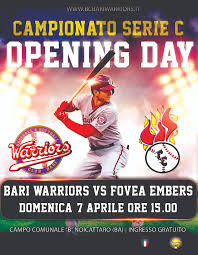
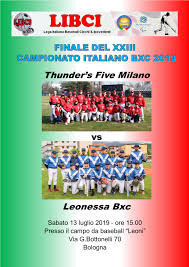 Questo è quanto mi ha portato la mia ricerca. Ho ancora molte domande: cantano come sciocchi “portami fuori al gioco” in inglese o in italiano? Servono hot dog, birra e popcorn durante le partite? Qual è il nome del bar dello sport in cui la gente va dopo la partita? In America, potrebbe essere chiamato “la Panchina”, “la Pancina dei lanciatori” o “il Decimo Inning”. In Italia è probabilmente chiamato “la Quinta Base”, ed è un bar per il caffè che potrebbe servire anche il vino. Domande serie riguardano come far sopravvivere e prosperare questo sport in Italia: cosa ne pensate di portare partite importanti in Italia come la serie degli Yankees-Red Sox a Londra? Forse George Clooney, una stella del baseball in liceo, potrebbe finanziare lo sviluppo del baseball in Italia con il supporto di Mike Piazza, Joe Torre e Major League Baseball. Come costruisci l’interesse popolare per uno sport in un paese che ha già un’indescrivinile passione per il calcio?

 L'Olivo Santa Barbara