
Both the supplì and the arancino/a are Italian street food made from rice. Both are beloved comfort food mostly eaten as appetizers but can be consumed at almost any time of day or night. But one is based in Rome, the other in Sicily. And hence the origins and the recipes differ, as do the loyal defenders of their local specialties. There is even some disagreement over the spelling of the Sicilian delicacy.
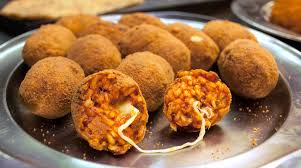 The name of the supplì in the traditional Roman cuisine comes from the French term for “surprise” because it seems that a similar dish had arrived in the city with the Napoleonic troops. The full name of this recipe is “supplì al telefono” because when you cut into it, the mozzarella in the center creates a thread between the two parts, recalling a telephone from a bygone era.
The supplì is traditionally cylindrical in form and smaller than the arancino/a. It is made from cooked rice, typically left over from the night before. The rice is blended with meat ragù, which originally were chicken giblets. After the rice forms are molded by hand with the mozzarella in the center, they are dipped in egg, breaded, and fried. They are eaten while they are hot to preserve the “telephone” effect. The number of variations to the original recipe is limited but increasing. In addition to the classic with ragù, there are vegetarian tomato supplì, as well as those with Carbonara and Cacio e Pepe.
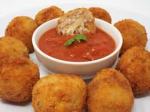 The name of the arancino/a comes from the golden color that is reminiscent of the orange. The historical origins are not very clear; perhaps they date back to the Arab domination from the 9th to the 11th century. A sweet version may date back to the Feast of Saint Lucia in the 17th century as it is traditional in Sicily to eat arancini/e on December 13, Santa Lucia’s feast day.
Like the supplì, the arancino/a is a ball of leftover rice that is breaded with egg and fried.  But from here the similarities diverge. The Sicilian version is larger (8-10 centimeters) and has at least 100 variations. Typically, there is a filling of ragù, peas, caciocavallo or mozzarella, and saffron. Some have seafood, other types of cheese, salami, butter, or tomato.
 Within Sicily, there are other differences besides the filling. In Palermo, the arancina—in the feminine form—is round like the orange. In Catania, the arancino—in the masculine form—is conical in shape perhaps inspired by the silhouette of Etna.
Arancina or arancino? Even the Accademia della Crusca, which gives the “final word” on the Italian language and is the oldest linguistic academy in the world, weighed in on the controversy. The Academy declared that both forms are valid. Arancina in the feminine form is traditionally the fruit from the tree, while the masculine form is the tree itself (for example, mela for apple and melo for apple tree; oliva for olive, olivo for olive tree). It would seem that arancina is preferred but La Crusca recognizes arancino as valid in the Sicilian dialect (from aranciu).
 casa. Nel 2017, nel decimo anniversario della sua scomparsa, si è tenuta una serata costellata di spettacoli all’Arena di Verona, un anfiteatro romano del I secolo d.C. che, con la sua capacità di ben 30.000 spettatori, è il più grande teatro d’opera all’aperto del mondo.
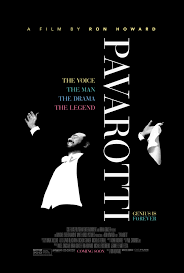 Poi nel 2019 è stato uscito “Pavarotti”, il documentario di Ron Howard. Presenta interviste con familiari, artisti d’opera, manager e promotori che parlano tutti in modo brillante del tenore. È prodotto, tra gli altri, da un rappresentante della Decca Records, la casa discografica di Pavarotti, e presumibilmente ha anche la benedizione della famiglia. Quindi, il film è un tributo al genio di Pavarotti che sottolinea solo alcuni dei difetti dell’artista.
 Lammermoor di Donizetti e poco dopo il suo debutto alla Scala con La bohème di Puccini. Il suo ruolo nel 1966 ne La fille du regiment di Donizetti alla Royal Opera House, Covent Garden, gli è valso il titolo di “King of High Cs”. Ma è stata questa opera al Metropolitan Opera di New York nel 1972 che ha fatto impazzire la folla con ben 17 chiamate ovazioni al sipario.
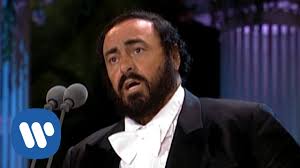 Pavarotti divenne ancora più noto per la sua interpretazione dell’aria, “Nessun dorma” della Turandot di Puccini, che divenne la colonna sonora della sigla di apertura della BBC per la Coppa del Mondo FIFA nel 1990 in Italia (e alla fine la sua canzone simbolo). Poi è arrivato il primo concerto dei Tre Tenori, tenutosi alla vigilia della finale della
  Coppa del Mondo FIFA del 1990 presso le antiche Terme di Caracalla a Roma, con i compagni tenori Plácido Domingo e José Carreras e il direttore Zubin Mehta. Ha affascinato un pubblico globale e la registrazione è diventata il disco classico più venduto di tutti i tempi. Sono poi seguiti molti concerti di Three Tenori.
 L’altro aspetto del documentario che mi è piaciuto molto è stato il ritratto della personalità vincente dell’artista. Era quasi infantile, con un sorriso smagliante, battute spiritose ricongiunti e buon umore che potevano incantare i pantaloni di quasi tutti (beh, questa è un’altra storia). Vieni quasi rapito dal suo sorriso gigante e gli occhi scintillanti.
 consideravano persona non grata, visto che aveva dovuto annullare 26 delle sue ultime 41 apparizioni in programma. Il documentario accenna solo alle cancellazioni dovute alla salute di una delle sue figlie. Ma è importante bilanciare questi difetti con la sua enorme generosità di spirito e i suoi innumerevoli concerti eseguiti per beneficenza.
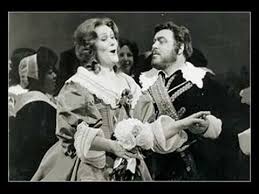 musica, il che rende il suo talento ancora più avvincente. Pavarotti attribuisce a Joan Sutherland l’apprendimento della respirazione. Le esigenze atletiche dell’opera? Senza microfono, proiettava la sua voce sopra un’orchestra completa, per essere chiaramente sentito fin nei palchi superiori di un teatro d’opera da 4.000 posti, e fece ciò per più di tre decenni. Con tutti i suoi successi, era davvero una superstar.
 Luciano Pavarotti was probably the greatest tenor of the twentieth century and the most beloved since Enrico Caruso (1873 – 1921). He was also one of the most commercially successful tenors of all time in part because he won crossover fame as a popular superstar. “I would like to be remembered as the man who brought opera to the masses,” he said, and so he did.
 The other aspect of the documentary that I really enjoyed was the portrayal of the artist’s winning personality. He was almost childlike with a beaming smile, witty rejoiners, and good cheer that could charm the pants off of almost anyone (well, that is another story). You are almost transported when you see his giant smile and sparkling eyes.
 L'Olivo Santa Barbara