Wine Windows

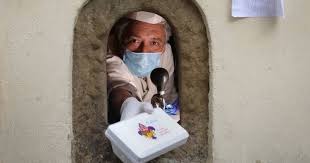
Sometime between the bubonic plagues of the 1300s and 1600s in Europe, wine merchants in Tuscany built “wine windows” to prevent buyers and sellers from coming into close contact.  These arched windows were small openings on the facades of palazzos and buildings through which, over the course of centuries, glasses, flasks, and bottles of wine were bought and sold.  These unique architectural structures and unique commercial ventures were a Florentine specialty.  Wine merchants passed the wine through the window to the client but did not receive payment directly into their hands.  Instead, they passed a metal pallet to the client, who placed the coins on it.  Then the seller disinfected the coins with vinegar before collecting them.

Who knew that people back then understood germ theory or how disease was spread?

The wine windows were given many names over time, showcasing the richness of the Italian language: buchette, finestrini, tabernacoli, porticine, mostre, sportellini, nicchie, porte del paradiso, finestruole, porticciole, buche, finestrine, porticelle.  The names are as varied as the architectural features of each window.

Wine windows fell out of fashion over the centuries, but they are now making a comeback during the pandemic.  Businesses in Florence are using them to offer minimal-contact wine, coffee, cocktails, gelato, and take-out food.  Founded in 1929, Vivoli is one of the oldest gelato purveyors in Florence.  It is using a wine window to sell gelato, semifreddo, zuccotto (a combination of cake and ice cream), and affogato (ice cream “drowned” in coffee).

According to the Wine Windows Association, there are about 150 of these historic windows in Florence.  The association was founded nearly five years ago to protect these unique apertures from demolition and damage and to help citizens and tourists appreciate this icon of Florentine culture.  It is planning to undertake a census of the windows and to assist owners in protecting, restoring, and, in some cases, uncovering lost ones.  The association is also documenting their historical usage.  According to The Wine Window Associations’ president Matteo Faglia, “People could knock on the little wooden shutters and have their bottles filled direct fromm the Antinori, Frescobaldi and Ricasoli families, who still produce some of Italy’s best-known wine today.”
Many thanks to my friend Anne LaRiviere who introduced me to this topic!

Posted in Architecture, Arte, English, Firenze, Foto, Italia, Storia, Toscana, Uncategorized, Vino | Leave a comment

Albright’s Questions

This is the second in a two-part series on Fascism.  Last week:  Mussolini and Trump

Madeleine Albright concludes her book, “Fascism: A Warning” with 10 questions that we should ask ourselves about our prospective leaders:

  1. Do they cater to our prejudices by suggesting that we treat people outside our ethnicity, race, creed, or party as unworthy of dignity and respect?
  2. Do they want us to nurture our anger toward those who we believe have done us wrong, rub raw our grievances, and set our sights on revenge?
  3. Do they encourage us to have contempt for our governing institutions and the electoral process?
  4. Do they seek to destroy our faith in essential contributors to democracy such as an independent press and a professional judiciary?
  5. Do they exploit the symbols of patriotism—the flag, the pledge—in a conscious effort to turn us against one another?
  6. If defeated at the polls, will they accept the verdict or insist without evidence that they have won?
  7. Do they go beyond asking for our votes to brag about their ability to solve all problems, put to rest all anxieties, and satisfy every desire?
  8. Do they solicit our cheers by speaking casually and with pumped-up machismo about using violence to blow away enemies?
  9. Do they echo the attitude of Mussolini: “The crowd doesn’t have to know,” all it has to do is believe and “submit to being shaped?
  10. Or do they invite us to join with them in building and maintaining a healthy center for our societies, a place where rights and duties are apportioned fairly, the social contract is honored, and all have room to dream and grow?

The answers will not tell us whether the prospective leader is right or left, conservative or liberal, Republican or Democrat.  The answers will tell us a lot about who wants to lead and whether we have confidence in the future or are face dire warnings. 

Posted in English, La Gente, Politica | 1 Comment

Le Domande della Albright

Questo è il secondo di una serie in due parti sul fascismo. La scorsa settimana: Mussolini e Trump

Madeleine Albright conclude il suo libro “Fascismo: un avvertimento” con 10 domande che dovremmo porci sui nostri futuri leader:

1. Nutrono i nostri pregiudizi suggerendo di trattare le persone che non appartengono alla nostra etnia, razza, credo o partito come indegni di dignità e rispetto?

2. Vogliono che alimentiamo la nostra rabbia verso coloro che crediamo ci abbiano fatto un torto, che diamo libero sfogo alle nostre lamentele puntando persino alla vendetta?

3. Ci incoraggiano a disprezzare le nostre istituzioni di governo e il processo elettorale?

4. Cercano di distruggere la nostra fede in alcuni dei più importanti contributi alla democrazia come una stampa indipendente e una magistratura professionale?

5. Sfruttano i simboli del patriottismo – la bandiera, la promessa – in uno sforzo consapevole per metterci l’uno contro l’altro?

6. Se sconfitti alle urne, accetteranno il verdetto o insisteranno ugualmente, senza prove, di aver vinto?

7. Vanno oltre il chiedere i nostri voti, vantandosi della loro capacità di risolvere tutti i problemi, mettendo a tacere tutte le nostre ansie per soddisfare ogni nostro desiderio?

8. Sollecitano i nostri applausi parlando con disinvoltura e con arrogante machismo sull’uso della violenza per spazzare via i nemici?

9. Riecheggiano l’atteggiamento di Mussolini: “La folla non deve sapere”, tutto ciò che deve fare è credere e “sottomettersi a essere plasmata?

10. Oppure ci invitano a unirci a loro per costruire e mantenere un centro sano per le nostre società, un luogo in cui diritti e doveri sono equamente ripartiti, dove il contratto sociale venga rispettato e tutti abbiano spazio per sognare e crescere?

Le risposte non ci diranno se il potenziale leader è di destra o di sinistra, conservatore o liberale, repubblicano o democratico. Le risposte ci diranno molto su chi vuole guidare e se abbiamo fiducia nel futuro o se siamo di fronte a terribili segnali.

Posted in Italiano, La Gente, Politica, Uncategorized | 1 Comment