

Christmas is inspired by traditions from the Romans, Celtics, Norse, Druids and other pagan cultures. They all shared one celebration that happened to fall around Christmas time—the winter solstice, which is the shortest day of the year in the Northern Hemisphere. For agricultural people, winter marked the end of the year’s harvest and the chance to rest from toiling in the fields and to enjoy the company of loved ones.
Both pagan and Christian traditions have coalesced into the holiday that is celebrated throughout the world. Italy has some traditions that differ from those in the United States. And, naturally, traditions can differ in Italy from city to city, from region to region, from what food is served to when presents are opened.

Italians kick off the season on December 8, the Day of the Immaculate Conception. (This is the day the Church declares that Mary was born without original sin.) December 8 is when decorations go up in homes and on the streets and when Christmas markets begin. Huge Christmas trees can be found in main piazzas, like in front of the Colosseum or in Milan’s Piazza Duomo, and Babbo Natale, a Santa counterpart, spreads Christmas cheer. December 8 is also the start of special Novenas, which are a series of prayers and church services.

The eight days before Christmas, also known as the Novena, the Zampognari (pipers) continue the tradition of festive bagpipe playing that dates back to ancient Roman times. The pipers were shepherds, who, to earn an extra income, would travel down from their mountain homes at Christmas to perform in market squares. The regions one is most likely to see the zampognari are Abruzzo, Basilicata, Campania, Calabria, Molise, Puglia and Lazio.
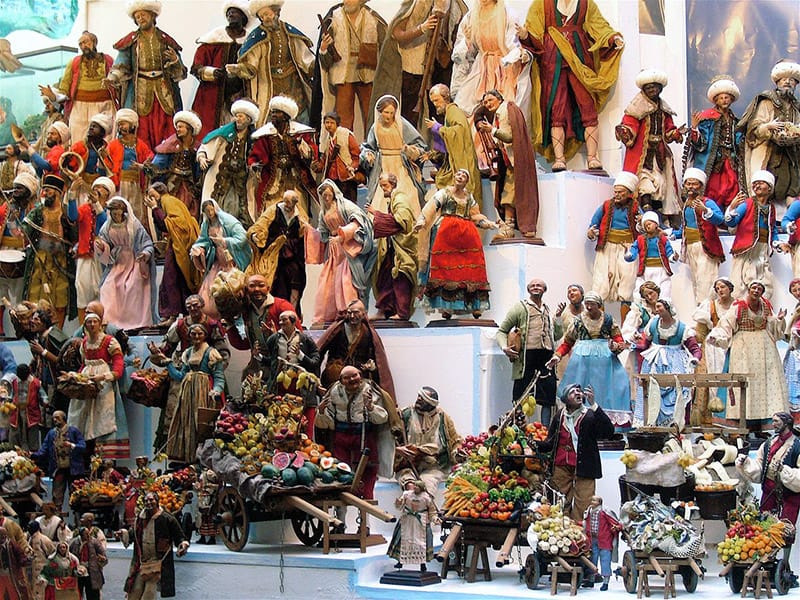
The city of Naples is world famous for its Nativity scenes, known as Presepe Napoletano. The first in Naples is believed to date back to 1025 in the Church of Santa Maria del Presepe. Beginning in 1223, St. Francis of Assisi popularized the Nativity scene as a way for churches and monasteries to tell the Christmas story. Nativity scenes in the home became popular in the 16th century. Today they are put out on December 8, but the figure of the baby Jesus is not put in the manger until the evening of December 24.
Sometimes Nativity scenes are displayed in the shape of a pyramid that can be many meters tall. It is made of tiers of shelves that are decorated with colored paper, gold-covered pinecones and small candles. The shelves might also contain fruit, candy and presents. A star is often hung at the top. One special thing about Neapolitan Nativity scenes is that they contain extra “every day” people and objects, such as houses, waterfalls, animals and even figures of politicians and celebrities. Naples is home to the largest Nativity scene in the world with over 600 objects on it.

Although Italians avoid meat on Christmas Eve (la vigilia) and may instead have a light seafood meal, among Italian-Americans The Feast of the Seven Fishes is a popular tradition. It was probably brought to America by Italian immigrants in the 1800s. Fish commonly eaten are baccalà (salted cod), clams, calamari, sardines and eel. Why seven fishes? Possibly seven represents the seven days of creation in the Bible or the seven holy sacraments of the Catholic Church.

After dinner on Christmas eve, some Italians head to midnight Mass, but in the Dolomites, skiers carry torches down slopes to welcome Christmas day, which is celebrated with traditional dishes like pasta in brodo, roasts and desserts like panettone.
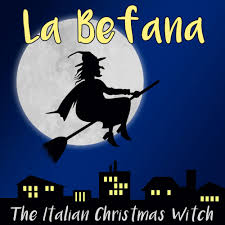
In some parts of Italy, gifts are exchanged on the morning of Christmas day. Others exchange them on Christmas Eve, the 24th. Some smaller towns and cities in northern Italy believe that blind Santa Lucia brings gifts to children on December 13th, so they open them that morning. Finally, on January 6, the children open the gifts of the Befana. Both a religious and popular festival, the Epiphany is both a manifestation of the divinity Jesus to the three Magi, and a festival in which the Befana, a “good old witch”, flying in the sky on her broom, goes down the chimneys and fills children’s socks with sweets. According to legend, the witch was believed to have followed the kings, but she got lost. The Befana is a tradition throughout Italy, very strong in Rome (we remember in the past the fascist Befana was born to distribute gifts to the poorest children), in Bologna and in Venice, where people believe that the Befana arrives every year by boat.
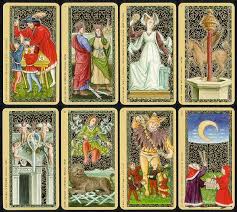
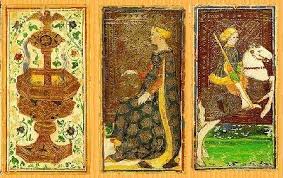 areggiavano tra loro con dei giochi creati ad hoc (cioè per questo scopo) per divertire i propri cortigiani. Usando mazzi di carte riccamente illustrati, i nobili giocavano a un gioco di abilità e fortuna chiamato “tarocchi” (la parola potrebbe aver significato originariamente “stoltezza”). Oggi sopravvivono circa 16 mazzi di carte (alcuni incompleti) commissionati dalla famiglia Visconti. Il set più completo è il mazzo Visconti-Sforza, 74 carte che si trovano tra la Morgan Library di New York City, l’Accademia Carrara di Bergamo, in Italia e la famiglia Colleoni a Bergamo.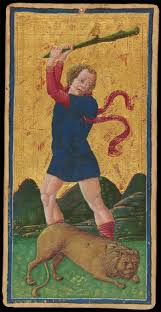
 Il simbolismo nei primi mazzi riflette l’araldica delle famiglie nobili italiane, così come l’arte e l’architettura italiane. È interessante notare che molte delle figure sulle carte erano bionde perché, a differenza della maggior parte degli italiani, i Visconti erano biondi. Le immagini spesso simboleggiavano la forza e le alleanze strategiche dei Visconti. Ad esempio, il leone mostrato sulla carta Coraggio è probabilmente un riferimento a una sconfitta militare a Venezia. La mela cotogna e le fontane sulle carte sono emblemi della famiglia Sforza, il cui figlio Francesco sposò Bianca Maria Visconti nel 1441. La palma e l’alloro sono simboli del potere ducale, il che fa pensare che quel particolare mazzo fosse creato dopo che Francesco Sforza divenne duca di Milano nel 1450.
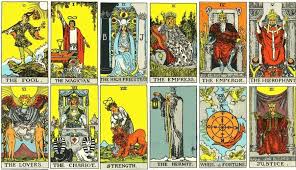 erano legate al misticismo egiziano, forse a causa delle scoperte di Napoleone in quel paese. Poi nel 1789 fu pubblicato il primo mazzo specificamente progettato per la divinazione. Quando l’interesse per l’occulto aumentò alla fine del XIX secolo, i mazzi di tarocchi furono modificati per adattarsi alle teorie di recente sviluppo. Uno dei più famosi è stato creato da Arthur Edward Waite, poeta e mistico britannico. Pamela Colman incaricò l’artista di illustrare le carte. Creò simboli legati al cristianesimo, alla massoneria, all’astrologia e alla cabala, modellando molte delle figure dei suoi amici nei movimenti femministi e suffragisti di Londra all’inizio del XX secolo. Ora noto come mazzo Rider-Waite-Smith, è in stampa dal 1909. È il mazzo che si trova più spesso nelle librerie occulte.
 L'Olivo Santa Barbara