Two Celebrations

In January 2022, Italy celebrated two milestones in its history:  The Italian flag turned 225 years, and the use of the Euro for Italy and the rest of the European Union turned 20 years.  The first represents the growth of Italy as a sovereign nation; the second represents Italy as one of the founding members of the European Union.

The Flag. The most widespread explanation of the origin of the colors of the Italian tricolore flag are that the green represents the plains, the white calls to mind the Alps and the Apennines, and the red symbolizes the blood of the victims of wars.  The flag has a complex and, at times, a troubled past.  The three colors combined actually made their first appearance 228 years ago in 1794 thanks to two students from the University of Bologna.  Inspired by the human rights proclaimed during the French Revolution, they led an insurrection and distributed tricolore cockades to their followers.  They chose white and red as the colors of Bologna and Asti and added green as a symbol of hope.  However, the insurrection failed.

The three colors next appeared in 1797 in Reggio Emilia as republics were establishing themselves throughout the peninsula.  The banners in Lombardy also reflected the same colors—red and white referred to the ancient municipal coat of arms of Milan (red cross on a white field), and green was the color of the uniforms of the Milanese Civic Guard.  In the mid 1800s the tricolor flag became the symbol of freedom in uprisings in the name of unity.  In 1848 if officially became the flag of the Kingdom of Sardinia.  The version at the time had the Savoy coat of arms in the center surrounded by blue to prevent the Savoy cross from becoming lost on the white background.

After the proclamation of the Kingdom of Italy in 1861, the tricolore became the official flag.  Legislative recognition came in 1925, which required that, in addition to the three colors, the banner must have the emblem of the royal crown in the center.  Then in January 1948, the Italian Constitution designates the flag of the Republic to be “green, white and red, in three vertical bands of equal size.” It excludes the Savoy coat of arms and marks the official election of the tricolor flag as a symbol of the new republican Italy.

Since 1997, January 7 has officially become the Giornata del Tricolore to celebrate the bicentenary of its birth.

The Euro.  On January 1, 2002, euro banknotes and coins were introduced into circulation in 12 European countries.  They quickly replaced Italian lire, French francs and German marks in purses, wallets and ATMs.  Shop customers who paid in the old currencies received change in euros under fixed exchange rates.  Citizens from Lisbon to Helsinki to Athens could travel among the 12 countries without exchanging currency. 
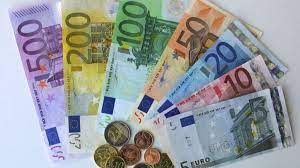
Predictions of a catastrophe never materialized.  In fact, the euro has become one of the most tangible achievements of European integration.  It is the world’s second most widely used currency; it remains quite popular with an 80% approval rating and a current membership of 19 countries, and growing. 
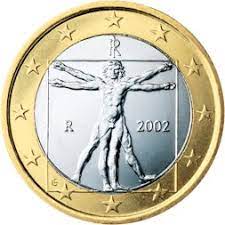
Yet, the euro has undergone several crises in the last 20 years, but each has been confronted and has made the euro and European unity stronger.  For example, there was the crisis over government and bank debt between 2011 and 2015; Mario Draghi, who was head of the European Central Bank at the time, helped to end the turbulence.  During the pandemic, the central bank set up a bond purchase program to keep borrowing costs low for struggling companies.  Also, in response to the pandemic, governments in the union agreed to borrow money together to set up a recovery fund to finance projects to fight climate change.
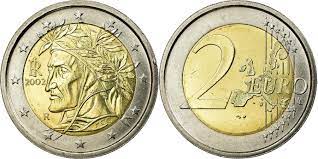
There are still many goals ahead, including work on a digital form of the currency.  The European banking system is seeking new opportunities for economic recovery and growth and ways to invest more sustainably in people, infrastructure and institutions.  Early crises enabled the euro to mature and fulfill an international role.  One has every reason to believe that the current challenges will also strengthen unity and growth.

Posted in Bologna, English, Foto, Italia, Politica, Storia | Leave a comment

Cani anti-covid-19

Usando il loro incredibile senso dell’olfatto, i cani oggi fanno molti tipi di lavoro per gli umani. Rilevano segni di diabete, il morbo di Parkinson e il cancro, e molti altri disturbi. Lavorano a fianco dei militari, in operazioni speciali per fiutare esplosivi nascosti. Collaborano con i funzionari doganali alla ricerca di merce da contrabbando, come droghe e avorio. Sono cercatori di tartufi e funghi per il nostro piacere culinario. E, come ho scritto prima, i cani sono partner inestimabili nelle squadre di ricerca e soccorso in seguito a disastri naturali. (Vedi i post su “I Cani da Soccorso” febbraio 2018 e “La Search Dog Foundation” agosto 2021.)

I cani hanno 300 milioni di recettori olfattivi rispetto ai 6 milioni degli esseri umani.  La parte del cervello dedicata all’analisi degli odori è 40 volte più grande della nostra.  Quindi, l’olfatto di un cane è tra 10.000 e 100.000 volte più acuto.  Diciamo che è solo 10.000 volte meglio.  Se si fa il paragone con la vista, allora quello che gli umani potrebbero vedere a un terzo di miglio, un cane potrebbe vederlo a più di 3.000 miglia di distanza—l’equivalente della distanza da una costa all’altra degli Stati Uniti.

Non c’è da meravigliarsi se i cani sono stati chiamati in causa nella guerra al Covid-19. Già nella primavera del 2020, i ricercatori dell’Università della Pennsylvania hanno iniziato ad addestrare i cani per fiutare il virus da campioni di urina e saliva. E ora questi ricercatori e altri provenienti da Italia, Germania, Finlandia e Francia, hanno lanciato dei test sul sudore umano, facendo uso appunto del fiuto dei cani.

Una delle prime sperimentazioni ha avuto sede a Milano. Si tratta di una collaborazione in corso tra l’Università degli Studi di Milano, i Carabinieri e l’Ospedale Sacco. L’ospedale ha fornito garze imbevute di sudore prelevate da pazienti Covid ricoverati. (Il virus stesso non può essere trasmesso all’uomo o agli animali attraverso il sudore.) I cani vengono quindi addestrati in due fasi: condizionamento olfattivo per riconoscere i composti organici volatili nel Covid, e quindi discriminazione olfattiva per distinguere i campioni positivi e negativi. 

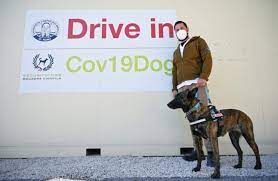
Un progetto simile è in corso presso l’Azienda Ospedaliera Universitaria Campus Bio-Medico di Roma. Se questi esperimenti si rivelassero affidabili, l’uso di cani Covid addestrati potrebbe rivelarsi un metodo di rilevamento più rapido ed economico in situazioni di grande affollamento, come una partita di calcio o un concerto rock. “Se abbiamo 1.000 persone da sottoporre a screening con un tampone antigenico, ci vorrebbero circa 20 minuti per ogni persona”, afferma Massimo Ciccozzi, professore di epidemiologia all’università. “Un cane, usando i suo olfatto, impiegherebbe 30 secondi al massimo.” Il progetto di Roma prevede di concentrarsi successivamente sui pazienti in un centro di test drive-through nel campus. 

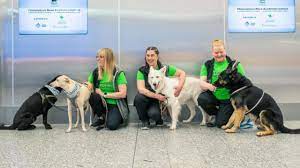
I cani anti-covid potrebbero offrire una risorsa straordinaria dove c’è un afflusso di grandi masse di persone, come eventi sportivi, manifestazioni e aeroporti. In effetti, i cani sono già stati schierati all’aeroporto internazionale finlandese di Helsinki-Vantaa per rilevare eventuali passeggeri infetti. I cani addestrati potrebbero anche essere usati per completare altri sforzi. Ad esempio, potrebbero fornire uno screening iniziale che un test di laboratorio potrebbe successivamente confermare, consentendo a una persona potenzialmente infetta di prendere precauzioni immediate.

Qual è il prossimo passo? Testare se i cani possono rilevare le varianti di COVID-19.

Posted in Animali, Foto, Italia, Italiano, Medicina, Milano, Roma | Leave a comment

Covid-19 Detection Dogs

Using their incredible sense of smell, dogs today do many types of work for humans.  They detect signs of diabetes, Parkinson’s disease, and cancer, among many other ailments.  They are allies in military operations, smelling out hidden explosives.  They partner with customs officials searching for contraband, such as drugs and elephant ivory.  They find truffles and mushrooms for our culinary pleasure.  And, as I have written about before, dogs are invaluable partners in search and rescue teams following natural disasters.  (See posts on “Search Dogs” from February 2018 and “The Search Dog Foundation” from August 2021.)

Dogs have 300 million olfactory receptors versus 6 million in humans.  The part of the brain devoted to analyzing smells is 40 times greater than ours.  Hence, a dog’s sense of smell is between 10,000 and 100,000 times more acute.  Let’s say it’s only 10,000 times better.  If you make the comparison to vision, then what we can see at a 1/3 mile away, a dog could see more than 3,000 miles away—that’s clear across the United States.

It is no wonder that dogs have been called upon in the war on Covid-19.  As early as spring 2020, researchers at the University of Pennsylvania began training dogs to sniff out the virus from urine and saliva samples.  And now researchers there and from countries around the world, including Italy, Germany, Finland and France have launched sniffer dog trials based on human sweat.

One of the first trials to achieve excellent results was based in Milan.  It is an ongoing collaboration between the University of Milan, the Carabinieri (the national military police) and the Sacco Hospital.  The hospital provided gauze soaked in sweat taken from hospitalized Covid patients.  (The virus itself cannot be transmitted to humans or animals through sweat.)  The dogs are then trained in two phases:  olfactory conditioning to recognize the volatile organic compounds in Covid, and then olfactory discrimination to distinguish positive and negative samples. 

A similar project is being conducted at Rome’s Campus Bio-Medico University Hospital.  If these experiments are found to be reliable, using trained Covid dogs could prove to be a faster and cheaper method of detection in crowd situations, such as a football match or a rock concert.  “If we have 1,000 people to screen with an antigen swab, it would take about 20 minutes for each person,” says Massimo Ciccozzi, a professor of epidemiology at the university.  “A dog, using its olfactory senses, would take 30 seconds maximum.” Rome’s project plans to focus next on patients at a drive-through testing center on the campus.

Covid detection dogs could offer an extraordinary resource where there is an influx of large masses of people, such as sporting events, demonstrations, and airports.  In fact, dogs have already been deployed at Finland’s Helsinki-Vantaa international airport to detect infected passengers.  Trained dogs could also be used to complement other efforts.  For example, they could provide an initial screening that a laboratory test could later confirm, allowing a potentially infected person to take immediate precautions.

What’s next?  Testing whether canines can detect the variants of COVID-19.

Posted in Animali, English, Foto, Italia, Medicina, Milano, Roma, Uncategorized | 2 Comments