Musicians in the subway: A tough career

 The Adagio and the Fugue of the first Sonata for violin (1720) of Johann Sebastian Bach Sonata for Violinis one of the most difficult works ever written for violin (so I’m told).  It was so innovative and puzzling that Bach died 30 years later without any publisher taking the risk to publish it.   A century and a half later Brahms didn’t dare buy the original manuscript that was offered to him because he doubted that it was genuine.  There are less than 10 minutes of music in this piece but it carries a shadow of disbelief from the first moment.

That is the composition, and this is the time and place:  the Lepanto stop on the A line of the metro of Rome, on Monday the 18th of January, 2016.  And this is the situation:  A violinist plays with the violin case open at his feet to collect donations.

On that Monday in January, the man who was collecting the money in the Rome metro Carlo Maria Parazzoliwas famous throughout Italy.  As an experiment, an Italian newspaper asked Carlo Maria Parazzoli to play the Bach piece in order to observe the reactions of passersby.  The violinist, aged 51, was the first violinist of the National Academy of Santa Cecilia.  Throughout his career he performed with the most celebrated conductors and in the most renowned music venues in the world.  When he is in concert in an evening at the auditorium in the capital, revenue is in the 10s of thousands of euros, and a good seat costs about 50 euros.

The music in the metro was free and one would never be closer to the sound than in that venue at the Lepanto metro stop in Rome.  But the results of the experiment?  After a half hour of Bach, the take was a little more than 13 euros.  Out of 1,760 passersby, only 11 stopped.

In 2008 a writer for the Washington Post conducted a similar experiment.  He tested a thousand of those going through the subway of the US capital with a great violinist of this Joshua Bellcentury.  Joshua Bell, who is the closest to a rock star in the violin world, agreed to improvise as a street musician in downtown Washington during rush hour.  For 43 minutes he played Bach’s Chaconne and 5 other pieces, collecting $32 and change from 27 people.  No one recognized him and only one adult passerby stopped to listen…for 9 minutes.

To be fair, most people in the subway are rushing to work or other appointments.  Even if they love classical music, they probably don’t have the time to stop and enjoy it.  However,

Yo Yo Ma

Yo Yo Ma

in the days after the fall of the twin towers on September 11, the cellist Yo-Yo Ma, at times joined by Emanuel Ax at the piano, played music Bruxelleson the platforms of the New York subway.  And I just saw that a cellist played Bach in a Brussels piazza in homage to the victims of that terrorist attack.  It probably happened in Paris too.  I imagine that in these cases, many people stopped and listened.  Music is good for the soul.



Posted in Abitudini, Arte, English, Musica | Leave a comment

Inferi

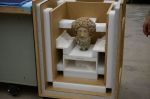
getty museumAncora una volta, il J. Paul Getty Museum a Malibu, in California, ha restituito un’opera d’arte all’Italia.  Nel gennaio 2016, la “Testa di Ade” si è imbarcata in un aereo per il suo ritorno a casa in Sicilia.

La storia inizia più di 2.000 anni fa.  Nell’epoca ellenistica, gli artisti dell’Italia meridionale, dove il marmo di qualità alta doveva essere importato, spesso utilizzavano la terracotta per opere di grandi dimensioni.  Questa testa di terracotta, probabilmente rotta fuori da una statua più grande, per secoli aveva risieduto a Morgantina nella Sicilia centrale.  Oggi, questa testa con capelli mattoni rossi e con la la testa di adebarba blu è considerata rara e preziosa.  Perchè tracce di colore della barba restano, il personaggio della testa ha meritato il soprannome di “Barbablù”.
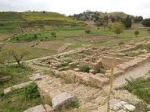
Poi negli anni ’70, tombaroli con un gusto per i capolavori, l’hanno rubata dal Santuario di Demetra e Persefone, che si trova all’interno del Parco Archeologico di Morgantina.  Comincia così la strada per il Getty, un museo giovane, ambizioso e molto ricco.  La testa di terracotta probabilmente ha passato attraverso diverse mani.  Quello che sappiamo è che nel 1985 il Getty l’ha acquistata per $530,000 da Maurice Tempelsman, un collezionista da New York, che l’aveva acquistata da Robin Symes, un rivenditore da Londra.

morgantinaAvanti nel tempo… entrano in scena 2 archeologi provenienti dalla Sicilia.  Lucia Ferruzza aveva trascorso 20 anni al servizio dei Beni Culturali della Regione Siciliana,  e Serena  Raffiotta è nata e è cresciuta a due passi da Morgantina e aveva fatto la sua tesi di laurea presso l’Università di Catania.   Suo padre per 20 anni è stato impegnato nella lotta contro tombaroli come Procuratore della Provincia di Enna.  Serena dice che è stata allevata a pane e ceramiche.
I due archeologi si sono incontrati a un convegno.  Lucia stava sfogliando attraverso la tesi di Serena quando si fermò in una pagina che l’aveva interessata : “uno straordinario ricciolo blu che era stato scoperto nel santuario di periferia di San Francisco Bisconti Morgantina ” .  Lucia ha subito pensato che ci potrebbe essere una connessione a un manufatto che aveva visto quando studiava presso il Getty nel 1987 con una borsa di studio.   Commissionata dal museo di fare ricerche sulla ceramica, Lucia è tornata al Getty nel 2000.  Ha scoperto che la testa misteriosa era stata correttamente etichettata al Getty come proveniente dal sud Italia, ma la sua etichetta nel caso ha detto, “probabilmente Zeus”.  Come dice Lucia, “il ricciolo blu in Sicilia divenne la nosta scarpetta di Cenerentola”.  Inizia così la strada lunga verso la restituzione.

Si pensava che la testa fosse quella di Zeus, il re degli dei, perché era chiamato “Barbato

Ade e Persefone

Ade e Persefone

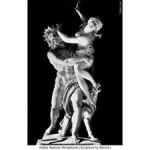
blu” nei poemi omerici.  Ma ora si ritiene di rappresentare il suo fratello, Ade, dio greco degli inferi, sulla base di altri reperti provenienti dall’antica città di Morgantina dove era centrato la religione sul culto di Demetra e di sua figlia Persefone.  Secondo il mito greco, Ade aveva rapito Persefone al Lago di Pergusa, non lontano da Morgantina, e le aveva chiesto di tornare nel mondo sotterraneo diversi mesi ogni anno.  Questa era la spiegazione degli antichi per l’inverno e il mutare delle stagioni.

Morgantina è lo stesso sito archeologico in Sicilia che era statosaccheggiato dove anche l’ex statua  del Getty di Afrodite era stata saccheggiata circo allo stesso tempo come la testa di Ade.  Il Getty ha acquistao la statua di Afrodite da Symes nel 1988 per $18 million.  Dope il ritorno in Sicilia, gli esperti ritengono che la statua rappresenta la dea Persefone or la madre Demetra.

Nel corso di una cerimonia solenne alla fine del mese di gennaio quest’anno, Antonio testa2Verde, il Console Generale d’Italia a Los Angeles, ha detto con orgoglio, “Dobbiamo soprattuto all’impegno e alla competenza degli archeologi italiani….Da un ricciolo di ceramica blu ritrovato tra i resti degli scavi fraudolenti…si è potuta accertare la provenienza della testa dello stesso caratteristico colore custodita al Getty”.  La testa ora risiede presso il Museo Archeologico di Aidone (Enna).

La testa è l’ultimo manufatto che il Getty ha restituito all’Italia in seguito all’accordo del museo nel 2007 con il Ministero della cultura del paese.  L’accordo è stato raggiunto dopo una lunga battaglia legale che ha coinvolto l’ex curatrice del Getty Marion True.


Posted in Arte, California, Foto, Italia, Italiano, Sicilia | Leave a comment

The Underworld

Once again, the J. Paul Getty Museum in Malibu, California, returns a work of art to Italy.  getty museumOn January 30, 2015, the “Head of Hades” boarded a plane on its way home to Sicily.

The story begins more than 2,000 years ago.  In the Hellenistic era, artists in Southern Italy, where high-quality marble had to be imported, often used terracotta for large-scale work.  This terracotta head, probably broken off of a larger statue, resided in Morgantina in central Sicily for centuries.  Today considered rare and precious, this head had polychrome red brick hair and a blue beard (traces of which remain), which earned it the nickname “Bluebeard.”

morgantinaThen in the 1970s, tomb robbers with a flair for masterpieces stole it from the Sanctuary of Demeter, located within the Archaeological Park of Morgantina.  Then begins the road to the Getty, a young, ambitious, and very wealthy museum.    The terracotta head probably passed through several hands.  What we know is that in 1985 the Getty purchased it for $530,000 from New York collector Maurice Tempelsman, who had purchased it from London dealer Robin Symes.

Next…2 archaeologists from Sicily:  Lucia Ferruzza had spent 20 years in the service of the Cultural Heritage of the Sicilian Region, and Serena Raffiotta was born and raised a stone’s throw from Morgantina and did her postgraduate thesis at the University of Catania.  Her father for 20 years engaged in the fight against grave robbers as Prosecutor la testa di adeof the Province of Enna (“I was brought up on bread and pottery.”).  They met at a convention.  Lucia was thumbing through Serena’s thesis and stopped at a page that intrigued her:  “an extraordinary blue curl that had been discovered in the suburban sanctuary of San Francesco Bisconti Morgantina.”  Lucia thought there might be a connection to an artifact she had seen when she was on scholarship at the Getty in 1987.  She returned in 2000, commissioned by the museum to do research on pottery.  The mysterious head was correctly labeled at the Getty as coming from southern Italy, but the card in the case said, “probably Zeus.”  As Lucia says, “the blue curl in Sicily became our Cinderella’s slipper.”   Thus began the long road to restitution.

Hades and Persephone

Hades and Persephone

The head had been thought to be that of Zeus, the king of the gods, because he was called “blue bearded” in the Homeric poems.  But it is now believed to represent his brother, Hades, Greek god of the Underworld, based on other finds from the ancient city of Morgantina.  The religion there centered on the cult of Demeter and her daughter Persephone.  According to the Greek myth, Hades abducted Persephone at Lake Pergusa, not far from Morgantina, and required her to return to the underworld several months every year.  This was the ancients’ explanation for winter and the changing of the seasons.

Morgantina is the same heavily looted archaeological site in Sicily where the Getty’s former statue of Aphrodite was looted around the same time as the head of Hades.  The Getty acquired the statue of Aphrodite from Symes in 1988 for $18 million.  Since that statue’s return to Sicily, experts believe that it represents the goddess Persephone or her mother, Demeter.

At a solemn ceremony at the end of January, Antonio Verde, the Consul General of Italy in testa2Los Angeles, said proudly, “We need above all the commitment and competence of Italian archaeologists…from a curl of blue pottery found among the remains of illegal excavations, it was possible to check the provenance of the head of the same color at the Getty.”  The head will now reside at the Archaeological Museum of Aidone (Enna).

The head is the latest artifact that the Getty has returned to Italy following the museum’s 2007 agreement with the country’s Ministry of Culture.  The agreement was made after a protracted legal battle over looted works of art that involved the former Getty curator Marion True.  (See post of October 1, 2015.)


Posted in Arte, California, English, Foto, Italia, Sicilia | Leave a comment