
 A series of powerful earthquakes struck Italy in the last year (August and October 2016 and January 2017) in the regions of Abruzzo, Lazio, and Marche, and more recently in Campania. They caused deaths and homelessness, and have cost 23 billion euros ($26 billion) in damage—some to priceless medieval structures and art. While visiting Sicily last fall, we went to restaurants that donated proceeds of orders of pasta all’amatriciana to earthquake victims and to the recovery process. When we were in Orvieto during Holy Week in April, Zubin Mehta conducted a concert at the Duomo; attendees made donations for earthquake victims.
Earthquakes raise the age-old question of whether animals can predict their occurrence. Even as far back as 373 B.C., historians of the city of Elice in Greece documented that 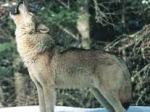 many animals, including mice, snakes, and weasels fled a few days before a devastating earthquake. Other similar episodes
  have been subsequently reported: catfish in frenetic motion, chickens that stop laying eggs, bees that abandon their hives, and dogs and cats that behave strangely before the earth shakes. However, it is not known precisely what the animals feel or perceive in these cases. Some scientists have proposed that they can perceive the earth’s vibrations before humans do, others that animals notice electrical changes in the air or gases released during a quake.
Researchers around the world, particularly in Japan, China, and the United States, continue to pursue the hypothesis of whether animals can anticipate these natural disasters. Beginning last October, a German scientist has been studying animal behavior on a farm in Pieve Torina in the Marches region of central Italy. Previously he had conducted a study on volcanic eruptions from 2012 to 2014 by monitoring goats and sheep on the side of Mount Etna, in Sicily. The animals predicted the 8 major volcanic eruptions 4 to 6 hours in advance: At night the animals woke up and nervously walked around, and in the daytime, they moved to a safe area where high vegetation suggested that it had been spared of previous lava flows.
 Now the director of the Max Planch Institute for Ornithology has tagged animals on the Italian farm—a rabbit, sheep, cows, turkeys, chickens, and dogs– with small, sophisticated sensors that measure the animals’ movements down to the second: their magnetic direction, speed, altitude, temperature, humidity, acceleration and location. He believes that different species might sense the environment in a distinct way and together they might form a collective sensing system.
The observation of animals was a predictive factor in China in 1975: Mice and snakes appeared “frozen” on streets incapable of proceeding; cows and horses appeared agitated; chickens refused to stay in the hen house; and geese took flight with great frequency. The government ordered the evacuation of Haicheng, a city of a million inhabitants, only a few days before an earthquake of magnitude 7.3. The move saved the lives of many people: 2,000 people died, but without the evacuation, it was predicted that more than 150,000 would have died. It was discovered afterwards, however, that a rare series of minor shakes had hit the city before the enormous quake in Haicheng. It was really the small shakes that convinced the Chinese government to evacuate; however, the Chinese continue to study animal behavior in these situations, as the small shakes could have contributed to the strange behaviors that were observed.
Geologists tend to give little weight to the anecdotal reports of owners of domestic animals, saying that they recall strange behavior only after an earthquake or other disaster has occurred. In other words, they are confusing causality with correlation. Animals react to lots of things—being hungry, defending their territory, mating, and predators. To suggest a connection between animal behavior and a subsequent quake would require much more data than isolated cases. One dog that barks cannot establish a correlation, but perhaps 100 could.
One proposal is the creation of a telephone number and an internet site where people can report strange animal behavior. The computer could analyze the origin and frequency of the messages, along with seismology measures, to see if a correlation can be established.
The study of tagged farm animals in Pieve Torina continues with some encouraging preliminary results. It is too soon to report the findings before publication in a scientific journal, but the data seem so far to show that the animals moved in a consistent way in the hours before a quake.
 È un occhio nero per l’ordinamento giudiziario in America. La storia di Sacco e Vanzetti continua a vivere ed è stata ripetutamente rivisitata nei 90 anni dopo l’esecuzione degli immigranti italiani. Libri, film, e canzoni hanno mantenuto viva la memoria di queste vittime per quasi un secolo. Anche quest’anno (2017), un libro è stato pubblicato in Italia intitolato La Marcia del Dolore che tratta i loro funerali.
 L'Olivo Santa Barbara