
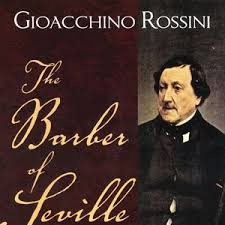
 As Opera Santa Barbara presents “The Barber of Seville” on the 150th anniversary of the composer’s death, it is a fitting time to reflect on the life of Gioacchino Rossini (1792 – 1868), a popular composer of many operas and also a connoisseur of food and wine.
He was born in Pesaro in the present-day Le Marche region of Italy on the Adriatic coast. His father was a horn player in an orchestra and his mother an aspiring singer. During his childhood, he was often left in the care of his maternal grandmother. He learned from her the pleasure of regional recipes and to appreciate the tastes and flavors of Le Marche —in particular truffles — that would accompany him his entire life.
According to legend, as a child, Gioacchino served as an altar boy with the excuse of tasting any leftover wine after the mass. He was a precocious composer of operas, and he made his debut at the age of 18 with “The Marriage Contract” (La cambiale di matrimonio). His best-known operas include not only “The Barber of Seville” (Il barbiere di Siviglia), but also “The Italian Girl in Algiers” (L’italiana in Algeri), “Cinderella” (La Cenerentola), and “Othello” (Otello).
During his travels in Europe for operatic performances, he developed an appreciation for foods and wines from disparate places. In 1823 he met the famous French chef Antonin Carême, who was in charge of the kitchen of the noble Rothschild family. They became life-long friends sharing a common passion for food.
It was in Paris at the Cafè Anglais that the famous Filetto alla Rossini (o Tournedos à la Rossini) was born. Rossini was in the habit of asking for variations to dishes on the menu, to enrich them according to his tastes. As this particular lunch, Rossini asked the chef to change the recipe of the fillet, adding truffle. The offended chef did not intend to take his suggestion, to which Rossini replied, “Alors, tournez le dos!” (So, turn your back!) A different anecdote recounts that the name came about because of the butler’s need to turn his back on guests in the composer’s house to hide the secret of the dish served. The recipe is not a secret today: The dish consists of a fillet of beef browned in butter, lying on a slice of bread browned in butter, topped by foie gras and slices of truffle, accompanied by a sauce of deglazed Madeira.
Rossini even added truffles to his salad dressing: “Take oil from Provence, English mustard, French vinegar, a little lemon, pepper, and salt and mix together; then add some truffles cut into thin slices. The truffles give this condiment a kind of halo, made just to send a glutton to ecstasy.” Later in life, Rossini recalled “I cried three times in my life: when they whistled at my first opera, when I heard Paganini play, and when a turkey stuffed with truffles fell into the water during a boat trip.”
At the age of 37, Rossini wrote his 39th and final opera, “William Tell” (Guillaume Tell),  known today mostly for its overture. Even though he lived 40 more years, he withdrew from public life. Other composers, like Elgar, Rachmaninoff, Sibelius, and Ives, retired long before their deaths. But none was as famous or as young as Rossini. There are a lot of theories about his brief career: maybe he was tired, maybe he was devastated by the death of his mother, maybe there was a shift in politics or his health.
Or maybe he just wanted to dedicate himself to the enjoyment of food: “I know of no more admirable occupation than eating, that is, really eating. Appetite is for the stomach what love is for the heart. The stomach is the conductor, who rules the grand orchestra of our passions, and rouses it to action….Eating, loving, singing and digesting are, in truth, the four acts of the comic opera known as life….”
 La maggior parte dei dipinti di Leonardo da Vinci si trovano nei principali musei del mondo, tra cui diversi nella Galleria degli Uffizi e diversi al Louvre. Ce n’è sono uno in visione pubblica nelle Americhe. Ginevra de’ Benci è un ritratto a tempera e olio su tavola di un’aristocratica fiorentina probabilmente dipinto per commemorare il suo matrimonio. La National Gallery of Art di Washington, DC, l’acquistò nel 1967 per oltre $5 milioni, un record all’epoca, dal principe del Lichtenstein.
 Da lì in poi—una volta restaurato e autenticato—è stato comprato e venduto più volte da collezionisti e commercianti d’arte, per prezzi sempre più alti. Poi è arrivato da Christie, la casa d’asta, dove il prezzo ha superato di gran lunga Women of Algiers di Picasso, che nel 2015 hanno venduto per $179,4 milioni.
 Ma Salvator Mundi non è “l’ultimo Da Vinci” in mani private. Ci sono due dipinti chiamati Madonna of the Yarnwinder” –uno è conosciuto come la Madonna di Buccleuch e l’altro come la Madonna di Lansdowne. Entrambi hanno storie complicate. Ma se un Yarnwinder venisse all’asta e fosse interamente attribuibile a Leonardo, sarebbe probabilmente la prima vendita di $1 miliardo.

