
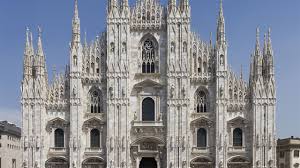
 There are more statues on Milan’s Duomo than any other building in the world. So I guess it’s not surprising that after more than 3,000 apostles, saints, martyrs, popes, and bishops, stone carvers got creative with their subject matter. There are some interesting and unexpected “intruders” among the spires of this Gothic Cathedral.
First, a little history. As the second largest Christian Church in Italy (behind St. Peter’s) and the third (some say the fifth) largest in the world, Milan’s Duomo is still a work in progress. It was begun in 1386, and construction continued for six centuries. The cathedral was consecrated in 1418 even though only the nave was finished at the time. In the early 1800s, after Napoleon conquered the city, he wanted to be crowned King of Italy in the Duomo so he offered to pay to finish the façade. Hence, there is a statue of Napoleon atop one of the 135 spires.
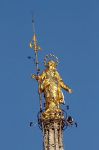 The gilded Madonnina (little Madonna),patroness and symbol of the city,stands atop the main spire rising 354 feet high. During World War II, la Madonnina was covered with a cloth to avoid being a target for bombers. Built in 1774, tradition maintains that it must be the tallest man-made object in Milan. So when a modern building surpasses her height, a replica of la Madonnina is placed on top.
The Duomo is covered with carvings of fruit, flowers, frogs, monkeys, and, of course,  gargoyles. More than 100 of these delightful, yet sometimes grotesque, beasts adorn the Duomo (and other Gothic cathedrals). While some of the symbolism is now lost, it was believed that gargoyles were erected to ward off evil spirits. There is also a strange creature in bas-relief that looks like part dinosaur, part dog, part dragon. It has a friendly look and is depicted eating a leaf. Legend has it that the scene represents Tarantasio, a mythical creature that appeared in a swamp south of Milan in the 12thcentury after devastating floods. The “dinosaur” mysteriously disappeared 200 years later on December 31, 1299. Soon thereafter, a large bone floated to the surface of the swamp after heavy rains.
Moving to more modern history, who put up the stone tennis racket and ice ax with mountain boots? And then there are non-religious figures beside Napoleon—faces of Vittorio Emanuele III, Mussolini,  and Pope Pius IX. It is said that the turban on the head of Il Duce was added later, at the end of the Second World War, to make it unrecognizable. And there is the boxer Primo Carnera, an Italian-American who won the world heavy-weight championship in New York in 1933.
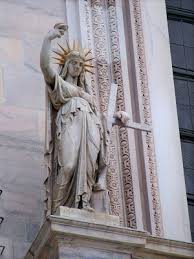 And speaking of New York, on the balcony above the main entrance to the Duomo is the “Statue of Liberty!” Sculpted by Camillo Pacetti in 1810, this statue is 75 years older than the New York’s Statue of Liberty. It is believed that Frederic Auguste Bartholdi was inspired by the Duomo’s rendition to create “Lady Liberty.” Both hold a torch with their right hand, and both wear a crown and a tunic. The only difference is what they hold in their left hand. The one in Milan holds a cross, and the one in New York holds a book with the Independence Day date on it.
With so much statuary and such a large cathedral, it is no wonder that the Duomo’s construction is responsible for the Navigli, Milan’s canal  system. The cathedral’s edifice is made from Candoglia marble from the Lake Maggiore area. Canals were constructed to ship the marble from the quarries. Some of the canals exist today. In fact, the Navigli District of Milan is quite popular among regulars and tourists; it is known for its art galleries and restaurants.
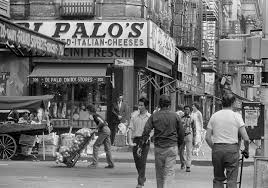 generazione degli italo-americani lasciarono la zona alla ricerca di più spazio e nuovi quartieri. Chinatown invadeva dal sud e la gentrificazione si estendeva dall’ovest. Le bandiere tricolori ora sono intervallate dai cartelli con gnocchi cinesi e zuppa vietnamita. Il museo italoamericano, che è stato recentemente rinnovato e ampliato, rimane per documentare i contributi degli italiani alla vita americana. E ci sono ancora alcune istituzioni culinarie come Di Palo, le cui cinque generazioni hanno costruito uno dei più famosi negozi alimentari della città, che sono frequentati da clienti come Martin Scorsese.
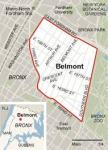 Si dice che la vera Little Italy si trovi nel Bronx, nell’area che si chiama Belmont, che è a mezzo miglio dallo Zoo del Bronx. Alcune chiamano la zona Arthur Avenue in memoria della strada principale, che è divisa in due dalla East 187th Street, e che non è altro che una fila di ristoranti, pizzerie, macellerie, pescherie, panetterie, e pasticcerie.
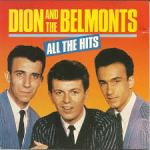 Gli italiani si stabilirono in questa zona negli anni ’50, in un periodo in cui Joe DiMaggio, Phil Rizzuto, Yogi Berra, Rocky Marciano, and Jake LaMotta mangiavano nei ristoranti locali. Era la casa di Dion Dimucci, che chiamò il suo gruppo di “do-wop” i Belmonts.
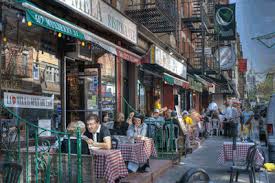 Ciò che non è cambiato è l’atmosfera italiana del quartiere. È come un villaggio siciliano dove vai a fare la spesa ed il macellaio ti consiglia il miglior taglio di carne e il fruttivendolo ha messo da parte una pianta di basilico per te prima che tu vada a casa a prendere della pasta fresca. È pieno di piccoli negozi italiani dove puoi trovare di tutto e hai un rapporto personale con il proprietario, un luogo in cui ti fermi a parlare con le persone per strada. Quando ti siedi al bar, ti senti come se fossi in
 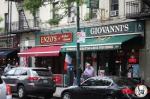 Italia. Tutto questo è nel quartiere che è casa dell’attore Chazz Palminteri, lo scrittore Don DeLillo, e dove Joe Pesci ha iniziato la sua carriera di attore dopo essere stato scoperto da Robert De Niro in uno dei ristoranti in cui ha lavorato.
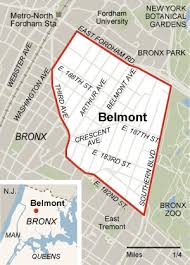 It is said that the real Little Italy today is in the Bronx, in an area called Belmont, half a mile from the Bronx Zoo. Some
 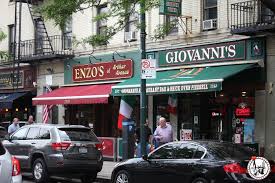 What hasn’t changed is the Italian atmosphere of the neighborhood. It is like a Sicilian village where you go shopping and the butcher advises you of the best cut of meat, and the greengrocer has put aside a basil plant for you before he goes home to get some fresh pasta. It is full of small Italian shops where you can find everything and you have a personal relationship with the owner, where you stop to talk with people on the street. When you sit at the bar, you feel like you are in Italy. All of this is in the neighborhood that was home to the actor Chazz Palminteri and the writer Don DeLillo, and where Joe Pesci began his acting career after being discovered by Robert De Niro in one on the area restaurants where he worked.

