
 The Ghirardelli Chocolate Company based in San Francisco, California, was founded by and named after Italian chocolatier Domenico Ghirardelli. He was born
  in Rapallo, on the Italian Riviera, in the region of Liguria in 1817. His father was a spice merchant in Genoa, and Domenico in his teens apprenticed at a noted chocolatier in Genoa. At the age of 20, he moved first to Uruguay and then to Lima, Peru, where he established a confectionary and began using the name Domingo, the Spanish equivalent of his Italian name.
About 10 years later, his neighbor in Lima took about 600 pounds of Domingo’s chocolate  to San Francisco and convinced Domenico to move to San Francisco in pursuit of the Gold Rush. Ghirardelli opened his first store in a mining camp to sell sweets and treats to miners. He spent time in the gold fields before deciding to open a general store in Hornitos, California where he perfected his chocolate recipes between 1856 and 1859. Although Hornitos is now a ghost town, it had gained considerable notoriety during the gold rush. The remains of Domenico’s store can still be seen in that town today.
In the meantime, Ghirardelli had established stores in San Francisco, some of which didn’t survive. In 1952 he founded and incorporated the Ghirardelli Chocolate Company at what 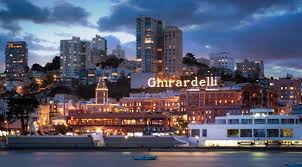 would become known as Ghirardelli Square in the marina area of the city. (In 1965 Ghirardelli Square was declared an official city landmark.) A few years later, a worker at the factory discovered that by hanging a bag of ground cocoa beans in a warm room, the cocoa butter would drip off, leaving behind a residue that could then be converted into ground chocolate. This technique, known as the Broma process, is now the most common method used for the production of chocolate.
Domenico’s company was very successful. By 1866, the company was importing 1,000  pounds of cocoa seeds a year. The company not only sold chocolate, but also coffee and spices to China, Japan, Mexico, and, of course the United States. By 1885 the company imported 450,000 of cocoa seeds annually. In 1892, Domenico retired leaving his company in the hands of his three sons. He died two years later in Rapallo, Italy.
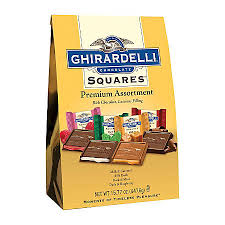 In the twentieth century, the Ghirardelli Chocolate Company not only expanded its product line, but also was bought and sold numerous times. One of its
 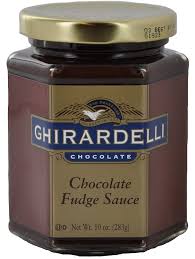 favorite products are ice cream sundaes complete with their famous hot fudge chocolate sauce. Today it is a wholly owned subsidiary of Swiss confectioner Lindt & Sprüngli. According to the Ghirardelli website, Ghirardelli is one of the few chocolate companies in the United States that controls every aspect of its chocolate manufacturing process, rejecting up to 40% of the cocoa seeds shipped in order to select the highest quality seeds. The company roast the cocoa seeds in-house by removing the outer shell on the seed and roasting the inside of the seed. The chocolate is then ground and refined.
Domenico Ghirardelli belongs in the pantheon of Italian-Americans who created lasting businesses in the United States. Another San Franciscan, Amadeo Giannini (1870-1949) opened the Bank of Italy in 1904 to serve a growing immigrant population. In those times, banks had served only the rich. He revolutionized the banking industry; today that bank is Bank of America. See Amadeo Giannini: The Banker of the People, June 25, 2015.
 Questa è una delle top 100 citazioni di film secondo l’American Film Institute. Viene pronunciata da Michel Corleone in una scena de Il Padrino: Parte II quando lui ricorda ciò che ha imparato da suo padre Vito. La citazione, a guardar bene, protrebbe essere la parafrasi di un pensiero proposto per la prima volta da Machiavelli ne Il Principe.
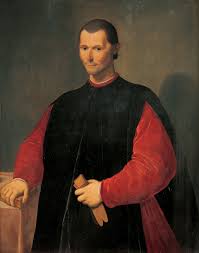 Niccolò Machiavelli (1469-1527) fu uno statista, storico, filosofo, scrittore, drammaturgo e poeta rinascimentale. È spesso chiamato il padre della moderna filosofia politica e delle scienze politiche. Per molti anni lavorò come alto funzionario nella Repubblica Fiorentina con responsabilità negli affari diplomatici e militari. Era famoso per il suo buon umore e il suo umorismo, ma fu bandito dalla vita politica quando la Repubblica di Firenze cadde di nuovo sotto le mani dei Medici, cioè sotto una vecchia forma di autocrazia. Fu un’epoca tumultuosa, in cui i papi intrapresero guerre acquisitive contro le città-stato italiane, e sia le persone e le città persero spesso potere. La Francia, la Spagna e il Sacro Romano Impero combattevano per il controllo delle regioni.
 Così l’aggettivo machiavellico è ampiamente usata oggi per descrivere politici che non hanno scrupoli, che usano l’inganno e sono subdoli per raggiungere i propri scopi. Alcune delle idee di Machiavelli potrebbero essere state accettabili nel XVI secolo, ma si spera che non siano più accettabili oggi. Tuttavia, tristemente, vediamo ancora oggi attuarsi questi principi visibili nel mondo della nostra politica.
 L'Olivo Santa Barbara