Wildlife Overpass (part 2)

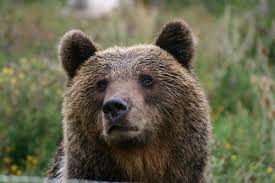
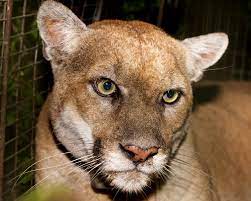
The stories of the deaths of M-20, the Italian Apennine bear, and P-22, the American mountain lion, are not rare.  About two million big animals die on American roads every year from vehicle accidents, and the numbers are no doubt underreported.  When you add the little ones like frogs and butterflies, the number could reach the billions.

The American mountain lion has inspired the creation of an overpass to facilitate wildlife crossings; it will span a busy 10-lane freeway, which sees about 400,000 cars a day, that had restricted P-22’s movements around Griffith Park in Los Angeles.  He had been surviving in an area—about 8 square miles—that was much smaller than any male mountain lion had ever lived.   The average male mountain lion territory is 150 miles.
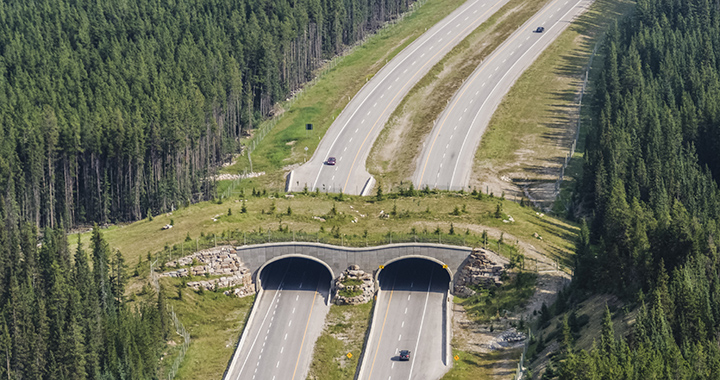
Wildlife overpass, Banff

Wildlife crossings were first constructed in France in the 1950s.  They are used throughout Europe, particularly in the Netherlands.  These corridors have even worked with animals that some people considered not very intelligent.  For example, when vehicle accidents were blamed for the decline in the koala population in Australia, engineers in Queensland created a series of tunnels and bridges to help them avoid busy streets.   Some wildlife experts predicted that the koalas wouldn’t figure them out.  After all, koalas are known for hanging out in trees, stoned on eucalyptus.  But it took less than three weeks for the koalas to navigate the system. 

These wildlife corridors are used by many big animals, including bears, moose, elk and cougars.  They are credited with helping grizzly bears find mates.  They could be an important safeguard for endangered species to sustain and increase their population.

The wildlife crossing in Los Angeles is a public-private project, spearheaded by the National Wildlife Federation, along with California’s transportation department.  About half of the $100 billion cost is being funded by private donations, including from philanthropist Wallis Annenberg, for whom the crossing will be named.  The crossing includes specially designed sound walls, along with natural sound barriers of tall trees and lush plantings.  They are designed to filter out the noise of the freeway as most animals get frightened and won’t approach if there is too much noise.  Engineers are also planning to address animals’ fear of bright lights.  They are designing light barriers, both on the crossing itself and on the approach, so that headlights aren’t a deterrent.

The Wallis Annenberg Wildlife Overpass will not only be the largest in the world, but it will also host a unique ecosystem on top of it.  Seeds are being collected to match the surrounding ecosystem.  Native, fire-resistant plants will cover the crossing, while invasive, fire-fueling material, like the black mustard plant, will be removed from the surrounding area.  Monarch butterflies and lizards will be part of the local life.

Unfortunately, P-22 will never get to use the crossing that he inspired.  But when the overpass opens in 2025, it will become the lasting legacy of the big cat, popular throughout Los Angeles and among all wildlife lovers.

Posted in Animali, Architecture, California, Cambiamenti climatici, English, Foto | Leave a comment

Amati e pianti: M-20 e P-22 (parte 1)

Circa un anno fa, sia l’Italia che gli Stati Uniti perdevano due famosi ambasciatori del mondo animale. L’Italia ha perso M-20, soprannominato Juan Carrito, un raro orso bruno, che viveva sugli Appennini, in un’area a cavallo tra Abruzzo, Lazio e Molise. Gli Stati Uniti perdevano P-22, un raro puma, che aveva fatto di Griffith Park la sua casa, sulle montagne di Santa Monica a Los Angeles. Entrambe le celebrità avevano follower sui social media, entrambe erano monitorate tramite radiocollare ed entrambe facevano notizia, soprattutto per le escursioni nel territorio umano.

Juan Carrito, aveva preso il nome da una piccola cittadina abruzzese, dove è stato avvistato per la prima volta. È stato ucciso in un incidente stradale nel gennaio 2023. Ma nel corso della sua breve vita, era diventato una star dei media, per le sue audaci incursioni nelle località di montagna e nei villaggi sciistici, dove cercava cibo e frugava tra i cassonetti della spazzatura.

Ha fatto notizia a livello internazionale nel novembre 2021 dopo aver fatto irruzione in una panetteria nella cittadina montana di Roccaraso, rimpinzandosi di torte e pasticcini e distruggendo il locale. Altre volte era entrato degli alveari e una volta, un famoso chef lo aveva trovato mentre vagava per il suo ristorante tre stelle Michelin… diretto verso la cucina.

Le guardie forestali hanno catturato Juan Carrito due volte, riportandolo poi in libertà, per riacclimatarlo lontano dagli umani. Una volta è stato addirittura messo in una riserva per orsi, nella speranza che sviluppasse il gusto per il cibo più appropriato a lui: bacche, insetti, carcasse e miele. Ma il richiamo del cibo spazzatura era troppo forte per questo orso ribelle. L’ultimo incontro con l’uomo si è rivelato fatale per questa specie ad alto rischio di estinzione. Gli incidenti stradali infatti, sono in generale la causa più comune di morte per l’orso bruno. 

Il traffico è un problema anche per i leoni di montagna, molti infatti sono morti in seguito a collisioni con dei veicoli. Nato intorno al 2010 nelle montagne occidentali di Santa Monica, P-22 si era diretto verso est e si era stabilito a Griffith Park, dopo aver attraversato due importanti autostrade di Los Angeles. Il suo habitat, di solo otto o nove miglia quadrate, è stata l’area più piccola mai registrata per un leone di montagna maschio adulto, e un’area inoltre non favorevole per la ricerca di una compagna. 

Tuttavia, P-22 è sopravvissuto per 12 anni, un’età considerato avanzata per la razza, persino per i leoni che vivono in aree remote. P-22 veniva spesso avvistato in quartieri intorno alle colline di Hollywood. Il National Park Service lo catturò nel 2014, curandolo a causa di un avvelenamento per topi, rilasciandolo poi sempre a Griffith Park. Poi, nel 2016, lo zoo di Los Angeles (situato nel Griffith Park) ritrovò la carcassa di un koala anziano fuori dal suo recinto. Il video di sorveglianza mostrava P-22 nelle vicinanze dello zoo, sebbene non avesse registrato un’interazione tra i due animali. 

A seguito di un attacco a due chihuahua in città nel 2022, P-22 venne catturato nel cortile di una casa per valutarne lo stato di salute.  Fu riscontrato che era notevolmente sottopeso e con danni a un occhio, probabilmente a causa di un incidente automobilistico avvenuto la notte precedente. Ulteriori esami rivelarono gravi problemi di salute: fratture del cranio, ernia degli organi addominali, insufficienza renale e malattie cardiache. L’unica soluzione era l’eutanasia. 

Molti abitanti di Los Angeles si identificarono con le difficoltà di P-22: immigrare a Los Angeles nonostante i molti problemi della città e vivere in un ambiente urbano denso.  P-22 è divenuto soggetto di numerosi libri, programmi televisivi e opere d’arte. Forse niente lo immortala più della fotografia del National Geographic: il puma che cammina maestoso sulle coline circostanti, sotto l’insegna “Hollywood”.

Le condoglianze sono state condivise sui social media sia per M-20, che per P-22. Ad entrambi gli animali era stato permesso di vivere allo stato brado. Forse anche la loro eredità scientifica continuerà a vivere.

Posted in Alpe, Animali, Foto, Immigrazione, Italia, Italiano | 1 Comment

Beloved and Mourned:  M-20 and P-22 (part 1)

About a year ago, both Italy and United States lost a famous animal ambassador.  Italy lost M-20, nicknamed Juan Carrito, a rare brown bear who lived in the Apennine Mountains, in an area straddling the Abruzzo, Lazio and Molise regions.  The United States lost P-22, a rare puma who had made his home in Griffith Park in the Santa Monica Mountains of Los Angeles.  Both celebrities had social media followers, both were tracked by radio collar, and both made headlines, particularly for their excursions into human territory.

Juan Carrito was named for Carrito, a tiny Abruzzese town where he was first spotted.  He was killed in a car accident in January 2023.  But throughout his short life, he had become a media star for his daring forays into mountain resorts and ski villages, where he foraged for food and rummaged through trash cans and dumpsters. 

He made international headlines in November 2021 after breaking into a bakery in the mountain town of Roccaraso, stuffing his face with cakes and pastries and trashing the place.  At other times, he had broken into a beehive, and once a famous chef found him roaming around his three-star Michelin restaurant…heading for the kitchen.

Forest rangers captured Juan Carrito twice and took him back into the wild to be re-acclimated away from humans.  Once he was even placed in a bear reserve in the hopes that he would develop a taste for more appropriate food—berries, insects, carcasses, and honey.  But the lure of junk food was just too strong for this rebellious bear.  The last encounter with humans proved fatal for this highly endangered species.  Traffic accidents are the most common cause of death for the Apennine brown bear.

Traffic is a problem for mountain lions as well, as many have died after collisions with vehicles.  Born around 2010 in the western Santa Monica Mountains, P-22 headed east and settled in Griffith Park after crossing two major Los Angeles freeways.  The nine-square mile Park habitat is the smallest recorded range for an adult male mountain lion and an area not conducive to ever finding a mate. 

Yet, P-22 survived for 12 years, which is considered old for the breed even in remote areas.  P-22 was often spotted prowling the neighborhoods around the Hollywood Hills.  The National Park Service captured him in 2014 and treated him for rat poison before releasing him back to Griffith Park.  Then in 2016 the Los Angeles Zoo (located in Griffith Park) found the carcass of an elderly koala outside its enclosure.  Surveillance video showed P-22 nearby on zoo grounds although it did not show an interaction between the two animals. 

Following an attack on two chihuahuas in the city in 2022, P-22 was captured (in a homeowner’s back yard) to evaluate his health.  He was found to be significantly underweight with damage to an eye, possibly due to a vehicle collision the night before.  Further examination revealed serious health issues—skull fractures, herniation of abdominal organs, kidney failure and heart disease.  Euthanasia was the only solution.

Many Angelenos identified with the struggles of P-22—immigrating to Los Angeles despite many barriers, thriving in a hard city, living in a dense, urban environment, and being single.  P-22 had become the subject of multiple books, television programs, and works of art.  Perhaps nothing immortalizes him more than the National Geographic photograph of the puma walking majestically under the “Hollywood” sign that dominates the hills.

Condolences were shared on social media for both M-20 and P-22.  Both animals had been allowed to live in the wild.  Perhaps their scientific legacy will also live on.

Posted in Alpe, Animali, California, English, Foto, Immigrazione, Italia | 1 Comment