The Renaissance of Italian Sport

Wembley Stadium, London, July 11, 2021.  The Euro 2020 soccer competition was delayed one year because of the pandemic.  Now the day of the final had arrived.  The noise in Wembley Stadium was deafening.  The crowd was probably 5-1 for England.  To withstand the competition in enemy territory, the Italian soccer team would have to focus solely on the task at hand.  Yet, within the first few minutes, England scored.  It wasn’t until the second half that Italy scored to tie the game.  Overtime didn’t produce any goals.  But the Azzurri won the shootout, 3-2.  The stadium fell silent.  The Euro 2020 trophy was going to Rome.

The European Championships have been held every four years since 1960 to determine the continental champion of Europe.  England has never won, and Italy won once in 1968.  The World Cup is also held every four years and will be held in 2022.  Brazil holds the most titles at 5, but Italy and Germany each have 4; Italy prevailed in 1934, 1938, 1982 and 2006.  But Italy didn’t even qualify for the World Cup in 2018, raising concerns that its soccer culture had grown stale.  Instead, under the leadership of coach Roberto Mancini, it was transformed into a champion in just three short years.  The team this year showed verve, panache, grit and sinew; its patience and persistence paid off.

Earlier in the day, 10 miles south of Wembley Stadium, the All England Club at Wimbledon was packed for the gentlemen’s tennis championship.  The 25-year-old newcomer, Matteo Berrettini, was facing 34-year-old Novak Djokovic of Serbia, a seasoned champion who had already won 19 Grand Slams.  The more refined audience showed plenty of support for the Italian:  Chants of “Mat-te-o” could be heard continuously as fans waved signs saying “Wimblettini.”  With a hammer of a serve clocked as high as 146 miles per hour, Berrettini came from behind and prevailed in the first set.  However, he lost the championship in four sets.  Djokovic earned his 20th grand slam to tie both Rafael Nadal of Spain and Roger Federer of Switzerland.  But Djokovic admitted that it wasn’t easy facing Berrettini and he predicted that one day Matteo would be a great champion.


What makes his performance especially remarkable is how Matteo has grown so quickly.  His forehand has always been a weapon, but until this year his backhand was weak.  And he had practically never played on grass until three years ago.  His coach, Vincenzo Santopadre, believes he is not only a quick learner but is also a humble young man with the right values and a good head on his shoulders.  What makes his performance historical is that he is the first Italian man ever to reach the finals at Wimbledon.  Nick Pietrangeli reached the semifinals 61 years ago.  Adriano Panatta won the French Open in 1976, but no Italian men have been in the finals of either the Australian Open or U.S. Open, which are the final two in the Big Four.

In June 2021, the New York Times ran an article maintaining that young Italian men were taking over the French Open.  Among those playing in this tournament besides Berrettini were Gianluca Mager, Lorenzo Sonego, Andreas Seppi, Fabio Fognini, Marco Cecchinato and a pair of 19-year-olds, Jannik Sinner and Lorenzo Musetti.  What makes Italy so good at this moment in tennis history?  The article says, “Answering that is a bit like asking for directions in Rome—plenty of possible answers, none seemingly any better than the rest.”  Some players posit that Italy is holding significantly more lower-level tournaments than in the past for pros to “cut their teeth”; others credit more seasoned Italian coaches.  Countries do sometimes produce waves of top players like the Germans did in the 1980s and the Americans did in the 1990s.  As the article concludes, the future of men’s tennis “suddenly feels very Italian.”

Let’s not forget two other milestones.  In 2015 two Italian women were in the U.S. Open final guaranteeing an Italian victory.  Flavia Pennetta beat Roberta Vinci, but both tennis players celebrated in New York with the Italian Prime Minister at the time.  And this year saw another victory of sorts:  Although Luna Rossa Prada Pirelli lost in March to Emirates Team New Zealand in the 2021 America’s Cup, the Italian boat showed true grit and a lot of talent in the run-up that resulted in winning the Prada Cup, earning the right to challenge the incumbent.

Next stops:  the U.S. Open and the World Cup 2022.

Posted in English, Foto, Italia, Lo Sport, New York, Roma, Storia | Leave a comment

Ricci di mare: da Pompei a oggi

L’eruzione del Vesuvio del 79 d.C. coprì, nascose e conservò non solo i corpi dei ricchi antichi che vivevano a Pompei, ma anche molti loro aspetti legati alla vita quotidiana. Attraverso gli scavi, gli archeologi hanno scoperto case, negozi, arte, vestiti e cibo dell’epoca. Tra i resti conservati troviamo anche i gusci di ricci di mare, una prelibatezza culinaria, allora come oggi.

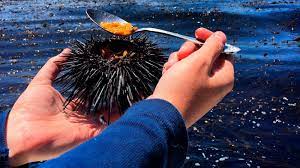
I ricci di mare sono animali rotondi e spinosi che vivono nei fondali marini, abitando tutti gli oceani e i mari a qualsiasi profondità. La dimensioni dei gusci varia da 3 a 10 centimetri. Non hanno occhi, gambe o mezzi di propulsione visibili, ma possono strisciare lentamente usando i piedi a tubo. A volte il segno di vita più visibile sono le spine, che sono attaccate ad enartrosi e possono puntare in qualsiasi direzione. Il tatto suscita una pronta reazione dalle spine, che convergono al punto toccato. Si nutrono di alghe.

La parola inglese “urchin” è una vecchia parola per riccio, a cui assomigliano i ricci di mare. In italiano e siciliano, la parola “riccio” si riferisce sia al mammifero detto anche porcospino, che al riccio di mare. Le gonadi (cioè le uova) dei ricci di mare, sia maschi che femmine, chiamate uova di pesce, sono una prelibatezza in molte parti del mondo, soprattutto in Giappone, dove sono conosciute come “uni” e vengono servito crude nel sashimi o nel sushi. Forse i ricci di mare di migliore qualità vengono raccolti nel sud della California e nel Mediterraneo, dove i piatti di pasta con i ricci sono gustati in tutte le regioni costiere italiane, in particolare in Puglia, in Sicilia e in Sardegna.

In California, i migliori ricci di mare si trovano al largo della costa di Santa Barbara. A causa delle correnti uniche e vorticose, calde e fredde, nelle acque del Canale di Santa Barbara vivono gli uni, ricci di mare di alta qualità. Vengono raccolti a 22 miglia dalla costa del porto. Il commercio è sbocciato dopo il 1997, quando l’abalone, un tipo di mollusco, era stato abbondantemente sfruttato; i subacquei quindi non sono stati più autorizzati a raccoglierli e hanno pensato di rifarsi con i ricci di mare, una nuova miniera d’oro. All’inizio, circa l’80% veniva esportato in Giappone. Ora sempre più vengono consumati localmente, in particolare nei ristoranti di sushi, poiché gli americani hanno affinato il gusto per le uova di pesce. Uni è costoso, ma una piccola quantità rende molto.

La raccolta dei ricci di mare è considerata uno dei lavori più pericolosi al mondo. I subacquei lavorano in un ambiente che non possono controllare e che può cambiare da un momento all’altro. Le correnti e il vento sono imprevedibili.  Le barche che usano possono incagliarsi fra gli scogli e gli apparecchi per la respirazione possono impigliarsi fra le alghe. A volte fa freddo. E poi ci sono gli squali. È stato girato persino un documentario del 2021, “The Delicacy”, che riprende i subacquei al largo della costa di Santa Barbara. Il film è stato presentato in anteprima al Santa Barbara Film Festival ed è ora disponibile su Prime Video.

Il sapore dei ricci di mare è difficile da descrivere perché nessun altro pesce ha il sapore di queste uova. È stato descritto come salato, dolce e cremoso; sembra assumere sapori diversi man mano che si mangiano. È stato anche descritto come umami e “burro dell’oceano di panna cotta”. Le uova tendono ad avere un colore oro brillante, giallo o arancio. 

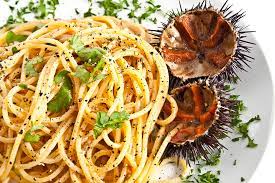
In Italia, i ricci sono una prelibatezza della stagione fresca, non dell’estate. In Sicilia di solito si comincia a trovare venduti da metà novembre fino ad aprile inoltrato. Esistono varie ricette per la pasta ai ricci di mare. Per la salsa ai ricci, la maggior parte delle ricette usa aglio o cipolla (mai entrambi), una piccola quantità di polpa di pomodoro fresco, prezzemolo fresco, sale, pepe macinato al momento e olio extravergine di oliva. Il principio guida è che nulla deve sopraffare il sapore della carne di riccio. La pasta deve essere lunga e possono essere spaghetti, vermicelli o linguine.

Posted in Abitudini, California, Cucina italiana, Film, Foto, Italia, Italiano, Pompei, Santa Barbara, Sicilia, Storia | Leave a comment

Sea Urchins: From Pompeii to the Present

The eruption of Mount Vesuvius in 79 A.D. covered, concealed, and preserved not only the bodies of the wealthy ancients who lived in Pompeii, but also many aspects of their daily lives.  Through excavations, archaeologists have discovered the homes, shops, clothing, art, and food of the time.  Among the preserved refuse were shells of sea urchins, a culinary delicacy then as they are today.

Sea urchins are spiny, round animals that live in the seabed, inhabiting all oceans and depth zones.  Their hard shells range in size from 1 to 4 inches.  They have no visible eyes, legs, or means of propulsion, but can crawl slowly using tube feet.  Sometimes the most visible sign of life is the spines, which are attached to ball-and-socket joints and can point in any direction.  Touch elicits a prompt reaction from the spines, which converge to the touched point.  They feed on algae and kelp.

The English word “urchin” is an old word for hedgehog, which sea urchins resemble.  In Italian and Sicilian, the word “riccio” refers to both a groundhog and a sea urchin.  The gonads of both male and female sea urchins, called roe, are delicacies in many parts of the world, especially in Japan, where it is known as “uni” and is served raw as sashimi or in sushi.  Perhaps the best quality sea urchins are harvested in Southern California and in the Mediterranean, where pasta dishes with ricci are enjoyed throughout Italy’s coastal regions, especially in Puglia, Sicily and Sardinia.

In California, the best sea urchins are caught off the coast of Santa Barbara.  Because of unique warm and cold swirling currents, the waters in the Santa Barbara Channel produce top quality uni.  Commercial divers harvest them 22 miles off the coast of the harbor.   The industry blossomed after 1997 when abalone had been overfished; divers were no longer permitted to catch them, and they pivoted to “the next gold” in the sea urchins.  In the beginning, about 80% were exported to Japan.  Now more and more are consumed locally as Americans develop a taste for the roe, particularly in local sushi restaurants.  Uni is expensive, but a little goes a long way.

Catching sea urchins is considered one of the most dangerous jobs in the world.  Divers work in an environment that they can’t control and that can change any minute.  Currents and wind are unpredictable.  Divers rely on boats that can get stranded and breathing apparatus that can get caught in the kelp beds.  Sometimes it is freezing cold.  And then there are the sharks.  A 2021 documentary, “The Delicacy,” follows divers off the coast of Santa Barbara.  The film premiered at the Santa Barbara Film Festival and is now available on Prime Video.

The flavor of sea urchins is difficult to describe because no other seafood tastes like this roe.  It was been described as briny, sweet, and creamy; it seems to take on different flavors as one eats it.  It has also been described as umami and “panna cotta ocean butter.”  The roe tends to have a bright gold, yellow or orange color.

In Italy, urchins are considered a cool-weather food.  In Sicily you usually begin to find them sold in the middle of November until late April, when the urchin season is over.  There are various recipes for spaghetti ai ricci di mare.  For the urchin sauce, most recipes include garlic or onion (never both), a small amount of fresh tomato pulp, fresh parsley, salt, freshly ground pepper and extra virgin olive oil.  The guiding principle is that nothing should overpower the flavor of the urchin meat.  The pasta should be long and can be spaghetti, vermicelli, or linguine. 

Posted in California, Cucina italiana, English, Film, Foto, Italia, Pompei, Santa Barbara, Sicilia, Storia | 1 Comment