Quiz on the Italian Renaissance

  1.  In which century was the term “Renaissance” first used?

o 16th

o 17th

o 18th

o 19th

It is believed that the term “Renaissance” was first used by the French historian Jules Michelet in 1858, but it was inked into history by the Swiss historian Jacob Burckhardt in his 1860 book, “The Civilization of the Renaissance in Italy.”

2. The Renaissance witnessed achievements in which field(s)?

o painting and sculpture

o literature and philosophy

o science and technology

o exploration

o all the above

Characteristics of the Renaissance include a renewed interest in classical antiquity, the rise of humanism, and radical changes in ideas about religion, politics, and science.  While we often associate the Renaissance with achievements in painting, sculpture and  architecture, there were tremendous advances in almost every field of human endeavor.

3. Which of the following was not a characteristic of humanism?

o belief in human dignity

o belief that all knowledge comes from God

o belief in the responsibility to lead personally fulfilling lives

o belief in the responsibility to contribute to the greater good

During the Renaissance, there was a shift from thinking that God ruled all thought and events to a human-centered philosophy.

4. Which was the most copied text during the 15th century?

o The Bible

o Dante’s Divine Comedy

o Pliny the Elder’s Natural History

o Cicero’s On the Republic

During the Renaissance, ancient manuscripts, lost for centuries, were rediscovered.  Popes and princes amassed vast libraries of Greek and Latin manuscripts laboriously written out by scribes on parchment, which were the skins of sheep, goats or donkeys.  In the beginning, the Divine Comedy, written in the “vulgar” Italian in 1308-1320, was considered fit only for wrapping fish.  By the end of the 15th century, it was the most reproduced text.

5. Which Medici was exiled from Florence by Savonarola?

o Cosimo (the patriarch)

o Cosimo’s son Piero

o Piero’s son Lorenzo

o Lorenzo’s son Piero

The Medici, the first family of Florence, ruled the city-state, off and on, from the mid-14th to the mid-18th centuries.  Known for banking and art collection, the family wielded extensive power…including populating the Catholic Church’s hierarchy.  They could be vicious with enemies; they manipulated the citizenry though elections and taxes.  They also amassed and preserved some of the Renaissance’s greatest treasures.  The son of Lorenzo “The Magnificent”, Piero “the Unfortunate,” was exiled from Florence in Savonarola’s “bonfire of the vanities” and his purge of perceived corruption.

6. Where is Michelangelo’s “David” located?

o Rome

o Milan

o Venice

o Florence

Weighing more than five tons, the “David” sculpture took Michelangelo three years to complete.  It is now considered one of the most iconic masterpieces to come out of the Italian Renaissance.  The sculpture can be seen today at the Accademia Gallery in Florence.

7. Which Renaissance man invented the parachute?

o Caravaggio

o Leonardo da Vinci

o Michelangelo

o Hieronymus Bosch

 While Leonardo da Vinci may be most remembered for his paintings, only 15-20 survive today, depending on attribution.  However, 50 notebooks of between 20,000 and 28,000 notes and sketches survive of his studies of the human body, nature, and innovations or       inventions like a flying machine and a prototype of the world’s first parachute, which he created by draping a piece of cloth over a wooden pyramid-shaped structure.

8. Michelangelo disliked Raphael because of what claim?

o Raphael was too old

o Raphael was copying him

o Raphael was rude to him

o Raphael was a conman

The charming artistic prodigy Raphael was eight years younger than the surly Michelangelo, and tensions ran high when they worked next door to each other.  Michelangelo claimed that Raphael was copying his style.  Raphael responded by painting a sulking Michelangelo into his famous “School of Athens” fresco in the Vatican.

9. Which astronomical discovery is not credited to Galileo Galilei?

o Pluto

o the moons of Jupiter

o the sun’s spots

o the Milky Way

One of the most famous scientists to come out of the Renaissance, Galileo used the newly invented telescope to make enormous strides in astronomy.  He was the first to note that the sun had spots, to observe the Milky Way, and to identify the moons of Jupiter. 

10.The printing press became available for commercial use in 1450.  Which of the following was this invention not responsible for?

o providing work for scribes and illuminators

o increasing literacy

o promoting the changeover from parchment to paper

o promoting the Reformation

o exhorting people to war

While the spread of literacy required the availability of inexpensive texts, stationers and booksellers had amply supplied school-

            masters and students with primers and grammars long before the arrival of print.  Literacy levels in Tuscany declined over the

            16th century.  Economic prosperity and political liberties of the 14th and 15th centuries did more for literacy than the printing press.

Posted in Uncategorized | 1 Comment

Patrimonio Mondiale

Secondo l’UNESCO, “Il patrimonio è la nostra eredità del passato, ciò con cui viviamo oggi e ciò che trasmettiamo alle generazioni future. Il nostro patrimonio culturale e naturale sono fonti insostituibili di vita e di ispirazione”.  L’UNESCO — l’Organizzazione delle Nazioni Unite per l’Educazione, la Scienza e la Cultura — è stata fondata nel 1945 per promuovere la pace e la sicurezza nel mondo attraverso la cooperazione internazionale nel campo dell’istruzione, delle scienze e della cultura.  La missione dell’UNESCO si è estesa negli anni per includere l’istituzione di siti del patrimonio mondiale di importanza culturale e naturale.

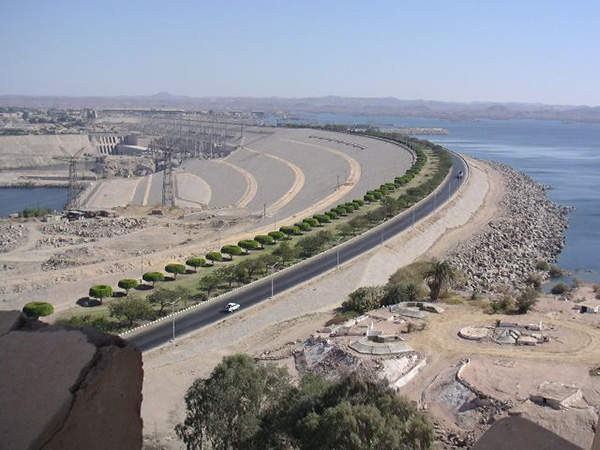
Le origini risalgono al 1954, quando l’Egitto decise di costruire la nuova diga di Assuan. Prevedibilmente, il serbatoio che ne sarebbe risultato, avrebbe inondato una vasta area della valle del Nilo, che conteneva tesori dell’antico Egitto e dell’antica Nubia. I governi di Egitto e Sudan allora chiesero all’UNESCO di aiutarli a proteggere i monumenti e i siti in pericolo. Il progetto portò al recupero di migliaia di oggetti e al trasferimento su un terreno più elevato di importanti templi.  Fu anche il punto di inizio della Convenzione sulla Protezione del Patrimonio Mondiale Culturale e Naturale con la conseguente istituzione della Lista del Patrimonio Mondiale.

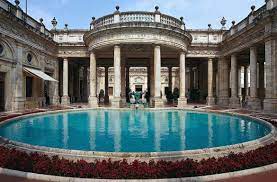
Le Isole Galapagos in Ecuador, il Parco Nazionale di Yellowstone negli Stati Uniti e l’isola di Goree in Senegal (il primo centro commerciale tra Africa e Americhe, oltre che centro del traffico di schiavi sulla costa africana) furono tra i 12 siti nominati nella prima lista nel 1978.  La Lista del Patrimonio Mondiale attualmente consiste in un totale di 1.153 beni in 167 paesi in tutto il mondo. L’ultimo aggiornamento di luglio 2021 include i portici di Bologna. Secondo l’UNESCO, alcuni portici sono costruiti in legno, mentre altri sono in pietra o mattoni. Coprono strade, piazze, sentieri e camminamenti di Bologna, e talvolta si trovano su entrambi i lati della strada. Coprono un’area totale di 62 km e sono una parte importante dell’identità di Bologna. Quest’anno l’UNESCO ha riconosciuto anche Montecatini Terme in Toscana, e gli affreschi trecenteschi di Padova, tra cui il ciclo di affreschi della Cappella degli Scrovegni di Giotto, che ha segnato l’inizio di uno sviluppo rivoluzionario nella storia della pittura murale.

Con 58 siti, l’Italia ha il maggior numero di Patrimonio Unesco. È interessante notare che la città con il maggior numero di siti non è Roma o Parigi ma Córdoba, che è la ventiduesima città più grande della Spagna. La Moschea di Córdoba è stato il primo sito nominato della città. Gli storici ritengono che la struttura originale sia stata costruita come chiesa nel VI secolo, convertita in moschea nel secolo successivo e in seguito trasformata di nuovo in cattedrale. La linea stilistica dell’edificio, con i suoi numerosi archi a ferro di cavallo, cupole e piastrelle decorative, è l’epitome dell’architettura moresca.

Il patrimonio culturale non riguarda solo monumenti e siti naturali, ma anche tradizioni, espressioni orali, pratiche sociali e riti trasmessi, nei secoli, dai nostri antenati. Ecco perché nel 2017 l’UNESCO ha inserito l’arte dei pizzaioli napoletani nella onorata Lista del Patrimonio Culturale Immateriale dell’Umanità: “Il saper fare culinario legato alla produzione della pizza – che comprende gesti, canti, forme di espressione visiva, espressioni linguistiche locali e la capacità di gestire correttamente l’impasto della pizza e di trasformare la preparazione della pizza in una performance da condividere è senza dubbio un patrimonio culturale. I pizzaioli e i loro ospiti partecipano tutti a un rito sociale intriso di convivialità, dove bancone e forno in pietra fanno da palcoscenico”.

L’UNESCO stabilisce standard rigorosi per il riconoscimento. Un bene deve essere considerato di “eccezionale valore universale”, deve soddisfare condizioni di integrità e autenticità, e deve essere dotato di un adeguato sistema di protezione e gestione. Preservare questi siti, monumenti e tradizioni sarà una preziosa eredità per le generazioni future.

Posted in Architecture, Arte, Bologna, Foto, Italia, Italiano, Storia, Uncategorized | Leave a comment

World Heritage

According to UNESCO, “Heritage is our legacy from the past, what we live with today, and what we pass on to future generations.  Our cultural and natural heritage are both irreplaceable sources of life and inspiration.”  UNESCO—the United Nations Educational, Scientific and Cultural Organization—was founded in 1945 to promote world peace and security through international cooperation in education, the sciences, and culture.  It has 193 member states and 11 associate members.  UNESCO’s mission has expanded over the years to include the establishment of World Heritage Sites of cultural and natural importance.

The origins date back to 1954, when Egypt decided to build the new Aswan High Dam.  Predictably, the resulting reservoir would eventually inundate a large area of the Nile valley, which contained treasures of ancient Egypt and ancient Nubia.  The Governments of Egypt and Sudan asked UNESCO to assist them to protect the endangered monuments and sites.  The project resulted in the recovery of thousands of artifacts and the relocation to higher ground of important temples.  It was also the starting point of the Convention on the Protection of World Cultural and Natural Heritage and the consequent establishment of the World Heritage List.

The Galapagos Islands in Ecuador, Yellowstone National Park in the United States, and the Island of Goree in Senegal (the largest slave-trading center on the African coast) were among the 12 sites named to the first list in 1978.  The World Heritage List currently consists of a total of 1,153 assets in 167 countries around the world.  The last update of July 2021 includes the porticos of Bologna.  According to UNESCO, some porticos are built of wood, while others are made of stone or brick.  They cover the roads, squares, paths, and walkways of Bologna, and sometimes can be found on both sides of a street.  They cover a total area of 62 km and are a major part of Bologna’s identity.  This year UNESCO also recognized Montecatini Terme, a series of spas in Tuscany, and the fourteenth-century frescoes of Padua, which include Giotto’s Scrovegni Chapel fresco cycle, which marked the beginning of a revolutionary development in the history of mural painting.

With 58 World Heritage Sites, Italy has the most of any country.  Interestingly, the city with the most sites is not Rome or Paris; they were recently surpassed by Córdoba, the 22nd largest city in Spain.  The Mosque of Córdoba was the city’s first-named site.  Historians believe that the original structure was built as a church in the sixth century, converted into a mosque the following century, and later changed back to a cathedral.  The building’s design—with its many horseshoe arches, domes, and decorative tile work—is the epitome of Moorish architecture.

Cultural heritage is not just about monuments and natural sites, but also about traditions, oral expressions, social practices and rites transmitted, over the centuries, by our ancestors.  That’s why in 2017 UNESCO placed the art of Neapolitan pizzaioli on the honored List of Intangible Cultural Heritage of Humanity: “The culinary know-how associated with pizza-making–which includes gestures, songs, visual forms of expression, local linguistic utterances and the ability to handle pizza dough properly and to transform pizza making into a performance to share—is without a doubt a cultural patrimony.  Pizzaioli and their guests all participate in a social ritual steeped in conviviality, where counter and stone oven work as a stage.”

UNESCO sets rigorous standards for recognition.  An asset must be considered of “exceptional universal value,” must meet conditions of integrity and authenticity, and must be equipped with an adequate protection and management system.  Preserving these sites and monuments and traditions is a legacy for future generations.

Posted in Architecture, Arte, English, Foto, Italia, Storia | Leave a comment