Cinecittà (in English)

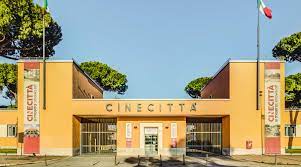
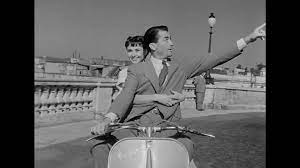
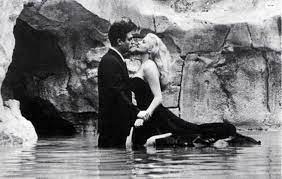
Cinecittà, the Italian film studio located on 99 acres less than 6 miles from the center of Rome, is as rich in cinema history as Hollywood’s backlots of Paramount, MGM and Warner Brothers.  It is where Gregory Peck and Audrey Hepburn zipped around the city on a Vespa in “Roman Holiday” (1953).  It is where Charlton Heston raced in a chariot in “Ben-Hur” (1959) on the single largest set (18 acres) ever built for a movie.  It is where Elizabeth Taylor and Richard Burton ignited a tabloid frenzy with their off-screen affair during the filming of “Cleopatra” (1963).  It is where Marcello Mastroianni and Anita Eckberg frolicked in the Trevi Fountain (a foam replica) in “La Dolce Vita” (1960). And because of all this, it is where the term “paparazzi” was coined.  It came from a fictional news photographer named Paparazzo in “La Dolce Vita.”
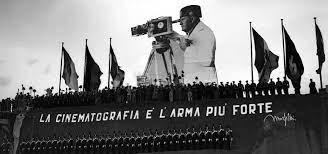
The origins of Cinecittà date back to the 1930s when Benito Mussolini not only wanted to revive the languishing Italian film industry, but also wanted to create what Hitler had developed—a propaganda machine.  Mussolini sent his son Vittorio to Hollywood to learn about America’s dream factories and to replicate them in Rome.  Cinecittà was built in a year and a half—an architectural fusion of art deco from Hollywood and Fascist-era minimalism.  It is said that more than 100,000 pre-war news reels are stored within the studio’s vaults, including Mussolini’s declaration of war on the allies.  Between 1937 and 1943, 279 films were made, some of which showcased the technological advances of the studios.  Others were known as “white telephone” films because they featured ritzy settings and posh lifestyles that few Italians experienced in their daily existence.
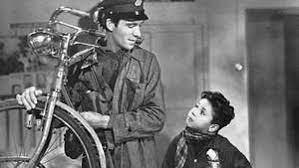
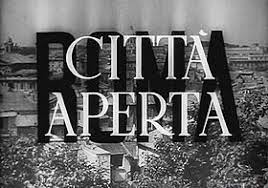
During World War II, Cinecittà was bombed by the Allies and looted by the Nazis.  By 1944, film production stopped, and the studios were used as a refugee camp.  America closed down Cinecittà in 1945 forbidding films to be made there as a punishment for Italy’s alliance with the Nazis during the war.  The irony of the ban was that it gave rise to Neorealism, as filmmakers like Roberto Rossellini and Vittorio De Sica took to the streets to make films like “Rome, Open City” and “The Bicycle Thief.”  In these classic films, Hollywood standards were eschewed, amateur actors were used, and scenes were shot in authentic locations.  Critical acclaim for these films not only drew attention to the Italian film industry, but also elevated Cinecittà as an alternative for Hollywood producers seeking to lower production costs.
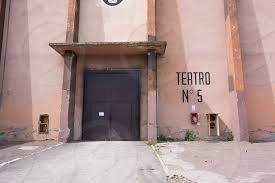
By the 1950s Cinecittà was back in business and established a great reputation on both sides of the Atlantic.  It was and still is the largest film studio in Europe, and directors flocked to “Hollywood on the Tiber,” as it was known during the glory years of the ‘50s and ‘60s.  For Italian films, “La Dolce Vita” was seen as a bridge between Neorealism and Modern Art films.  For the rest of his life, Federico Fellini made nearly all his movies on Stage 5, the largest soundstage in Europe. 

After Fellini’s death in 1993, Cinecittà began to languish.  The Italian government privatized it in 1997, selling an 80% stake.  Investments have made Cinecittà a cinema capital once again.  Since the 1990s, films produced there have included “The English Patient,” “Gangs of New York,” “The Passion of Christ” and “The Two Popes.” However, competition always looms on the horizon; other studios offer state-of-the-art facilities and tax breaks to lower production costs.  Cinecittà, however, is the only studio in the world with pre-production, production, and full post-production on one lot. Thus, one can walk in with a script and walk out with a completed movie.

Over its lifetime, more than 3,000 movies have been filmed at Cinecittà, of which 90 received an Academy Award nomination and 47 of these won.  While the future for Cinecittà remains uncertain, there will always be “la dolce vita” days of the ‘50s and ‘60s and the splendors of the past.
Posted in Architecture, English, Film, Foto, Italia, Roma, Storia | 1 Comment

La Festa di San Gennaro

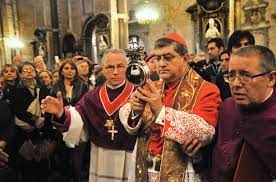
La Festa per San Gennaro, patrono e protettore di Napoli, si celebra ogni anno il 19 settembre in tutto il mondo. Nella stessa Napoli è soprattutto una festa religiosa in cui credenze e superstizione si fondono in attesa del famoso “miracolo della liquefazione”. Secondo la tradizione, il sangue del martire cristiano fu raccolto dopo la sua decapitazione nel 305 d.C. e fu conservato in due ampolle, ancora oggi gelosamente tenute in una cassaforte con doppia serratura nel Duomo di Napoli. Il 19 settembre le ampolle vengono esposto sull’altare e accolte dai devoti con preghiere, urla di giubilo e di gioia, abbracci ed applausi. Lo scioglimento in tempi rapidi del sangue viene considerata un segno di buon auspicio per il futuro; il ritardo o il mancato scioglimento del sangue sono invece considerati come presagi negativi.* Il 19 settembre è la data principale e la più importante, l’evento si replica poi il 16 dicembre e la prima domenica di maggio, data della festa della traslazione delle sue reliquie.

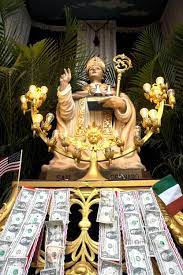
Nel settembre 1926, gli immigrati appena arrivati ​​a New York da Napoli, si radunarono lungo Mulberry Street nel quartiere di Little Italy. Decisero di continuare la tradizione che avevano seguito in Italia per celebrare il giorno del martirio di San Gennaro. Le famiglie di immigrati eressero una piccola cappella per ospitare l’immagine del loro santo patrono. Invitarono tutti a partecipare e ad appuntare un’offerta ai nastri, che erano appesi alla statua. Il denaro fu poi distribuito ai poveri del quartiere.

Little Italy a New York si estendeva da Canal Street e Bowery a Lafayette Street. Molti siciliani vivevano in Elizabeth Street; napoletani, calabresi e altri siciliani abitavano in Mott Street. Anche Mulberry Street era un misto di italiani, ma era principalmente napoletano. Vivevano tutti insieme e condividevano ricette e tradizioni. Con lo svolgersi del ventesimo secolo, i giovani si trasferirono in altre città, e Little Italy è diventata sempre più piccola. Oggi rimangono solo pochi ristoranti e negozi.

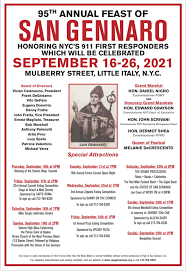
Tuttavia, nel corso del XX secolo, la Festa di San Gennaro si è ingrandita, da un evento di un giorno è diventate una fiera di strada di 11 giorni. Per anni si è celebrata con cibo e bevande, musica e giochi, frequentata da fedeli e turisti. Attirava più di un milione di persone. Le famiglie che erano cresciute a Little Italy sono tornavano per le celebrazioni annuali. La festa oggi si svolge in Mulberry Street, che è chiusa al traffico, e si mangiano salsicce e zeppole grazie a 200 venditori ambulanti. Quest’anno (2021) ricorre la 95th festa annuale di San Gennaro, dedicata a onorare i primi soccorritori di New York City il 9-11-2001. Tra gli eventi in programma ci sono una gara di mangiare cannoli, un’altra per mangiare zeppole e un’altra per mangiare pizza. Forse l’evento lirico di Enrico Caruso è un po’ più elegante.


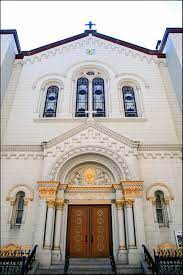
Dal punto di vista religioso, la Grande Processione si svolge dopo una Messa celebrativa presso la Chiesa del Preziosissimo Sangue il 19 settembre. Si tratta di una processione con candele in cui la statua di San Gennaro viene portata dalla sua sede permanente nella Chiesa del Preziosissimo Sangue lungo le strade di Little Italy.

La continua crescita della Festa negli ultimi dieci anni le ha permesso di donare più di 1,8 milioni di dollari a cause meritevoli in tutti e cinque i distretti di New York e nell’area dei tre stati per aiutare i bisognosi e i giovani. Nessun’altra festa pubblica riesce a donare tanti soldi come la Festa di San Gennaro.

*Gli scienziati dicono che la sostanza all’interno delle ampolle sigillate a Napoli sembra essere sangue essiccato, ma non riescono a spiegare perché a volte si sciolga e a volte no.

Posted in Abitudini, Campania, Cucina italiana, Immigrazione, Italia, Italiano, Italoamericani, Napoli, New York, Sicilia, Storia | Leave a comment

The Feast of San Gennaro

The Feast of San Gennaro, patron saint and protector of Naples, is celebrated every year on September 19 throughout the world.  In Naples itself it is primarily a religious festival in which faith and superstition merge in anticipation of the “miracle of liquefaction.”  According to legend, the blood of the Christian martyr, Saint Gennaro, was collected after his decapitation in 305 d.C. and is now preserved in 2 vials in a safe with two locks in the Duomo of Naples.  On September 19, the vials are brought to the altar and welcomed by the devoted with prayers, shouts of jubilation and joy, hugs and applause.  The liquefaction in a short time is considered a good omen for the future; a delay or failure is considered a bad sign.*  While September 19 is the primary and most important date, the event is replicated on December 16 and the first Sunday in May, the feast date of the transfer of his relics.

In September 1926, newly arrived immigrants from Naples congregated along Mulberry Street in the Little Italy neighborhood of New York City.  They decided to continue the tradition that they had followed in Italy to celebrate the day when Saint Gennaro was martyred.  Immigrant families erected a small chapel to house the image of their patron Saint.  They invited all to participate and to pin an offering to the ribbon streamers that were hung from the statue.  The money was then distributed to the poor in the neighborhood. 

Little Italy in New York City used to span from Canal Street and the Bowery to Lafayette Street.  Sicilians lived on Elizabeth Street; Neapolitans, Calabresi and Sicilians lived on Mott Street.  Mulberry Street also had a mix but was primarily Neapolitan.  They all lived together and shared recipes and traditions.  As the twentieth century evolved, the children moved away and Little Italy became smaller and smaller.  Today, only a few restaurants and shops remain.

However, over the twentieth century, the Feast of San Gennaro expanded from a one-day event into an 11-day street fair.  For years it has been an annual celebration of food and drink, music and games, and was frequented by the faithful and tourists alike.  It attracts more than one million people.  Families that grew up in Little Italy returned for the annual celebrations.  Centered on Mulberry Street, which is closed to traffic, the festival features sausages and zeppole, and about 200 street vendors.  This year (2021) is the 95th annual Feast of San Gennaro, which was dedicated to honoring New York City’s first responders on 9-11-2001.  Among the scheduled events are a cannolo eating competition, a zeppole (donut) eating competition, and a pizza eating competition. Perhaps the Enrico Caruso opera event is a bit more elegant.

On the religious side, the Grand Procession is held after a celebratory Mass at the Church of the Most Precious Blood on September 19.  This is a candlelit procession in which the statue of San Gennaro is carried from its permanent home in the Most Precious Blood Church through the streets of Little Italy.

The continued growth of the Feast over the past ten years enabled it to donate more than $1.8 million to worthy causes in all five boroughs of New York and the tri-state area to help the needy and the young.  No other public festival donates more money to charity than does the Feast of San Gennaro.

*Scientists say the substance inside the sealed vials in Naples appears to be dried blood but cannot explain why it sometimes turns into liquid and sometimes does not.

Posted in Calabria, Campania, Cucina italiana, English, Foto, Immigrazione, Italia, Italoamericani, Napoli, New York, Sicilia, Storia | Leave a comment