Godfather: Religious, Secular or Mafioso Title?

Toward the end of Godfather I, Michael Corleone is in church taking the vow as godfather to sister Connie’s son.  With dramatic organ music playing, the priest intones, “Do you renounce Satan…and all his works…and all his pomps?”  — while the heads of the competing mafia families are all being obliterated at the behest of Michael.  He simultaneously becomes godfather to an infant and Godfather to the reigning Corleone family—il capo dei capi.

Godfathers and godmothers have been around since the early days of Christianity when the Church was under persecution from the Roman Empire and had to prevent pagan infiltration.  Godparents had various roles: To attest to the integrity of the adult individual receiving the Sacraments of Initiation; to serve as critical spiritual guides if parents of a child were martyred and needed direction in the Faith; and to protect the church’s doctrine from paganism and persecution.  After 800 CE, when infant baptism became commonplace, the role of the godparent changed to what we generally understand it to mean today:  They are adults who commit themselves to assist parents in teaching the Catholic Faith to children.
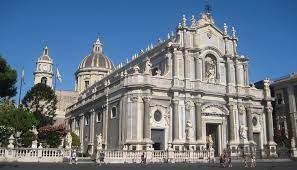
Now the appointment of godparents is coming under scrutiny in the land that is home to the Catholic Church. The diocese of the Sicilian city of Catania enacted in October 2021 a three-year ban on naming godparents at baptisms and christenings.  Church officials claim that the tradition has lost any spiritual significance.  Instead, they say, it has become a way for families to improve their fortunes by making advantageous connections, sometimes with shady local characters.  Not only do many godfathers lack the faith, but many live sinful or criminal lives.  In some cases, the position has been used for social blackmail and usury.  

While church officials say that the primary reason to eliminate godparents is due to the secularization of the position, the influence of the mafia has also played a major role.  Some parish priests have welcomed the bans to give them a rest from questionable characters threatening them into naming specific godfathers.  In fact, Italian prosecutors have tracked baptisms to show how underworld bosses spread influence.  In Reggio Calabria, the birthplace of the ‘Ndrangheta, the archbishop proposed a 10-year ban on the practice because it is ripe for exploitation by mobsters.  In Aci Trezza, a town about 10 km north of Catania, the diocese allows godparents, but requires them to sign forms swearing that they are believers and not Mafia members.
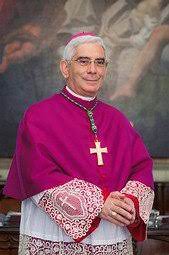
In 2014, Pope Francis took a stand against organized crime by excommunicating all mafiosi.  He has recently been approached by clergy in southern Italy who want his support on the question of godparents.  Michele Pennisi, the archbishop in Monreale, which is near Palermo, is a vocal mafia critic and challenges the idea that crime bosses have a paternal side: “The mafia has always taken the term godfather from the Church to give its bosses an air of religious respectability.”  In 2008 Pennisi received death threats from the mob after he banned religious funerals for known gangsters.  Earlier this year, he condemned the decision of a local priest to let the son of the infamous mobster, Toto Riina, become his niece’s godfather.

The priest was from the notorious village of Corleone, which was made famous by Mario Puzo’s novel and Francis Ford Coppola’s movie, The Godfather.  The confrontation between priest and archbishop led Pennisi to ban anyone convicted of “dishonorable crimes” from acting as a godparent.  But will the entrenched culture of omertà—the code of silence—make these rulings hard to enforce?

Posted in Abitudini, Calabria, English, Film, Foto, Italia, La Gente, Mafia, Sicilia, Storia, Vaticano | Leave a comment

La Coppola

La coppola: in vendita nelle bancarelle di Palermo, è oggi indossato non solo in Sicilia, ma anche in Calabria e altrove; è un tipo di cappello piatto, simbolo iconico della Sicilia. La storia è incerta, così come l’origine del nome. Una teoria popolare è che abbia avuto origine in Inghilterra, dove una legge nel 1571 richiedeva ai maschi di età superiore ai 6 anni (ad eccezione dei nobili e della classe superiore) di indossare cappelli di lana la domenica e nei giorni festivi. Lo scopo era quello di tutelare la produzione interna di lana, che all’epoca era alla base dell’economia del Paese.ii

Come è arrivata in Sicilia la coppola? Secondo questa teoria, alla fine del XIX secolo ci sarebbe stata una migrazione di famiglie inglesi in cerca di affari e investimenti. Molto in voga in Inghilterra e Irlanda, la coppola prese il nome italiano di “coppola”, che derivava dalla parola inglese “cup”. Altri invece ritengono che il nome “coppola” sia più verosimilmente un adattamento siciliano, calabrese o pugliese della parola latina “caput” per testa. La parola siciliana “còppula” significa anche testa.

Un’altra teoria sulla storia dice che il berretto siciliano è una variante del berretto da guardiacaccia inglese introdotto in Sicilia intorno al 1800 quando Ferdinando I, re di Napoli e Sicilia, lasciò Napoli per Palermo di fronte all’invasione di Napoleone nel sud Italia. Le truppe britanniche erano di stanza in Sicilia per proteggere l’isola da una possibile invasione francese e per proteggere lo zolfo siciliano, che era fondamentale per la forza militare della Gran Bretagna e per la sua rivoluzione industriale. 

Avido cacciatore, Ferdinando era spesso accompagnato in queste gite da militari e diplomatici britannici. L’aristocrazia siciliana iniziò a imitare i modi di vestire inglesi, come i berretti da caccia in tweed. In poco tempo, i contadini siciliani ne imitarono lo stile. Il cappello proteggeva dal sole e permetteva ai lavoratori di indossare un capo poco costoso che consideravano un lusso. In poco tempo, i proprietari terrieri iniziarono a riferirsi ai lavoratori sottomessi come “una buona coppola”. Quando la mafia ottenne il controllo delle campagne, i mafiosi usarono lo stesso termine per indicare che i cittadini non avrebbero interferito nelle attività criminali dell’organizzazione. Poi si associò ai “picciotti”, giovani nei ranghi più bassi della gerarchia mafiosa.

Fin dai suoi primi giorni, il berretto piatto si è evoluto nell’uso e nel significato. All’inizio in Inghilterra denotava diverse occupazioni e livelli socioeconomici: il nero era indossato dalla classe operaia, il marrone era per i contadini e i lavoratori nei campi e il blu era usato dai marinai. È diventato un cappello da guida e un cappello da strillone. E più tardi, nel XX secolo, è stato legato agli sport dei ricchi come la caccia e il golf, e persino a generi musicali come il jazz. 

Negli anni ’90, gli stilisti italiani e altri iniziano a prendere ispirazione dal passato, ma invece di realizzare cappellini coppola in tweed dai colori opachi, ne disegnano di coloratissimi in molti tessuti diversi, tra cui cotone e lino e persino in denim realizzato con jeans riciclati. In Sicilia, un movimento di “consapevolezza della mafia” ha sostenuto la creazione di raffinati cappelli, che avevano lo scopo di sfatare il tradizionale stereotipo del mafioso siciliano rustico. Mentre la vecchia generazione di siciliani indossa ancora i tradizionali berretti, la coppola dai colori vivaci è probabilmente l’onda del futuro.

Posted in Abitudini, Calabria, Differenze culturali, Foto, Italia, Italiano, La Gente, La Lingua, La Moda, Mafia, Puglia, Sicilia, Storia | Leave a comment

The Coppola Cap

For sale in the market stalls of Palermo today and worn throughout Sicily and even in Calabria and elsewhere is the Coppola hat, a type of flat hat that is an iconic symbol of Sicily.  The history is uncertain, as is the origin of the name.  One popular theory is that it originated in England where a law in 1571 required males older than 6 years (except for nobles and the upper class) to wear woolen hats on Sundays and holidays.  The purpose was to protect the domestic production of wool, which was the basis of the country’s economy at the time.

How did the coppola hat reach Sicily?  According to this theory, there was a migration in the late 19th century of English families in search of bargains and investments.  Very much in vogue in England and Ireland, the flat cap took the Italian name of “coppola,” which came from the English word “cup.”  However, others believe that the name “coppola” is more likely to be a Sicilian, Calabrian or Apulian adaptation of the Latin word “caput” for head.  The Sicilian word “còppula” also means head.  

Another theory on the history says that the Sicilian cap is a variation of the English gamekeeper’s cap introduced in Sicily around 1800 when Ferdinando I, King of Naples and Sicily, left Naples for Palermo in the face of Napoleon’s invasion of southern Italy.  British troops were stationed in Sicily to protect the island from a possible French invasion and to protect Sicilian sulphur, which was critical to Britain’s military strength and to its industrial revolution.  

An avid hunter, Ferdinando was often accompanied on these outings by British military and diplomats.  The Sicilian aristocracy began to imitate the British modes of dress, like the tweed hunting caps.  Before long, Sicilian peasants were imitating the style.  The hat provided protection from the sun and allowed workers to wear an inexpensive item that they considered a luxury.  Before long, landowners began to refer to submissive workers as “una buona coppola.” As the mafia gained control of the countryside, mafiosi used the same term for citizens unlikely to interfere in the organization’s criminal activities.  Then it became associated with the “picciotti,” who were young men in the lowest ranks of the mafia hierarchy.

Even since its earliest days, the flat cap has evolved in usage and meaning.  In the beginning in England, it denoted different socio-economic levels:  Black was worn by the working class, brown was for farmers and field works, and blue was used by sailors.  It became a driving hat and a newsboy hat.  And later in the twentieth century, it was linked to rich people’s sports like hunting and golf, and even to musical genres such as jazz.

By the 1990s, Italian and other designers begin to take inspiration from the past, but instead of making dull-colored tweed cuppola caps, they designed brightly colored ones in many different fabrics, including cotton and linen and even in denim made from recycled jeans.  In Sicily, a “Mafia awareness” movement supported the creation of attractive caps, which were intended to debunk the traditional stereotype of the rustic Sicilian Mafioso.  While the older generation of Sicilians still wear the traditional caps, the brightly colored coppola is probably the wave of the future.

Posted in Abitudini, Calabria, Differenze culturali, English, Foto, Italia, La Gente, La Moda, Mafia, Puglia, Sicilia, Storia | Leave a comment