Wordle

As you may already know, Wordle is a word game that challenges you to guess a 5-letter word. It’s an addictive, once-a-day game that has had a meteoric rise, many copycats, and now versions in non-English languages, including Italian, for those who want to challenge and improve their vocabulary.

Wordle is relatively simple. You have 6 attempts to guess the secret word. Every attempt must be a valid 5-letter word. After each attempt, the colors of the tiles will change to show you how close you are to guessing the word. A letter in a yellow tile means that the letter appears in the secret word but in the wrong place. A letter in a green tile indicates that the letter is in the word in the correct position. A letter in a grey tile means that is is not in the word at all. Here is what it looks like:

The game was invented by Josh Wardle, a software engineer from Brooklyn, for his partner who loved word games. After Wardle’s Wordle became an obsession in his family, he released it to the rest of the world in October 2021. On November 1, 90 people played. By January 1, 2022, 300,000 people plays thanks to viral conversations on Twitter. The New York Times bought the game at the end of January, and now millions play.

There are several reasons for the game’s appeal. As of now, it is free for players, does not have any ads or pop-up banners, it doesn’t ask for money, it takes maybe 3 minutes to play, and it challenges your brain. There is only one game per day (although there are sites with archived games in English); the sense of scarcity, like the game’s simplicity, is perhaps especially appealing during a pandemic.

Since the New York Times put up a paywall in 2011, its’ business objective had been to persuade readers, most of whom receive content digitally, to buy subscriptions to their products like cooking, games, and daily news briefings. The newspaper’s purchase of Wordle reflects the growing importance of games, like crosswords and Spelling Bee, in the company’s quest to increase digital subscriptions.

In Italy, Pietro Peterlongo, a Principal Data Scientist at the ToolsGroup software company based in Milan, developed an Italian version. January 3, 2022 was the launch date. The basic rules are the same as in Wordle and un nuovo gioco di PAROLE appare ogni giorno:

pietroppeter.github.io/wordle-it/

Posted in Abitudini, English, Italia, La Lingua, Lo Sport, Milano, Uncategorized | 1 Comment

Artemisia Gentileschi (in italiano)

Artemisia Gentileschi (1593 – c. 1656) è considerata tra le più affermate artiste europee del Seicento e la più celebre pittrice dell’epoca. È stata spesso trascurata a favore dei contemporanei maschi; tuttavia, il riconoscimento dei suoi successi e la sua posizione nella storia dell’arte sono cambiati nel corso dei secoli. Nuovi documenti e la scoperta di nuovi dipinti negli ultimi 20 anni hanno migliorato la comprensione della sua produzione artistica.

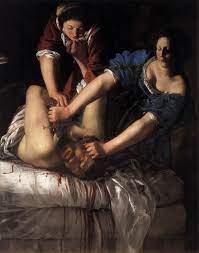
Figlia del noto pittore Orazio Gentileschi, Artemisia si formò fin da piccola nella bottega del padre. Sia il padre, che la figlia furono influenzati da Caravaggio. Mentre i dipinti di Orazio sono altamente idealizzati, quelli di Artemisia sono più naturalistici. Possedeva grande abilità nel rendere le trame delle superfici e i riflessi di luce. Il suo primo dipinto conosciuto, Susanna e i vecchi, firmato e datato 1610, è estremamente definito e affronta due temi ricorrenti nella sua arte: donne eroine e il nudo femminile. Altre due opere famose sono Giuditta che uccide Oloferne, e Giuditta e la sua serva. Molte delle sue donne sembrano autoritratti o quasi.

Per molto tempo, i suoi successi come artista sono stati oscurati dalla storia del suo stupro, avvenuto all’età di 17 anni da parte di Agostino Tassi, un artista collega di suo padre. Il padre fece causa a Tassi. Durante il processo Artemisia fu torturata dalle sibille, che le strinsero delle corde intorno alle dita per verificare la veridicità della sua testimonianza. Tassi fu condannato all’esilio da Roma, ma la sentenza non fu mai eseguita. A partire dagli anni ’70 del secolo scorso, gli studi femministi aumentarono l’interesse per Artemisia Gentileschi concentrandosi sul suo stupro, sul suo maltrattamento e cogliendo un desiderio di “vendetta” nei suoi forti personaggi femminili e nella loro volontà di ribellarsi agli uomini. È vero che i suoi personaggi mancano di tratti “femminili” stereotipati, come la sensibilità, la timidezza e la debolezza. Nel tempo, l’analisi dei suoi dipinti si è ampliata per vedere il coraggio politico nelle sue figure femminili e per comprendere le sue raffigurazioni di morte e perdita.

Dopo il processo per stupro, Artemisia si trasferì a Firenze dove ebbe successo come pittrice di corte. Godeva del mecenatismo della famiglia Medici e frequentava la cerchia colta di Michelangelo Buonarroti il ​​Giovane. Fu la prima donna ad entrare nella celebre Accademia delle Arti del Disegno di Firenze. Imparò a leggere e a scrivere a Firenze.  Assistette a spettacoli musicali e teatrali, che probabilmente influenzarono la rappresentazione di figure bibliche e mitologiche in abiti contemporanei, spesso sontuosi. 

Artemisia visse anche a Venezia, Londra e Napoli. Fu a Venezia che probabilmente dipinse Lucrezia, un’opera recentemente riscoperta, conservata in collezioni private fino a quando non fu acquistata dal J. Paul Getty Museum di Los Angeles nel 2021. In questo dipinto, Lucrezia emerge dall’ombra pugnalandosi al petto. Lo splendore della sua pelle, le perle tra i capelli, i ricchi tessuti contrastano con l’orrore che sta per accadere. Secondo la storia romana, Lucrezia, la moglie di un nobile, fu violentata da Sesto Tarquinio, figlio del re di Roma. Proclamando la sua innocenza, si pugnalò a morte. La rabbia e il dolore per la sua morte portarono a una ribellione che scacciò i Tarquini da Roma e segnò la fondazione della Repubblica Romana. 

Lucrezia divenne uno fra i soggetti preferiti nell’arte rinascimentale e barocca, come simbolo della forza femminile. Molto probabilmente la sua storia risuonava con quella di Artemisia, che spesso dipingeva donne forti nelle sue opere. Influenzò la sua personalità artistica come pittrice indipendente e di successo in un mondo dominato dagli uomini. Artemisia si avvicinava ai suoi soggetti con grande empatia e seppe tradurre le loro esperienze in dipinti emotivamente complessi.

Posted in Arte, Campania, Firenze, Foto, Italia, Italiano, Napoli, Storia, Venezia | 1 Comment

Artemisia Gentileschi (in English)

Artemisia Gentileschi (1593 – c. 1656) is considered among the most accomplished seventeenth-century Western artists, and the most celebrated woman painter of that era.  She was often overlooked in favor of male contemporaries; however, recognition of her achievements and her standing in the history of art have changed over the centuries.  New documents and the emergence of new paintings in the last 20 years have enhanced our understanding of her art.

The daughter of the well-known painter Orazio Gentileschi, Artemisia trained from an early age in her father’s workshop.  Both father and daughter were influenced by Caravaggio.  Whereas Orazio’s paintings are highly idealized, Artemisia’s are more naturalistic.  She was skilled in rendering surface textures and light reflections.  Her first known painting, Susanna and the Elders, signed and dated 1610, is extremely accomplished and addresses two recurring themes in her art: women heroines and the female nude.  Two other well-known works are Judith Slaying Holofernes and Judith and Her Maidservant. Many of her women appear to be self-portraits or “near” self-portraits.

For a long time, her achievements as an artist were overshadowed by the story of her rape at the age of 17 by Agostino Tassi, an artist colleague of her father’s.  Orazio pressed charges against Tassi.  During the trial, Artemisia was tortured by the sibille, which tightened ropes around her fingers to test the veracity of her testimony.  Tassi was condemned and sentenced to exile from Rome, but the sentence was never enforced.  Beginning in the 1970s, feminist studies increased interest in Artemisia Gentileschi focusing on her rape and mistreatment and seeing “revenge” in her strong female characters and their willingness to rebel against men.  It is true that her characters lack stereotypical “feminine” traits, such as sensitivity, timidness, and weakness.  Over time, the analysis of her paintings broadened to see the political courage in her female figures and to understand her depictions of death and loss.

After the rape trial, Artemisia moved to Florence where she became quite successful as a court painter.  She enjoyed the patronage of the Medici family and frequented the cultivated circle of Michelangelo Buonarroti the younger.  She became the first woman accepted into Florence’s celebrated Academy of the Arts of Drawing.  She learned to read and write in Florence and attended musical and theatrical performances, which probably influenced her representation of biblical and mythological figures in contemporary, often lavish, dress.

Artemisia also lived in Venice, London, and Naples.  It was in Venice that she probably painted Lucretia, a recently rediscovered work that had been in private collections until it was acquired by the J. Paul Getty Museum in Los Angeles in 2021.  In this painting, Lucretia emerges from the shadows and grasps a dagger, aiming it at her chest.  The radiance of her skin, the pearls in her hair, the rich fabrics contrast with the horror that is about to happen.  According to Roman history, Lucretia was the wife of a nobleman; she was raped by Sextus Tarquinius, son of the King of Rome.  Proclaiming her innocence, she stabbed herself to death.  Anger and grief over her death led to a rebellion that drove the Tarquins from Rome and marked the foundation of the Roman Republic.

Lucretia became a favorite subject in Renaissance and Baroque art as a symbol of female strength.  Her story most likely also resonated with Artemisia, who often depicted donne forti (strong women) in her work.  It shaped her artistic persona as an independent and successful painter in a world dominated by men.  She approached her subjects with great empathy and translated their experiences into emotionally complex paintings.

Posted in Arte, English, Firenze, Foto, Italia, Napoli, Storia, Venezia | Leave a comment