In “The Story of Pizza in America” (September 1, 2016), I mentioned the Frank Pepe Pizzeria Napoletana in New Haven, Connecticut. This city has a Little Italy complete with tricolor banners and lots of Italian restaurants, including the famous Pepe’s on Wooster Street.
New Haven is rich in Italian immigrant history, and is the home of my husband, Bill, and his many relatives. Like the Volleros, Frank Pepe came from the Amalfi coast. Frank’s home town was Maiori in the province of Salerno. He came to New Haven in 1920, opened a bakery, and delivered goods to the neighborhood by cart. One day he flattened some bread dough, put some leftovers on top of it, and baked it. Pepe’s pizza was born.

 In 1925 Frank Pepe opened his pizzeria and used only a coal fire to give his “tomato pies” their famous crust. He is credited with New-Haven style pizzas, which are legendary for their misshapen appearance, thin crust, and charred edges. One of Pepe’s specialties is white clam pizza.
After Frank Pepe died in 1969, his daughters Elizabeth and Serafina continued the family business. Elizabeth just died in 2017 at the age of 94. Today the grandchildren run the pizzeria, which has expanded to 6 other locations in Connecticut, one in Yonkers, NY, and one in Chestnut Hill, MA.
Back to the neighborhood in New Haven. As Chris Dinkeloo, who is the husband of Audrey Santatico (one of Bill’s second cousins in the New Haven area) said: “What I didn’t realize when I married into an Italian family here is that I was suddenly related to most of the people in New Haven.”
 To prove his point, we are related to Frank Pepe. Follow this closely. Frank Pepe’s daughter Elizabeth married Ralph Rosselli whose brother married Josephine Amaturo, who is the sister of Phyllis, the wife of Tom Giglietti. Tom is the grandson of Rosa Vollero, the sister of Andrew Vollero, who is Bill’s father.
In conclusion, Chris observes: “The great thing about the Italian families in this area is that not only do they know their heritage back 3 generations, they also know who their 3rd and 4th cousins are. Lineage seems to be the main topic of conversation at the family dinner table every Sunday.”
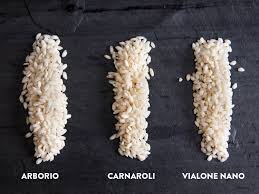 Arborio, Carnaroli, e Vialone nano sono le varietà ideali di riso da usare. L’Arborio è più diffuso nei supermercati, ma gli italiani preferiscono gli altri due, che hanno chicchi più piccoli, sono più amidacei, e assorbiscono meglio il liquido. Molte persone suggeriscono che all’inizio, il riso deve essere lavato; altri dicono che questo fa perdere al riso la sua consistenza e che lo faccia separare durante la cottura.
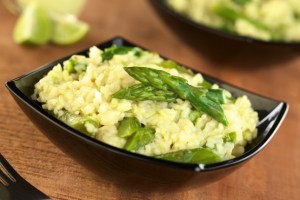
 appassire dolcemente, senza che prendano colore. Tostate il riso all’inizio della cottura, aggiungete il vino o altro alcol, ed infine versate il brodo bollente poco a poco mescolando il risotto più o meno costantemente. Alcune ricette aggiungono gli asparagi tagliati dopo la cipolla e prima del riso; preferisco cucinare gli asparagi “al dente” e aggiungerli alla fine per preservare consistenza croccante. Un altro punto molto discusso è se sia necessario aggiungere il burro alla fine.