
After more than 15 years of faithful service, my coffee machine gave up the ghost. Made in Switzerland, the Jura Impressa C5, which had been a present from my sister, produced cup after cup of hot coffee, both tall and short, at the push of a button. It had always responded well to my request for caffeine. All I had to do was provide the beans and the water. Even my Italian friends said that it made good coffee…well, decent coffee, according to them.
After a brief mourning period, I was faced with the decision of a substitute. “Of course, an Italian coffee machine,” said friends without hesitation. “And Gaggia is the best brand.” At the push of another button, I ordered a Gaggia with all the bells and whistles. From Milan to my house, via Amazon Prime, she was on her way!
That night I woke up in a sweat. Did I do the right thing? Swiss or Italian? Was I too impulsive? Was I testing my luck ordering another Italian machine? After all, I already owned a Fiat and a pizza oven made by an Italian. I really wanted a coffee machine that worked like a Swiss clock.
But when she arrived, all my doubts flew out the window. I fell in love with her elegant design, one that only the Italians can do. And everything seemed so simple—buttons for espresso, short coffee, tall coffee, cappuccino, latte, and “clean.” This lady could do everything.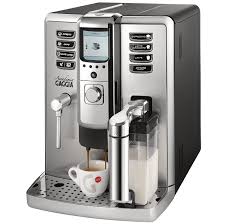
And, in fact, she did do everything…for about a week. Then one day, nothing. She wouldn’t even turn on. Had I offended the coffee gods when I requested a cappuccino in the afternoon? I called my Italian friend Giuseppe who made the pizza oven; he is an engineer and a coffee expert. He is a machine whisperer. And this lady responded immediately to him. I’m sure she likes Italian men (I understand). It was as if she discovered that I was a pseudo Italian and that she didn’t have to take orders from me, especially if I requested caffè lungo (essentially American coffee) so often.
But who take orders from whom? It seems that after every other cup, I receive a command in Italian (without an “excuse me,” without a “please,” without a “thank you”): Fill the water tank, empty the grains container below, close the coffee bean door, descale the machine, place the milk carafe in the housing, etc.
By now we have reached an understanding. She is the brains of the outfit and I am the slave. I am no longer a slave to coffee; I am a slave to La Signora. But I must admit, the lady makes great coffee…especially if I give her only Italian coffee beans to work with.
 Se avete mai perso il vostro migliore amico a quattro zampe, sapete come sia straziante. Chiamate senza sosta il vostro amico, tappezzate il quartiere con i volantini, controllate i rifugi locali, e lasciate il loro premio preferito sulla soglia. Nell’era dei sociali media, entrambi i proprietari e i rifugi usano Facebook con successo. Next Door è una rete privata sociale a Santa Barbara dove voi e i vostri vicini potete condividere le notizie online e postare informazioni sugli animali persi e recuperati.
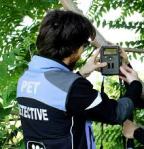 Sta arrivando una nuova generazione di strategie per trovare gatti e cani persi. Il Pet Detective è un’agenzia investigativa con nuove idee per animali domestici. Fondata negli Stati Uniti, ora arriva nella regione del Piemonte in Italia. Dopo aver seguito corsi in America, Andrea Granelli, un educatore cinofilo, è ritornato in Italia per aprire una scuola a Bergamo e formare una squadra a Torino.
 I Pet Detective usano le stesse tecniche che sono utilizzate dalla polizia per risolvere le indagini sulle persone scomparse. Tra le più sofisticate ci sono l’uso di ragionamenti deduttivi, profilino comportamentale, teoria della probabilità di ricerca, la raccolta di prove forensi, trappole umane, e l’uso di attrezzature high-tech.
 Se il proprietario decide di usare i servizi di Pet Detective, ci sono diversi pacchetti che si possono acquistare; i prezzi vanno da 59 a 159 euro. L’agenzia prova a coinvolgere il più possibile il proprietario in modo da ridurre al minimo i costi. La
 tempestività è essenziale: le ricerche iniziate entro 5 giorni dalla scomparsa portano nell’82 per cento dei casi ad un risultato positivo. La pioggia cancella le tracce, che vanificherà gli sforzi di entrambi il detective e il proprietario.
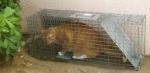
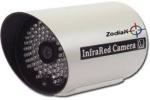
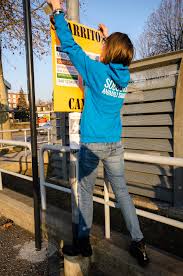
 In base alle abitudini del fuggitivo, si circoscrive la zona in cui potrebbe trovarsi. Poi si posizionano delle esche (il cibo preferito), che vengono monitorate con telecamere a infrarossi. Nulla è lasciato al caso. I Pet Detective inviano al proprietario una mappa delle zone strategiche dove appendere i volantini con la foto dell’animale smarrito. Alcuni pet detective utilizzano persino strumenti di ascolto amplificati, monitor per bambini, cani addestrati alla rilevazione di gatti, e cani addestrati a tenere traccia dei cani persi.
 Now comes a new generation of strategies to find lost cats and dogs. It’s called Pet Detective. Initiated in the United States, it has now come to the Piedmont region of Italy. After taking courses in America, Andrea Granelli, a dog whisperer, returned to Italy to open a school in Bergamo and form a team based in Turin.
 In Turin, the team, first and foremost, makes a profile of the missing animal. “Every subject has precise characteristics,” explains Dario Maffioli, project manager of Pet Detective. “There is a big difference between the behavior of a dog that runs away,

