
If you have ever lost your best (four-legged) friend, you know how heart-breaking it is. 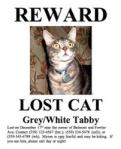 You call incessantly for your friend, you paper the neighborhood with fliers, you check out local shelters, and you leave favorite treats on the doorstep. In the age of social media, both owners and shelters use Facebook with some success. Next Door is a private social network in the Santa Barbara area where you and your neighbors can share news online and post information on lost and recovered animals.
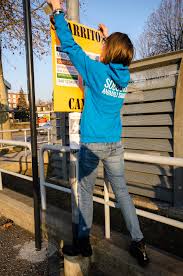 Now comes a new generation of strategies to find lost cats and dogs. It’s called Pet Detective. Initiated in the United States, it has now come to the Piedmont region of Italy. After taking courses in America, Andrea Granelli, a dog whisperer, returned to Italy to open a school in Bergamo and form a team based in Turin.
Pet Detectives use the same techniques that the police use to solve missing-person investigations. On the sophisticated end, they include deductive reasoning, behavioral profiling, search probabilty theory, gathering of forensic evidence, humane traps, and use of high-tech equipment.
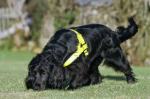
 In Turin, the team, first and foremost, makes a profile of the missing animal. “Every subject has precise characteristics,” explains Dario Maffioli, project manager of Pet Detective. “There is a big difference between the behavior of a dog that runs away,
  and that of a cat. You need to make distinctions according to breed, the character of the animal, and if it is shy or has a tendency to frighten easily.” Therefore, the first step for the animal owner is to complete a questionnaire online (www.petdetective.it), include a photo, and answer questions like where the animal disappeared, if it lives in a house or in the garden, and its tastes in food. This part is free.
If the owner decides to use the services of Pet Detective, there are different packages to purchase, which range from 59 to 159 euros (approximately $66 to $180). The company tries to involve the owner as much as possible to help minimize costs. Timeliness is of the essence: searches initiated within 5 days of the disappearance carry an 82% success rate. Rain erases traces and will frustrate both the detectives and the owner.
 Based on the habits of the fugitive, a zone is delineated in which the pet is likely to be
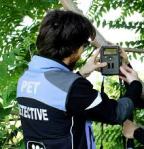
 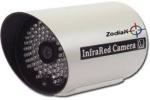 found. “Bait” (the pet’s favorite food) is strategically placed, and the area is monitored by infrared cameras. Humane traps are included depending on the case. Nothing is left to chance. The Pet Detectives even send to the owner a map of the strategic zone where fliers are posted with a photo of the missing animal. Some pet detective services even use amplified listening devices, baby monitors, cat detection dogs, and dogs trained to track lost dogs.
 Un curriculum impressionante: La sua “carriera” iniziò negli anni ’50 con una serie di crimini. Dopo una pena detentiva, è stato latitante per 24 anni. Era responsabile per migliaia di omicidi. Poi è stato in prigione per 24 anni scontando una pena di 26 ergastoli. Trasformò il crimine organizzato siciliano in un’organizzazione terroristica. Rimase “Capo dei capi” della mafia fino alla sua morte in un ospedale della prigione di Parma all’età di 87 anni. Ha vissuto in un carcere duro per i reclusi più pericolosi.
 Totò Riina non si pentì mai. Omertà fino alla fine. Il giorno della sua morte, nel novembre 2017, una delle sue figlie ha lasciato un messaggio su Facebook: una foto di una rosa nera sovrapposta a una faccia di donna semi-oscurata. L’indice, tatuato con “shhh”, davanti alle sue labbra. Silenzio.
 Riina iniziò all’età di 18 anni quando uccise un ragazzo durante una rissa. Come era normale allora, fu reclutato dalla mafia quando uscì dalla prigione. Durante gli anni ’70 e ’80, quando era in fuga, ordinò migliaia di morti, molti dei quali ne fu il diretto responsabile. Nel 1979, l’estate del terrore, scatenò una guerra che devastò la Sicilia. Nel 1981 la sua forza militare gli permise di eliminare apertamente tutti i capi delle famiglie che gli resistevano, facendolo diventare il “Capo dei capi”.
 Riina uccise e ha fatto uccidere carabinieri, magistrati, sindacalisti, giornalisti, medici, e funzionari regionali e politici. Tra i più notevoli ci furono Piersanti Mattarella, il presidente della regione in quel periodo e fratello di Sergio Mattarella, attuale presidente della Repubblica; e Carlo Alberto Dalla Chiesa, che fu inviato in Sicilia per frenare la mafia. La maggior parte furono vittimi innocenti in un conflitto per consolidare potere e territorio.
 Poi il Maxiprocesso iniziò nel 1986 guidato da due coraggiosi magistrati, Giovanni Falcone e Paolo Borsellino (vedete i due post “Il Coraggio di Essere Eroi” agosto 2017). Ancora latitante, Riina fu condannato in contumacia all’ergastolo. Quando la sua sentenza divenne definitiva (dopo gli appelli), Riina dichiarò guerra allo Stato e ai due giudici che lo fecero condannare. Falcone e Borsellino furono uccisi dalle autobombe a due mese di distanza nel 1992.
 L'Olivo Santa Barbara