‘Nduja

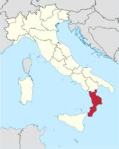
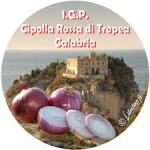
The region of Calabria, in the toe of Italy’s boot, is famous for many foods—from produce to seafood to the local hearty red wine.  There is also the cipolla rossa di Tropea,the prized red onion of the east coast of the region, and an ice cream dessert, the tartufo, that I featured in a pictorial post of August 31, 2017.  Recently Jacopo Giacopuzzi, the Veronese – turned – Santa Barbarian pianist, introduced me to ‘nduja (pronounced in Calabrian as DOOJ-ah).
‘Nduja is a spicy, spreadable pork salami from Calabria, which is made from parts of the pig, such as the shoulder, belly and head.  (The jowls are used for guanciale.) Spices and roasted hot red peppers give it its characteristic red color and fiery taste.  Meat, fat, and peppers are ground finely to become a paste and then put into orba, a traditional casing, and smoked with wood from olive and locust trees. It is then aged briefly and can last for over a year.  As with other food dishes, salami are often the result of something delicious created from leftovers.

The origins of ‘nduja are uncertain.  It could be from Medieval times.  It could be Spanish, not only because of the use of chilies, but also because of the similarity to the Spanish cured sausage, sobrasada.  The name is probably a derivative of the French andouille. When the French fought the Spanish in southern Italy in the early 19thcentury, they may have helped to develop it then.

Originally it was used only as an accompaniment to vegetables, ripe cheese, or on slices of bread. Today it is showing up everywhere: in pasta dishes, on pizza, even stuffed in squid.  It now has a DOP (denominazione d’origine protetta)designation, which ensures that products are locally grown and packaged. In the last few years there has been an increased demand across Europe for ‘nduja.  In Britain it is even showing up on restaurant menus and on supermarket shelves, like those of Marks and Spencer.  And thanks to places like Eataly in New York, Chicago, and Los Angeles, it is also coming to the United States.
 

Posted in Calabria, Cucina italiana, English, Italia | Leave a comment

Pozzi Veneziani

A Campo Santi Giovanni e Paolo

Mentre si cammina per Venezia e si ammira la sua architettura, non si può fare a meno di notare i meravigliosi pozzi architettonici in quasi ogni grande campo. Erano ingegnose opere d’arte e di ingegneria progettate per fornire acqua potabile agli abitanti che, ironicamente, erano circondati dall’acqua.

I pozzi di Venezia non erano veri pozzi perché non attingevano acqua dagli acquiferi sotterranei.  Erano cisterne sotterranee progettate per raccogliere e filtrare preziose acque piovane, e servivano i veneziani dal V secolo fino al 1884 quando l’acqua venne pompata dalla terraferma.

La costruzione era sia complessa che costosa.  Costruttori altamente qualificati noti come Pozzeri, insieme a muratori, supervisionarono lo scavo delle cisterne.  I figli seguirono padri e nonni nell’affare.  Era un commercio importante e molto apprezzato.

Prima fu selezionata una vasta area; quindi, i pozzi furono costruiti nei campi o corti di Venezia.  L’area fu scavata a una profondità di 5 o 6 metri sotto il piano terra e il livello del mare.  La rientranza fu imbottita con uno strato impermeabile di argilla per impedire l’infiltrazione di acqua salata e la dispersione di acqua fresca dal serbatoio. Al centro c’era un cassone o canna da pozzo che formava il pozzo; qui è dove gli abitanti locali immergevano i loro secchi per ottenere acqua fresca.  Il resto della rientranza era pieno di sabbia e ghiaia.  Ogni strato consisteva in una pietra di diverse dimensioni che creava un filtro graduato.  Poi 2 o 4 pilelle furono costruite vicino al bordo della rientranza per raccogliere l’acqua piovana il più lontano possibile dal cassone centrale in modo che l’acqua potesse essere purificata attraverso i vari strati di sabbia.

A Cà d’Oro

La gloria suprema era la vera, che era un’opera d’arte di per sé. Le prime furono costruite con pietre prese da antiche rovine romane: capitelli, sezioni di pilastri e urne cinerarie furono adattate per essere utilizzate anche come vere.  La Repubblica di Venezia incoraggiò l’aristocrazia a partecipare alla costruzione di pozzi di acqua piovana; in cambio lo stemma o le iscrizioni della famiglia sarebbero state scolpite nelle vere. L’amministrazione di Venezia sviluppò anche un sistema per controllare e mantenere i pozzi.

A Palazzo Ducale

I pozzi erano coperti da pesanti coperture di ferro e chiusi a chiave per gran parte della giornata.  A volte solo il prete locale teneva la chiave per sbloccarli due volte al giorno, mattina e sera, al rintocco del campanello che chiamava i residenti a riempire i loro secchi.  Al culmine della prosperità veneziana, c’erano oltre 6.500 pozzi.  Mentre oggi non sono in funzione, circa 600 rimangono nei campi veneziani come testimonianza della storia e dell’arte di questa meraviglia dell’ingegneria, che forse potrebbe essere adattata oggi nelle aree del mondo che soffrono la siccità.

A Chiostra della Santissima Trinità dentro Santa Maria dei Frari

Posted in Architecture, Arte, Foto, Italia, Italiano, Storia, Veneto, Venezia | Leave a comment

Venetian Wells

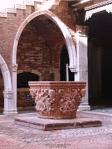
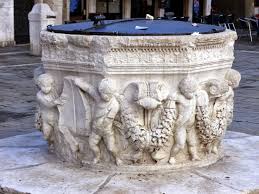
Well head at Campo Santi Giovanni e Paolo

While walking around Venice and admiring its architecture, you can’t help but notice the beautiful, architectural wells in almost every large square (campo).  They were ingenious works of art and engineering that were designed to supply drinkable water to inhabitants who, ironically, were surrounded by water.

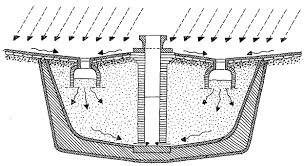
The wells of Venice, vere da pozzo,were not true wells as they did not draw water from underground aquifers.  They were underground cisterns designed to collect and filter precious rainwater, and served Venetians from the 5thcentury to about 1884 when water was piped in from the mainland.

The construction was both complex and expensive.  Highly skilled builders known as pozzeri,along with bricklayers, supervised the digging of the cisterns.  Sons followed fathers and grandfathers into the business.  It was an important trade and highly valued.

First a large area was selected; hence wells were built in the campi or corti of Venice.  The area was dug to a depth of 5-6 meters below ground and sea level.   The recess was lined with a waterproof layer of clay to prevent infiltration of salt water and dispersion of fresh water from the tank.  In the center a tall tunnel (cassone or canna da pozzo) formed the well shaft; this is where the local inhabitants dipped their buckets to obtain fresh water.  The rest of the recess was filled with sand and gravel.  Each stratum consisted of a different size stone creating a graduated filter.  Then 2 to 4 manholes (pilelle) were built close to the edge of the reservoir to collect the rainwater as far from the center tunnel as possible so that the water could be purified through the various layers of sand and gravel.

Well head at Cà d’Oro

The crowning glory was the vera, the well-head, which was a work of art in its own right.  Early ones were built with stones taken from ancient Roman ruins: capitals, pillar sections, and cinerary urns were adapted for use as vere.  The Republic encouraged the aristocracy to participate in the construction of rainwater wells; in return, the family’s coat of arms or inscriptions could be carved into the vera.  Venice’s Administration also developed a system to check and maintain the wells.

Doge’s Palace well head

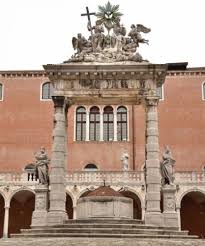
Wells were capped with heavy, iron covers and locked for most of the day.  Sometimes only the local priest kept the key to unlock them twice a day, morning and evening, at the toll of the “well bell” calling residents to fill their buckets.  At the height of Venice’s prosperity, there were over 6,500 wells.  While no wells are in use today, about 600 remain in the Venetian campias a testament to the history and art of this engineering marvel, which perhaps could be adapted today in areas of the world suffering from drought.


Rainwater well in the cloister of Trinity inside the monastery of Santa Maria dei Frari

Posted in Architecture, Arte, English, Foto, Italia, Storia, Veneto, Venezia | 1 Comment