Maria Montessori

Maria Montessori was an Italian physician, educator, and innovator, acclaimed for her educational approach that mirrors and builds on the way children naturally learn.  Born in 1870 in Chiaravalle, in the province of Ancona in the Marche region of Italy, she was an avid learner who spent her childhood years in Rome, a paradise of libraries, museums, and good schools.  At the age of 13, she entered an all-boys technical institute to prepare for a career in engineering.  She soon changed her mind, and with great perseverance, she gained admission to the University of Rome’s medical program.  When she graduated with honors in 1896, she was among Italy’s first female physicians.

Maria focused on psychiatry in her early medical career.  She also developed an interest in education.  Her studies led her to question the prevailing methods of teaching children with intellectual and developmental disabilities.  In 1900 she was appointed co-director of a new training institute for special education teachers.  She approached her work scientifically, observing and experimenting with different teaching methods.  Many of the children advanced beyond expectations.

Then in 1907 she opened the first Casa dei Bambini, a quality learning environment for children in a poor inner-city district.  The kids misbehaved at first but soon showed interest in solving problems and working together.  Maria observed how they learned from their surroundings, essentially teaching themselves.  For the rest of her life, Maria advanced child-centered education.  She lectured widely, wrote books and articles, and developed teacher preparatory programs.  As a public figure, she also campaigned vigorously for women’s rights.  She was recognized in Italy and beyond as a leading feminist voice.

The Montessori Method then and now is based on self-directed activity, hands-on learning, and collaborative play.  In classrooms, children make choices and teachers give age-appropriate activities to guide them.  It is individualized education based on creativity and not on discipline or authority.

And the results are impressive based on studies that have been conducted.  Children who attend Montessori kindergartens, acquire more skills than other students.  They increase their ability to regulate impulses, to solve social problems, and to live better in groups.  They have a greater sense of justice and consider another person’s point of view. They have more confidence in dealing with difficult problems.  While children coming from poor families generally have worse results in school, Maria Montessori demonstrated that it is possible to increase the skills of those who are disadvantaged and to close the gap.

Montessori education has been adopted worldwide.  Today there are more than 22,000 Montessori schools in at least 110 countries.  However,in general, the name Montessori is not trademarked, copyrighted, or patented, and can be used by any school with any degree, or none, of certification or teacher training.

Here are some famous quotes from Maria Montessori:

“The greatest sign of success for a teacher…is to be able to say,

 ‘The children are now working as if I did not exist.’”

“Never help a child with a task at which he feels he can succeed.” 

“Establishing lasting peace is the work of education; all politics can do is

keep us out of war.”
Posted in Abitudini, English, Foto, Italia, Medicina, Roma, Storia | 1 Comment

L’italiano è “cool”

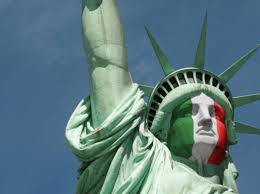
Nel giugno 2018, ho letto un articolo in un giornale italiano sulla crescita della lingua italiana a New York e dintorni.  Negli ultimi cinque anni, il numero di ragazzi che studiano l’italiano, dalle elementari al liceo, è più che raddoppiato—da 22.000 a 54.000 nei tre stati di New York, New Jersey e Connecticut.

Allo stesso tempo, c’è una crescita nel numero dei programmi bilingue italiano/inglese, in cui tutte le materie sono insegnate metà tempo in italiano e metà in inglese. Il primo è già al quarto anno in una scuola pubblica di Bensonhurst, a Brooklyn.  Il secondo inizierà il prossimo autunno in una scuola pubblica ad Harlem a Manhattan.  Un terzo infatti è pronto per essere lanciato a Williamsburg, Brooklyn.  E anche a Staten Island, la provincia più popolata da italo-americani, si parla di una simile iniziativa.  La domanda di assunzione è grande; per esempio, per il primo anno d’asilo, la scuola a Bensonhurst aveva ricevuto 242 richieste per soli 18 posti disponibili.

Ci sono diverse ragioni per questa crescita e per la moda di studiare questa lingua. L’italiano è una lingua bella, divertente (e anche difficile secondo me) e a volte utile.  L’Italia è una destinazione preferita per i turisti.  Il cibo e la cultura some ampiamente riconosciuti. L’Italia e la sua cultura sono amatissime dai newyorkesi e in generale dagli americani, ma purtroppo l’italiano è ancora poco parlato. E quindi in generale sempre più famiglie a New York mostrano interesse per il bilinguismo italiano-inglese perché sono convinte che il bilinguismo faccia bene alla crescita dei bambini sia dal punto di vista scolastico sia per il loro carattere e la loro apertura mentale.

Per aprire un programma bilingue, le famiglie devono garantire la frequenza di una ventina di bambini fino alla quinta elementare.  Fra gli altri requisiti per avviare un programma, circa le metà dei 20 alunni devono avere un genitore la cui lingua madre sia l’italiano.   E un maestro deve essere disponibile che parli entrambe le lingue e deve avere tutti i certificati necessari per l’insegnamento all’infanzia.  Una difficoltà per le giovani famiglie italiane immigrate a New York con figli piccoli è che non sono concentrate in pochi quartieri (come in passato) ma sono sparse per tutta la città.  Se non vivono vicino alla scuola, non è semplice organizzare il pendolarismo nella Grande Mela.

Ci sono molti gruppi dietro questa tendenza nell’educazione bilingue.   L’Italian American Committee on Education (Iace) è un’organizzazione non-profit fondata nel 1975 per promuovere lo studio della lingua italiana e cultura nell’area dei tre stati.  È sotto la supervisione del Consolato Generale d’Italia a New York.  Supportano anche il corso bilingue fornendo libri e risorse in italiano e finanziando una parte dello stipendio dell’insegnante bilingue. E poi c’è una squadra che il console generale a New York chiama “le Mamme Tigri” che promuovono la campagna e reclutano le famiglie interessate.

Per attirare più studenti, lo Iace lancia anche iniziative extra curriculuri incentrate sul Made in Italy in collaborazione con i principali marchi italiani, come “Mangia sano & parla italiano” with Eataly e “Disegna l’auto dei tuoi sogni” with Ferrari.  Questo marketing culturale contribuisce a far aumentare la propensione degli americani a comprare l’autentico Made in Italy.


Posted in Abitudini, Foto, Italiano, Italoamericani, La Gente, La Lingua, New York | 1 Comment

Italian is Cool

In June 2018 I read an article in an Italian newspaper about the growth of studying the Italian language in and around New York City.  In the last five years, the number of children that study Italian, from elementary school through high school, has more than doubled, from 22,000 to 54,000 in the three states of New York, New Jersey and Connecticut.

At the same time, there is an increase in the number of bilingual Italian / English programs in which all of the materials are taught half time in Italian and half time in English. The first such program is already in its fourth year in a public school in Bensonhurst in Brooklyn.  The second will begin next fall in a public school in Harlem in Manhattan.  A third is ready to launch in Williamsburg, Brooklyn.  And even in Staten Island, the borough most populated by Italian-Americans, there is talk of a similar initiative.  The demand for placement is great; for example, for the first year of kindergarten, the program in Bensonhurst received 242 requests for only 18 places available.

There are several reasons for this growth and trend in studying Italian.  It is a beautiful language, fun (even if difficult) and at times useful.  Italy is a favorite destination for tourists.  The food and culture are widely recognized.  Italy and its culture are loved by New Yorkers and in general by Americans, but unfortunately the language is spoken little.  Therefore, more and more families in New York are showing interest in bilingual Italian-English programs because they are convinced that they will be good for their children from a scholastic point of view and for their characters and open minds.

To start a bilingual program, families must guarantee the attendance of 20 children up to the 5thgrade.  Among the other requirements are that about half the students must have a parent whose mother tongue is Italian.  And a teacher must be available who speaks both languages and has all the certificates necessary to teach children.  One difficulty for the young Italian families who have emigrated to New York with little kids is that they are not concentrated in a few neighborhoods (like in the past) but are dispersed throughout the city.  If they don’t live near the school, it is not easy to organize commuting in the Big Apple.

There are many groups behind this trend in bilingual education.  The Italian American Committee on Education (IACE) is a non-profit founded in 1975 to promote the study of Italian language and culture in the tri-state area.  It is under the supervision of the Consul General of Italy in New York.  They also furnish books and resources and finance a part of the stipend of the bilingual teacher.  And then there is the team that the Consul Generals of New York calls “The Mamma Tigers” who promote the campaign and recruit interested families.

To attract more students, the IACE is also launching “extra curriculum” initiatives focused on Made in Italy in collaboration with major Italian brands, like “Eat healthy and speak Italian” with Eataly and “Design the car of your dreams” with Ferrari. This type of cultural marking helps to increase the propensity of Americans to buy authentic products that are Made in Italy.

Posted in Abitudini, English, Foto, Italoamericani, La Gente, La Lingua, New York | Leave a comment